
The World Bank has approved a loan of 85 million US dollars (around Rs 12.5 billion) for the implementation of the Greater Lumbini Area Development Project.
The decision was made during a board meeting held on March 13 in Washington, DC, for a project covering the districts of Rupandehi, Kapilvastu, and Nawalparasi, all linked to Gautam Buddha’s birthplace, Lumbini.
According to the Lumbini Development Trust, the project, led by the Ministry of Urban Development and the Ministry of Culture, Tourism and Civil Aviation, is estimated to cost over Rs 12.35 billion.
Senior Director Gyanin Rai of the Lumbini Development Trust said formal communication from the World Bank is expected soon, after which the Government of Nepal will proceed with implementation following Cabinet approval.
Rai noted that although efforts to secure funding had been underway for several years and nearly failed, sustained work over the past year helped secure the loan.
The project is a comprehensive tourism infrastructure and heritage conservation program to be implemented under the leadership of the Ministry of Urban Development, in coordination with the Ministry of Culture, Tourism and Civil Aviation, Lumbini Province, local governments, and the World Bank.
The initiative aims to develop the Greater Lumbini region — stretching from Bardaghat in Nawalparasi to Chandrauta in Shivaraj Municipality of Kapilvastu, including Rupandehi — into a major tourism hub. The concept was initially proposed by former Finance Minister Bishnu Prasad Paudel.
Vice-Chairperson of the Lumbini Development Trust, Lharkyal Lama, said the project has now reached the implementation stage after extensive studies, consultations, and coordination with international development partners and local stakeholders.
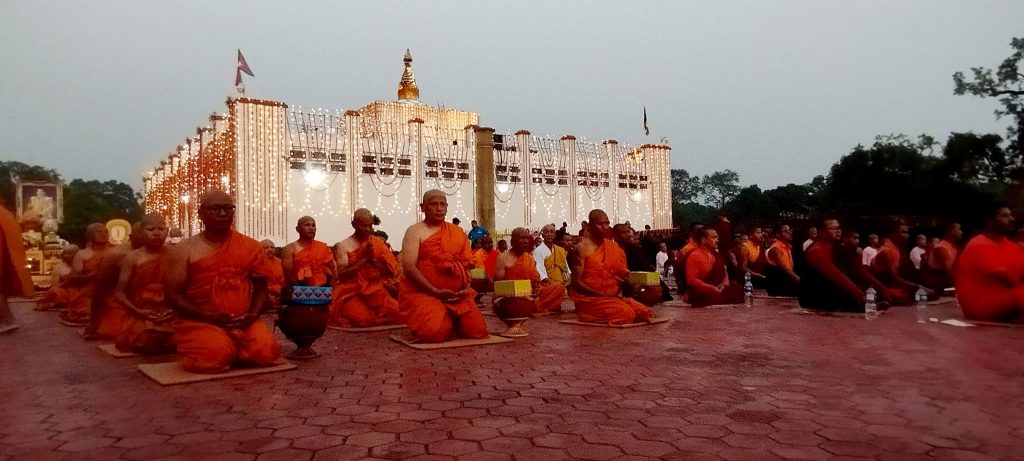
He added that the project is expected to transform the Greater Lumbini area into an attractive destination not only for Buddhist pilgrims but also for global tourists.
The project aims to establish Lumbini as a centre of spirituality, culture, and tourism while promoting infrastructure development, economic activities, employment, and sustainable urban growth. It also prioritises heritage conservation, good governance, and community livelihoods.
Key heritage sites in the project include the Maya Devi Temple, the sacred Pushkarini pond, the Ashoka Pillar, and Tilaurakot in Kapilvastu — the ancient capital of the Shakya kingdom — as well as Ramgram in Nawalparasi, believed to house the only intact relic stupa of Buddha.
Local governments, including Ramgram Municipality, Devdaha Municipality, and Lumbini Cultural Municipality, have jointly urged the World Bank to ensure more than 8 million US dollars (over Rs 1 billion) budget allocation per municipality, emphasising transparent, sustainable, and locally driven implementation.
The project will initially focus on major Buddhist heritage sites such as Lumbini, Tilaurakot, Devdaha, and Ramgram, with plans to expand to other regions, including hill districts.
According to the Ministry of Urban Development, the project seeks to improve tourism infrastructure and services, increase annual tourist arrivals, enhance visitor satisfaction, and promote local employment and entrepreneurship.
It will also support integrated destination planning, local economic development, women- and youth-led enterprises, skills development, and responsible private sector engagement. Improvements in visitor facilities, signage, mobility, and public spaces are also planned.
The project further emphasises institutional capacity building, transparent implementation, monitoring systems, and grievance redress mechanisms.
Environmental and social safeguards, including gender equality, climate resilience, and sustainability, have been incorporated in line with World Bank standards. The project also aims to boost women’s participation in tourism, currently estimated at around 20 percent, through training, market access, and advisory support.
Climate-smart infrastructure, including water and sanitation systems, energy-efficient designs, and disaster risk assessments, will also be part of the initiative, alongside a multilingual grievance handling system to ensure accountability and sustainable development.