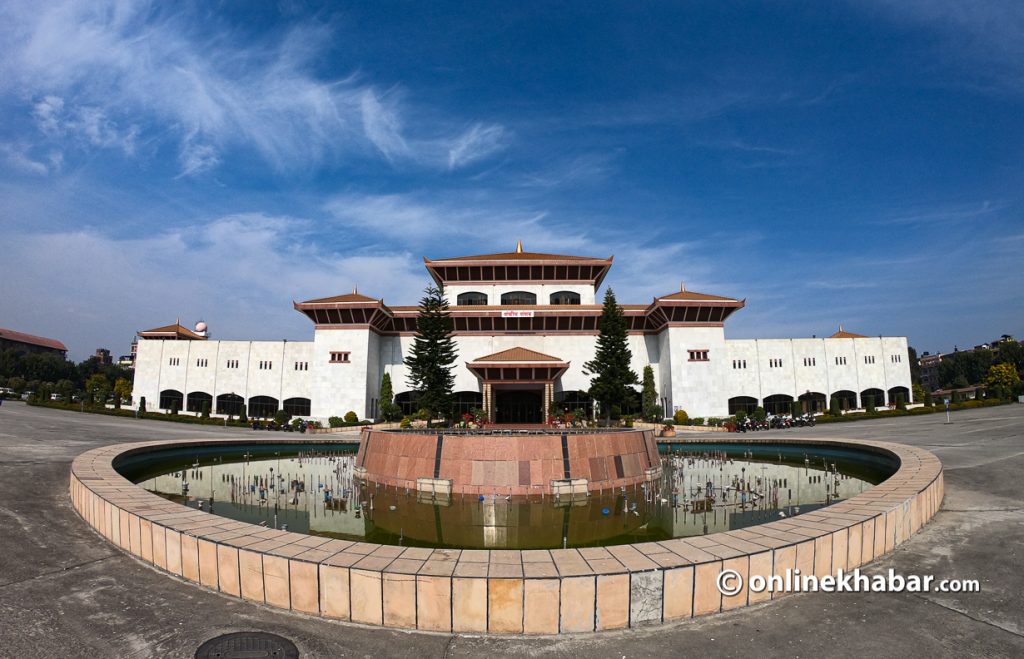

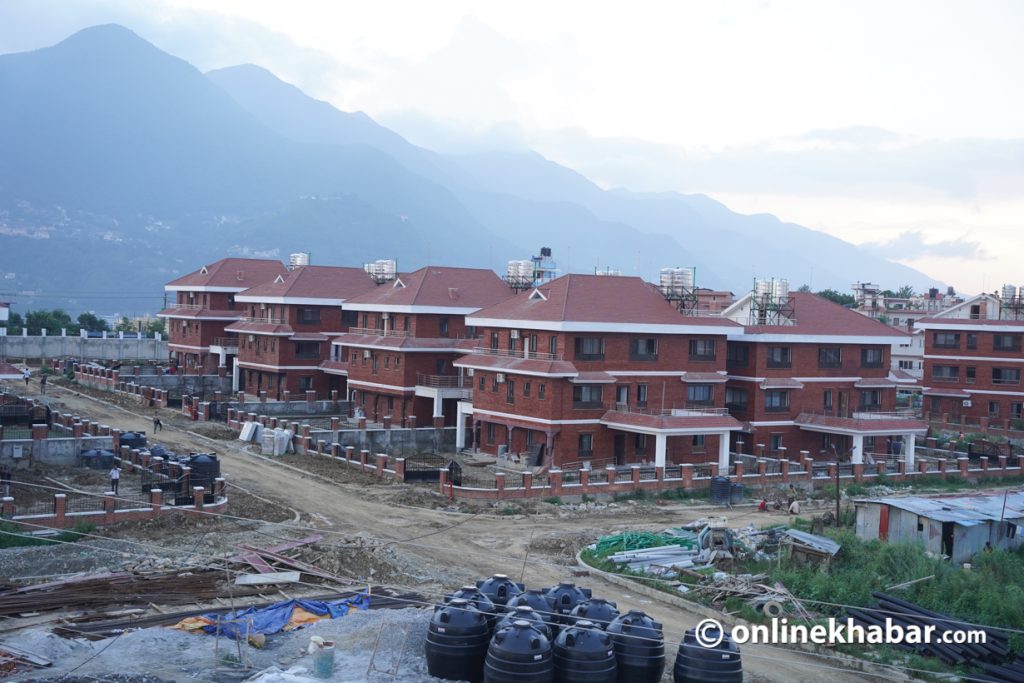
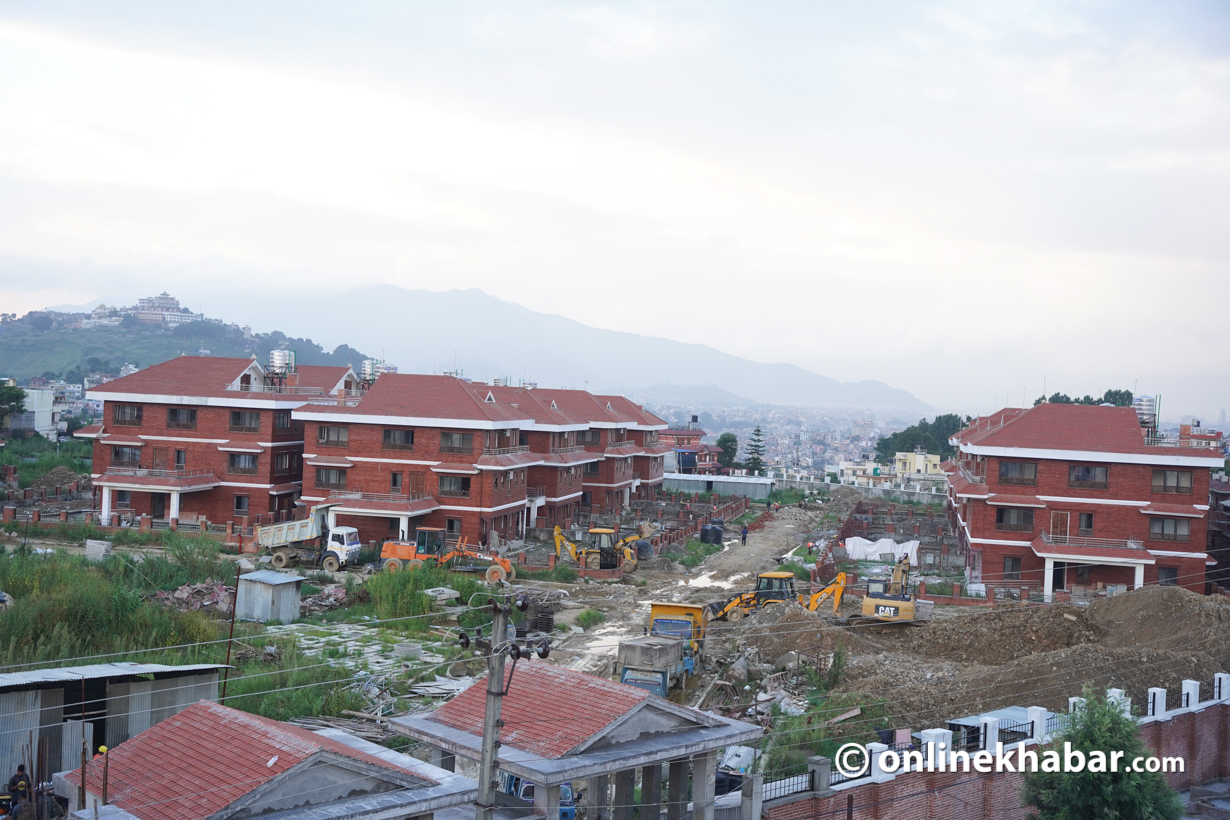
The ministerial residence complex in Bhaisepati, Lalitpur, built at a cost of nearly Rs 3 billion, still remains in a ruined condition.
This complex, which includes residences for federal ministers, the chairperson and vice-chairperson of the National Assembly, and the deputy speaker of the House of Representatives, had been occupied by ministers for only about a year. During the Gen Z protest on September 8 and 9, the complex became a target of demonstrators. Out of its 27 blocks, 26 were vandalised and set on fire.
Only the building designated as the defence minister’s residence sustained minor damage. After repairs and repainting were completed, Defence Minister Madhav Prasad Chaulagain is currently residing there.
According to Chakravarti Kanth, chief of the Federal Secretariat Construction and Management Office under the Ministry of Urban Development, the contract process for reconstructing 11 blocks has moved forward. The plan is to award the contract with a deadline to complete the work by the third week of July.
Kanth said the goal is to complete work on the 11 blocks within the current fiscal year and make them usable. However, a new government will be formed, and new ministers are expected to arrive within the next week. In that situation, alternative arrangements will have to be made.
“First, we need to know how large the cabinet will be and how many ministers there will be. Based on that, we will plan accordingly,” Kanth says to Onlinekhabar. “We will then manage the residential arrangements.”
According to him, one option under discussion is to allow ministers who already own houses in Kathmandu to stay in their private residences while the government provides official facilities such as security. Another option is to rent houses.
Even in renting houses, several possibilities are being discussed, whether to rent separate houses for each minister or rent a collective residence where government facilities could be provided. However, he said the office alone will not make this decision.
“We are waiting for a high-level decision. Whatever instructions we receive, we are ready to make the necessary arrangements,” he says.
As work on the first 11 blocks begins, the ministry also plans to move forward with the reconstruction of the remaining blocks.
Damage assessment from the protests
According to a report prepared by a committee formed to assess damages caused during the September 8-9 protests, the total loss amounted to Rs 84.45 billion. This equals 1.38 percent of Nepal’s GDP and 4.30 percent of the current fiscal year 2082/83 budget.
Of this amount, the reconstruction of the first 11 blocks of the ministerial residence alone is estimated to cost more than Rs 110 million, according to the Ministry of Urban Development.
The foundation stone for the ministerial residence complex was laid on October 1, 2019, by then Prime Minister KP Sharma Oli. By August 2025, most members of the previous cabinet had already moved into the residences.
Previously, ministerial residences were located in Pulchowk, which have now been converted into judges’ residences.