Kathmandu, January 12
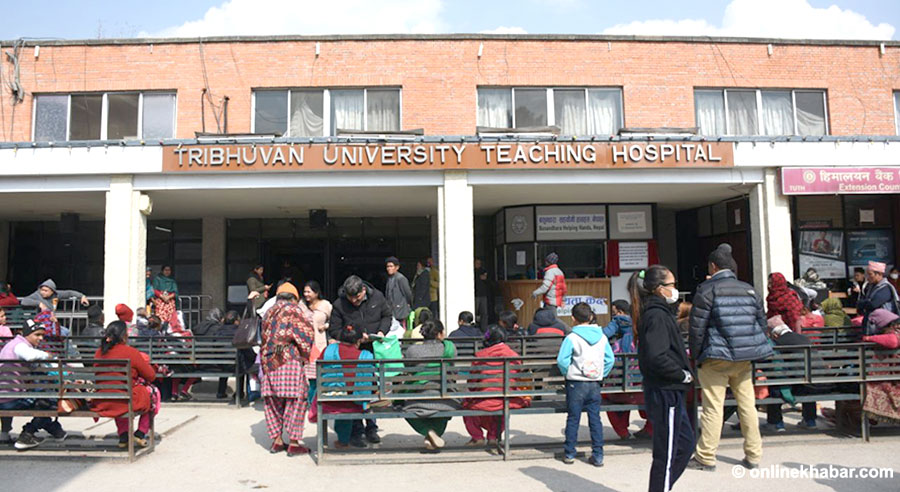
Tribhuvan University Teaching Hospital has decided to suspend its health insurance services.
According to the hospital administration, all treatment services provided under the health insurance scheme will be discontinued from Magh 1.
The hospital stated that its financial condition has deteriorated after the Health Insurance Board failed to clear insurance claims for a long time. The Board reportedly owes the hospital around Rs 400 million in unpaid dues.
While the hospital incurs monthly expenses of more than Rs 50 million, only about 50 per cent of its insurance claims have been approved, further aggravating the financial strain, the administration said.
The hospital also pointed out a significant disparity between the treatment rates set by the Health Insurance Board and the hospital’s actual costs. Despite repeated appeals, the hospital said there has been no response. “For the past two years, the hospital has been meeting daily expenses from its own internal resources. We can no longer continue providing insurance services at a loss,” the hospital said in a notice.
Information Officer Dr Gopal Sedain said a large portion of the amounts claimed by the hospital in various fiscal years remains unpaid. “Due to the lack of payments, it has become difficult to manage expenses from internal resources. We have also been unable to pay medicine and medical supply vendors for the past five months,” Dr Sedain told Onlinekhabar. “When it became clear that services could not continue at a loss, we decided to suspend them.”
According to the Health Insurance Board, more than Rs 11 billion remains unpaid to listed health institutions. Hospitals have warned that they may suspend health insurance services within weeks if payments for treatments provided to insured patients are not cleared.
As a result, insured citizens are likely to be deprived of services, increasing the risk of the health insurance programme being left in limbo.
Under the health insurance scheme, hospitals are required to submit claims to the Health Insurance Board for treatments provided to insured citizens, after which the Board must make payments. However, due to insufficient government subsidies, the Board has been unable to pay service providers.