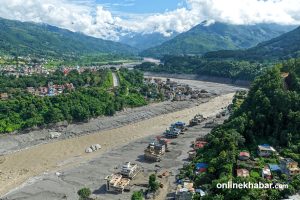
On the hills and slopes of Benighat–Bahunatar in Dhading, a boy grew up who was always more drawn to the sound of the river than to the letters in his books. For him, the Trishuli River was not just a source of water; from the very beginning of his life, it was his first teacher, silent, yet profound.
While his friends sat inside the classroom, he would hide his schoolbag in the bushes and run towards the water. Even when the school bell called him back, the waves of the Trishuli called out louder. Sometimes, the deepest life lessons are taught not by classrooms, but by nature. For Udhav Kadel, this truth had already revealed itself in childhood.
Time changed, circumstances changed, but the boy’s bond with the river never did. Today, that same boy has become a well-known figure in Nepal’s adventure tourism sector.
He had never imagined that what was once seen as “undisciplined” behaviour, tricking teachers and running to the river, would one day form the foundation of the most disciplined decisions of his life. After completing Grade 12, Udhav went to Europe to study hotel management. Once he stepped onto foreign soil, he began to realise that earning money alone is not the sole purpose of going abroad.
During his difficult years in Europe, he deeply experienced the value of self-discipline, compassion, and hard work. Working morning to evening in unfamiliar surroundings and amid hardships, his understanding of life gradually deepened. “Dreams are not created by countries; dreams are born from courage,” he reflected while living there. Beyond earnings, he learned one lesson that mattered most: the art of becoming a better human being.
For many Nepalis who have settled in Europe or the United States, the desire to return home is often seen as unnecessary sentimentality, even interpreted as foolishness. But for Udhav, the urge to return was not stubbornness; it was a call from within. He returned because he knew his future lay right there, on the riverbank that had spoken to him since childhood. He was aware of the risks, uncertainty, an unclear future, and incomplete plans. Yet sometimes, the desire to do something meaningful grows so strong that even risks begin to feel small.
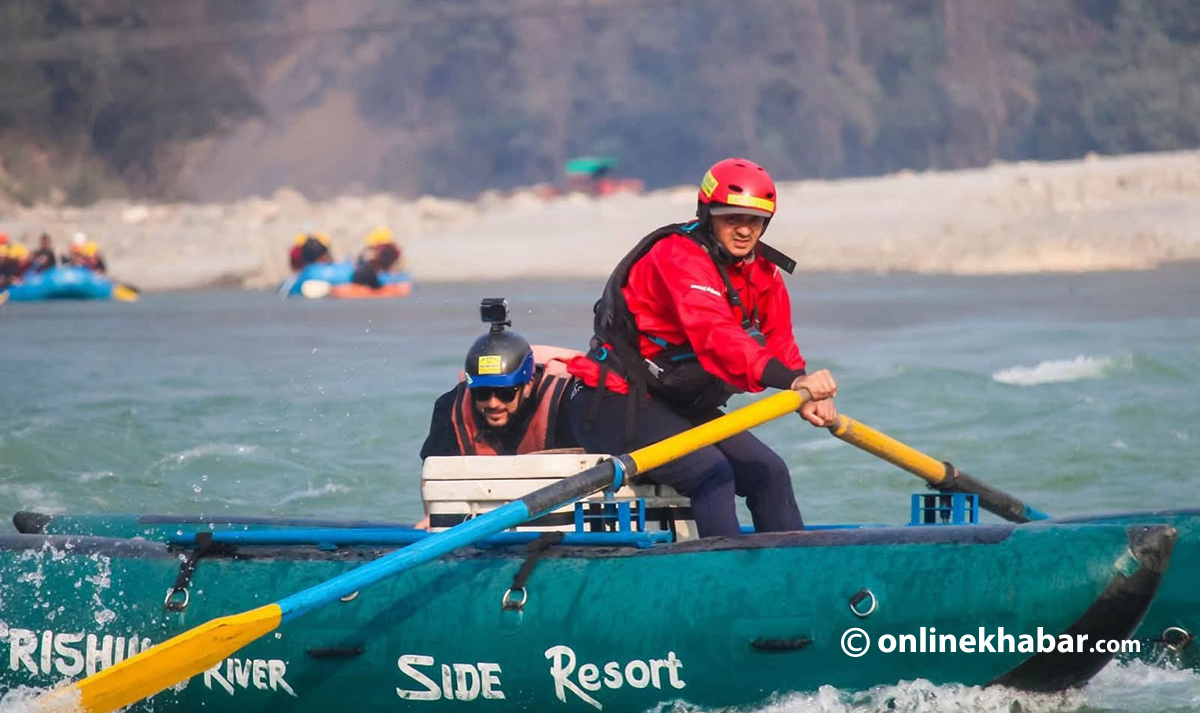
After returning to Nepal, he chose a path many considered impossible: the rafting business. What began with one or two boats gradually expanded and became a trusted name among domestic and international tourists. The Trishuli remains the same old friend to Udhav, never deceptive, never trapping, but always teaching in countless ways. The river gets angry, the weather changes, tourists come and go, but courage born in water is tested in water. This belief kept him moving forward.
He is not just a businessperson, but someone who works like a campaigner. His goal was never limited to personal success. He trained local youth, produced guides, purchased local farm produce, and connected the community with tourism. As a result, local people became equal stakeholders in his success. He understood one simple truth: where roots are planted, the tree grows strongest.
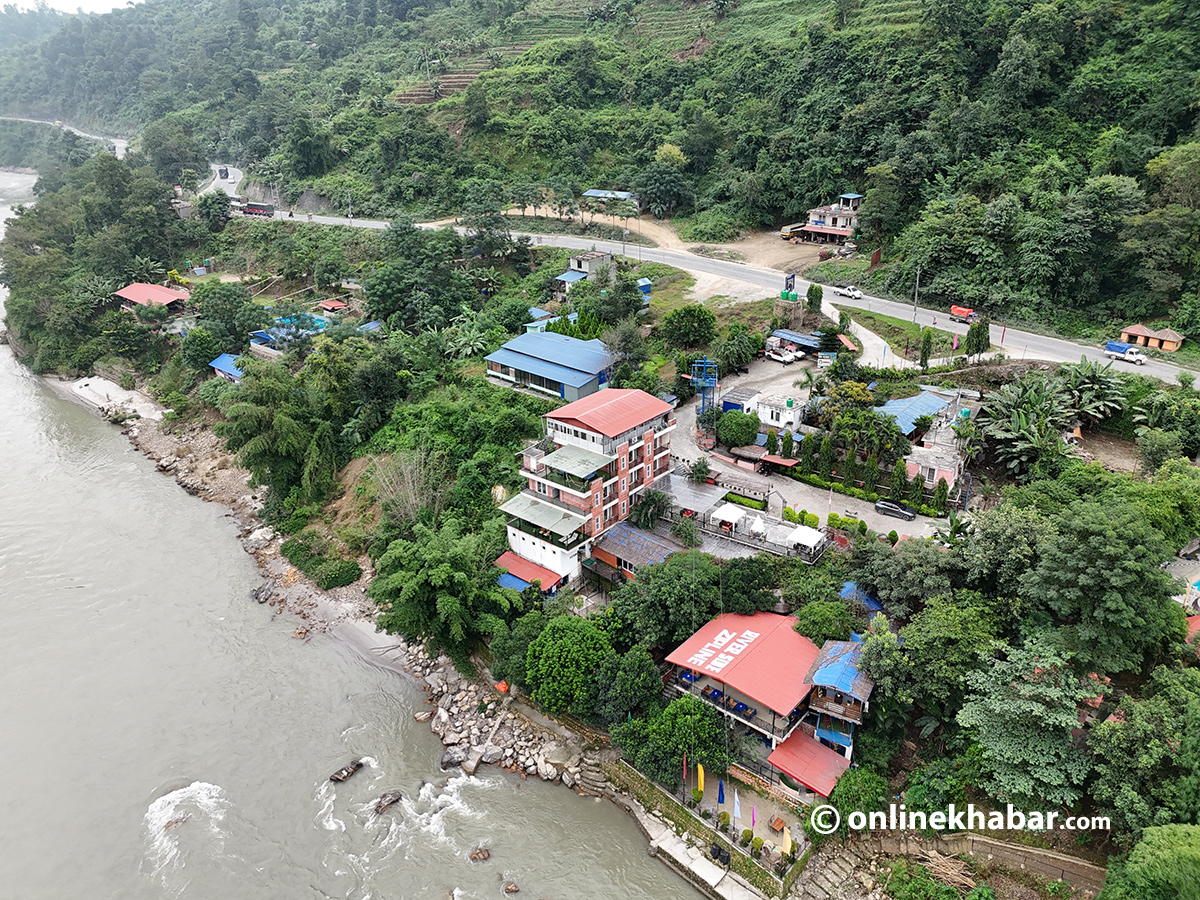
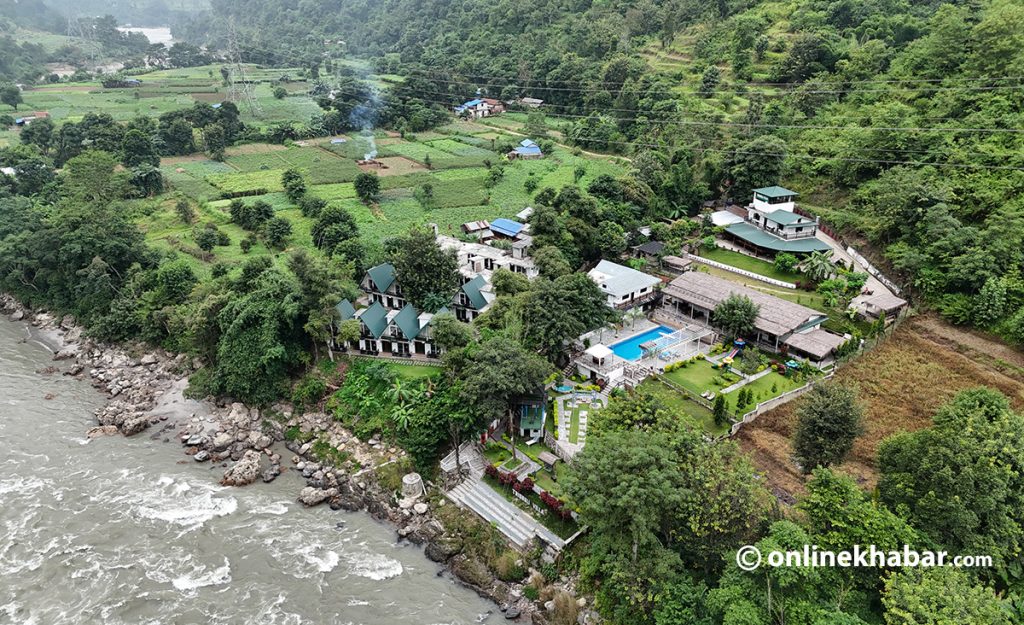
Rafting alone could not fulfil his vision. He saw a bigger picture, creating accommodation along the Trishuli that would feel like a home for travellers. Initially, tourists were hosted in tented camps. Gradually, this evolved into cottage rooms and then a modern building. A swimming pool, DJ hall, and deck restaurant were added over time. In essence, Udhav reinvested his earnings back into the same riverbank. This is how Trishuli Riverside Resort was born. His ancestral land by the river has been beautifully transformed through his sweat and dedication.
Still, he did not stop there. He purchased land across the resort. During the COVID-19 period, when many tourism entrepreneurs were paralysed by uncertainty, he resumed construction. The result was a more premium property than the original resort, Trishuli Villa.
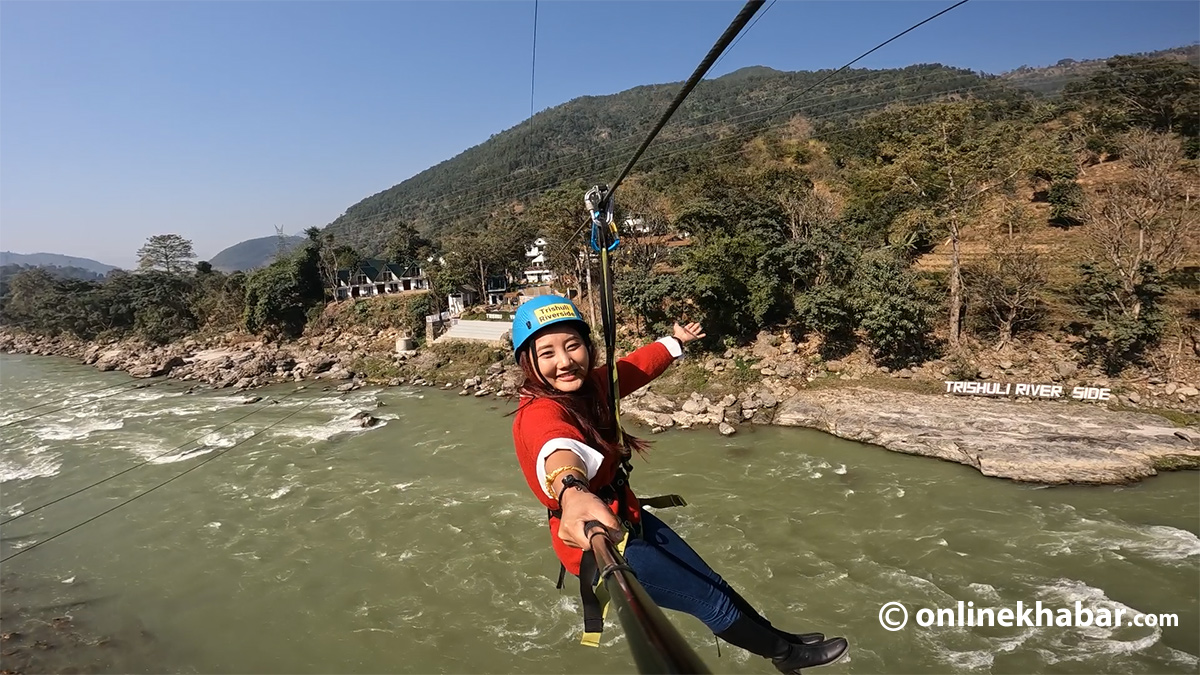
A zipline and sky cycling now connect Trishuli Villa and Trishuli Riverside Resort. Investing Rs 100 million during a time when the world was struggling with COVID-19 is not a decision just anyone can make. To many, it seemed like a risk; to Udhav, it was a brick laid in the foundation of self-confidence.
There were days when disasters like earthquakes and the pandemic forced him to lose as much as he had gained. In such moments, he sometimes questioned himself: “Was returning from abroad a mistake?” But the waves of the Trishuli have always given him just one answer: “Colliding is not misfortune; continuing to flow is destiny.”
Udhav’s life story is not merely a tale of personal success. It is an answer to a question that echoes in the minds of thousands of Nepalis living abroad: where, and for whom, do dreams truly come true? There is no single answer.
Gathering skills, discipline, and experience abroad and then returning with the courage to build something at home is not common but people like Udhav prove that it is possible. Their journey says: the country may be difficult, but it is full of possibilities. If there is courage to work, the river’s waves themselves carve the path forward.
For young people who want to do something meaningful, Udhav stands as a quiet source of inspiration. It is good for dreams to be frightening, because frightening dreams often define the direction of life. The mental strength of a boy who grew up playing with water along the Trishuli River is what allows him today to inspire thousands, where the heart is committed, the path begins to shine.
—By Brahma Kant Ghimire