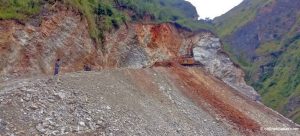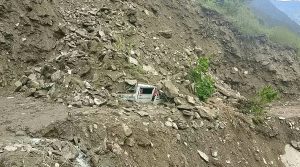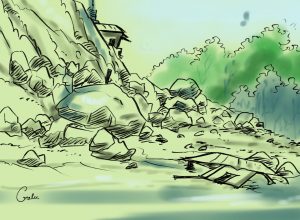

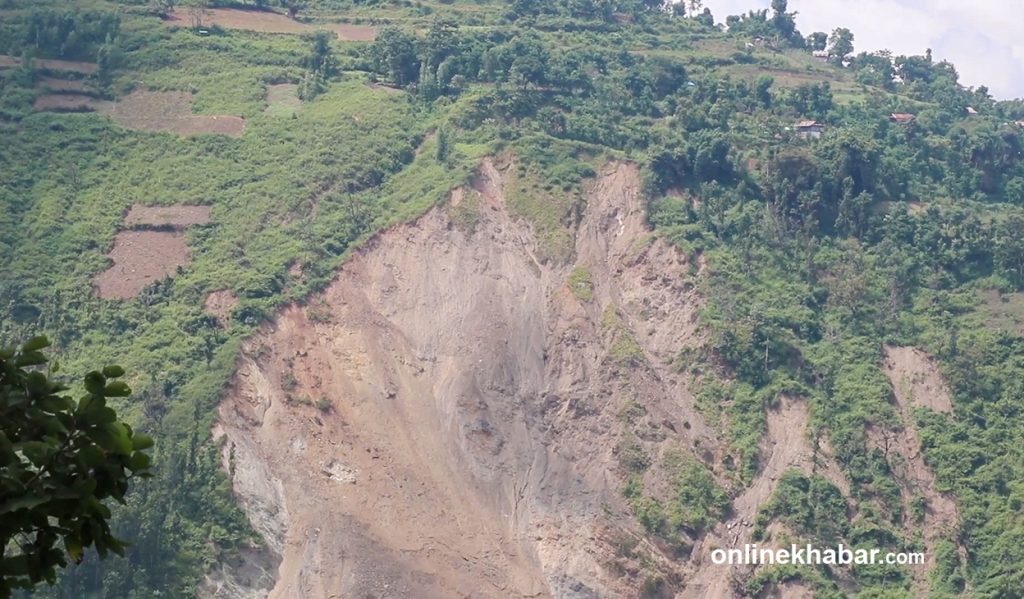
As the monsoon sets in, around 120 families in Sangurigadhi Rural Municipality of Dhankuta are at high risk of landslides. More than a dozen families in the area have already been displaced due to the threat of landslides.
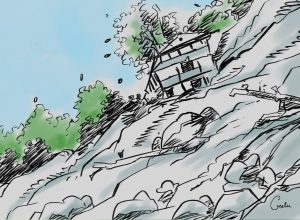
Dadhuwa village in Ward No. 7 of Sangurigadhi Rural Municipality is one example of the landslide risk. The village, home to around 27 families, is surrounded by landslides on both sides. According to locals, the landslide on the eastern side began in 1999. As it expanded, seven families were forced to leave the village. Although the landslide on the eastern side has come under some control in recent years, the threat to the remaining residents has not disappeared.
The situation became more concerning after another landslide began on the western side of the village in 2018. Several families have already been displaced because of the western landslide, while others are in a situation where they may have to leave their homes at any time. Resident Jite Rai said the landslide has been expanding because of the steep terrain and erosion caused by streams and rivers on both sides of the village.
Rai said residents face the monsoon with fear every year because the landslide becomes more active as the flow of water increases. He added that the risk remains even during the dry season, as landslides continue to occur even when there is no rainfall. The situation in Dadhuwa is no different from that in other settlements across Sangurigadhi. Several areas of the rural municipality, which has 10 wards, are at risk of landslides.
According to Dipak Rai, a technical officer at the rural municipality, landslide problems are comparatively more severe in Wards No. 1, 5, 6, 7 and 8. Data collected by the rural municipality shows that around 120 families across the municipality are currently at risk of landslides. More than a dozen families have already been displaced, while several others are at risk of displacement.
Providing new homes for families displaced after their houses were threatened by landslides is a major challenge. For families dependent on agriculture, having to abandon not only their homes but also their farmland has also affected their livelihoods. The rural municipality said it has begun the process of relocating families at the highest risk to safer areas. However, Rural Municipality Chairperson Jitendra Rai said immediate relocation of all at-risk families is difficult because of the area’s geographical remoteness, limited resources and lack of suitable safe locations.
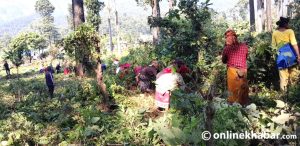
Chairperson Rai said the rural municipality has been carrying out various measures to reduce the risk of landslides. These include planting trees and constructing retaining walls in vulnerable areas to control landslides and soil erosion. According to Rai, a team including geologists has conducted a study of the affected areas to assess the actual level of risk. Based on the findings, the rural municipality is working to formulate plans for risk reduction and the safety of affected families. The process of relocating families severely affected by landslides has also been initiated. However, Chairperson Rai said the process has been delayed due to what he described as negligence by the provincial and federal governments.
Weak terrain and unplanned roads
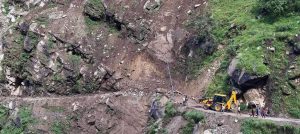
The landslide problem in Sangurigadhi is linked to both natural and human factors. The area’s fragile hills, steep terrain and erosion caused by rivers and streams have made the land vulnerable to landslides. Technical officer Rai said haphazardly constructed roads in recent years have further increased the risk.
Rai said cutting into hills during road construction disturbs the natural stability of the terrain. Poor drainage of rainwater has also contributed to soil erosion and landslides in areas around roads. Sangurigadhi Rural Municipality, located in the southern part of Dhankuta district, lies within the Mahabharat mountain range.
Technical officer Rai said the area’s geological structure is relatively weaker than that of the higher mountainous areas of the district. He said landslide problems are becoming increasingly complex because of unplanned road construction and inadequate water management in an already naturally fragile landscape.