
Kathmandu, September 18
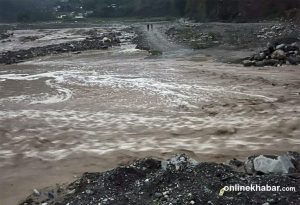
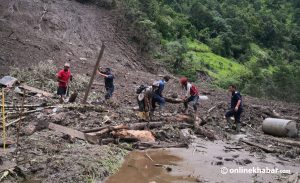
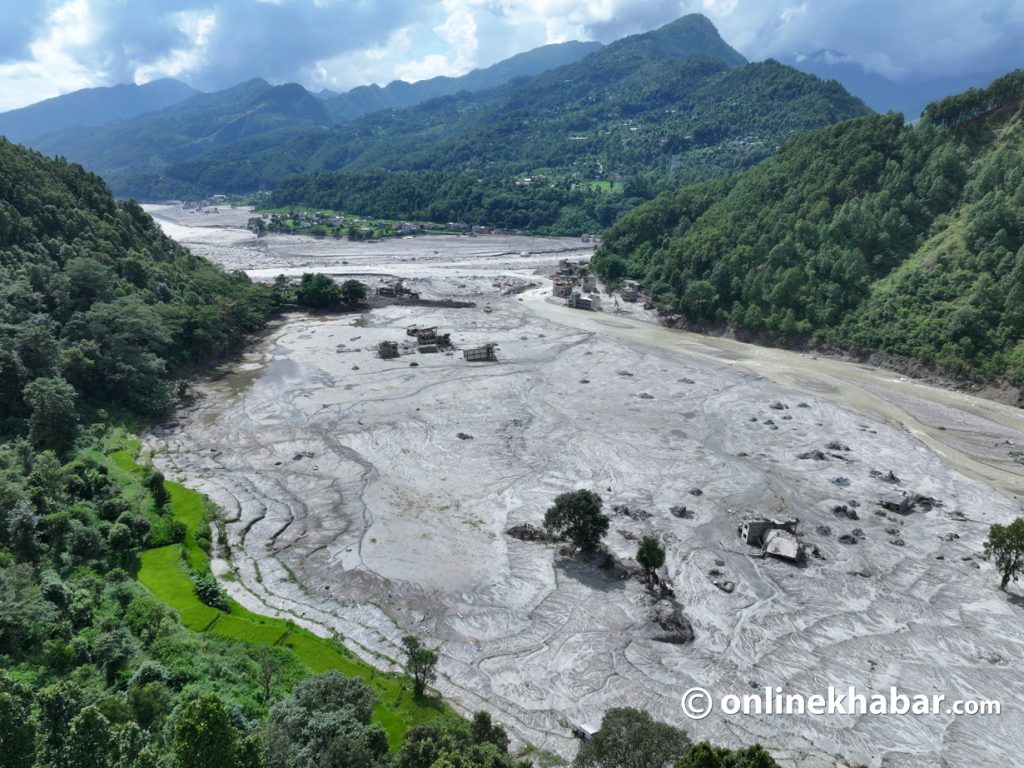
Families of people missing in the Bhotekoshi floods are facing a threefold hardship. They are not only grieving the loss of their loved ones but have also lost their homes, land and businesses. In addition, the bodies of their loved ones have not been recovered.
The legal procedures they must complete have added to their uncertainty. Families who have already performed funeral rites using symbolic bodies made of kusha grass according to religious tradition now face further hardship due to lengthy legal procedures to establish the deaths of their loved ones.
A relative of a person who went missing in the Rasuwa floods recently visited Tarkeshwor Municipality in Kathmandu to obtain a missing-person certificate. However, the municipality could not issue such a certificate.
According to Tarkeshwor Municipality Chief Administrative Officer Dharmaraj Lamsal, under the general legal procedure, a missing-person certificate cannot be issued until 12 years have passed. Some relatives of people missing in the Rasuwa floods are permanent or temporary residents of Tarkeshwor Municipality.
More than 5,000 people, including people from Rasuwa, Nuwakot and other districts as well as foreign nationals, have been reported missing since the floods of August 26. According to the National Disaster Risk Reduction and Management Authority, the bodies of 1,403 people who died in the floods have been recovered. Of these, 105 bodies have been handed over to their families.
More than three weeks have passed since the floods. As the likelihood of finding missing people alive diminishes with each passing day, some families have already performed funeral rites by creating symbolic bodies from kusha grass in accordance with religious traditions.
But does performing funeral rites using a symbolic kusha body mean that a person is legally considered dead? Do families whose loved ones are missing and whose bodies have not been recovered have to wait 12 years to have the deaths legally established?
Missing flood victims do not have to wait 12 years
Section 40 of the National Civil Code, 2017, contains provisions concerning the declaration of death of a missing person.
Under normal circumstances, a person who has been missing without information for 12 consecutive years, or about whom a person who would ordinarily be expected to receive information has received no information for 12 years, is presumed dead unless evidence is found that the person is alive.
However, this provision does not apply equally to all cases of missing persons. The law provides a separate procedure for people who go missing in disasters or accidents.
Subsection 4 of Section 40 provides for a judicial declaration of death when a person has gone missing without information or when there are grounds to believe that the person died as a result of a disaster or accident.
This means families of people missing in the Bhotekoshi floods do not necessarily have to wait 12 years to have their deaths legally established.
What must families do?
According to senior advocate Raju Khadka, a relative or other concerned person can file an application at the district court seeking a judicial declaration of death of a person who went missing in a disaster or accident.
The application must state when, where and under what circumstances the person went missing. It must also include the grounds for believing that the person may have died, along with any available evidence.
After receiving the application, the court may investigate based on evidence confirming the occurrence of the incident, evidence that the person was involved in the incident, eyewitness accounts and other available evidence.
According to Khadka, police records related to the incident, eyewitness accounts, travel records, CCTV footage, phone records and other evidence may be useful.
However, he said what constitutes sufficient evidence depends on the circumstances of each incident and the evidence available.
Rule 60 of the Civil Procedure Rules, 2018, also sets out the procedure for filing an application seeking a judicial declaration of death under subsection 4 of Section 40.
Death registration after court order
Families may perform funeral rites according to religious traditions when a body has not been recovered. However, such rites alone do not result in legal registration of death.
According to senior advocate Khadka, once a court issues a judicial declaration of death, the family can initiate the death registration process at the relevant ward office on the basis of the court order.
Initially, family members must collect available evidence establishing that the person went missing. After filing an application at the district court and obtaining a judicial declaration of death, the death can be registered at the ward office.
Following death registration, legal procedures concerning the deceased person’s property, inheritance and other rights can also be initiated.
What happens after a symbolic kusha funeral?
Families of some people missing in the Rasuwa floods have already performed funeral rites using symbolic bodies made of kusha grass.
Completing religious funeral rites and legally establishing a person’s death are separate matters. Therefore, according to senior advocate Khadka, performing funeral rites using a symbolic kusha body does not by itself result in direct registration of death.
If a body is recovered and identified, the death registration process can be initiated with the necessary evidence. However, when a body has not been recovered, a judicial declaration of death may be required.
What evidence should families collect?
Available evidence is the most important factor when seeking a judicial declaration of death.
The court may examine the grounds indicating that the person may have died and evidence establishing that the person was involved in the incident. Families should therefore preserve all available evidence, including:
- Police records related to the incident
- Eyewitness accounts
- Travel records
- CCTV footage
- Phone records or other communication details
- Other records confirming that the person was at the incident site
According to advocate Khadka, the sufficiency of evidence will be determined based on the circumstances of each case and the evidence available.
What if a person declared dead returns alive?
The law also addresses such an unusual situation. If a person returns alive after a court has issued a judicial declaration of death, the person can apply to have the declaration annulled. The law also allows amendments if there is a change concerning the date of death stated in the judicial declaration.
Once the judicial declaration of death is annulled, the person may reclaim property and other rights to which they are legally entitled. If property has been transferred or other legal transactions have taken place in the meantime, their consequences will be determined under the relevant laws, Khadka said.
Families await government decision
Although a judicial declaration is legally available, local officials and representatives in Rasuwa and Nuwakot say the existing procedure is complicated for families of people who went missing in a disaster involving such a large number of people.
The Rasuwa District Disaster Risk Reduction and Management Committee has already decided to ask the Ministry of Home Affairs to establish an alternative fast-track mechanism for registering missing persons, officially confirming deaths and processing insurance claims.
According to Hemraj Aryal, spokesperson for the Office of the Prime Minister and Council of Ministers, the government is discussing what should be done regarding people missing in the Bhotekoshi floods.
“We are discussing what should be done regarding people missing in the Bhotekoshi floods,” he said.
Meanwhile, for families whose loved ones remain missing and whose bodies have not been recovered, the immediate question remains: when will the state establish an easier process to legally confirm the status of their loved ones?