Kathmandu, September 7
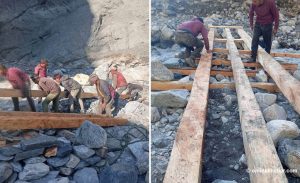
Trade pressure between Nepal and China has shifted to the Korala border point in Mustang after the Rasuwagadhi border crossing suffered extensive damage in floods and the Tatopani border point was temporarily closed from the Chinese side.
According to officials, Korala, which previously handled relatively little commercial activity, is now bearing much of the trade pressure between the two countries and has become the only operational border point currently handling the flow.
After the Bhotekoshi floods devastated the Rasuwagadhi border point, hundreds of cargo containers carrying goods from China were stranded along the route to Nepal. The goods had already been cleared through Chinese customs, creating complications over administrative procedures, payment systems and refunds if the cargo were to be returned to China and imported through another border point.
Against this backdrop, the government directed cargo vehicles originally bound for Nepal through Rasuwagadhi (Timure) to be diverted to the Korala (Nechung) border point in Mustang as an alternative route.
As a result, a large number of cargo vehicles have begun arriving at Korala.
The Mustang Customs Office, which normally clears only a limited number of vehicles, is now facing additional pressure after effectively taking on traffic that would previously have been handled by three customs points.
Despite shortages of infrastructure and personnel, the customs and other government agencies are making emergency arrangements to keep customs clearance operations running.
According to Bidur Chudal, chief customs officer at the Mustang Customs Office, the workload increased sharply due to three consecutive public holidays and the influx of diverted cargo vehicles.
However, with banks and government offices fully reopening from Monday, traders have started submitting customs declarations in greater numbers and the clearance process has picked up pace.
On Sunday alone, 15 containers were cleared. Five were carrying fruits, while the remaining 10 contained ready-made garments and other goods.
Additional customs staff deployed
The Department of Customs has deployed additional personnel to Mustang to deal with the increased workload.
The Mustang Customs Office has a sanctioned strength of 18 employees but had only 12 working before the additional deployment.
The department has now assigned six additional employees, bringing the total to 18. The additional team comprises three officers and three non-gazetted first-class officials.
Chudal said the newly assigned employees were travelling to Mustang after receiving their transfer orders.
According to Mustang customs data, 175 containers have been rerouted towards Korala from the China side. Some have already started entering the customs yard.
The customs office has prioritised vehicles diverted from other border points for clearance.
“Let us think about the infrastructure issues later. For now, we are working around the clock, with the support of traders and container operators, to clear the vehicles that have arrived here and send them onward,” Chudal said.
He acknowledged that the border point continues to face long-term problems, including inadequate infrastructure, the poor condition of national highways and a shortage of bridges.
Quarantine services operating from a tent
While customs clearance has accelerated, plant quarantine services — mandatory for imports of agricultural and forest products — remain severely constrained.
Many of the vehicles diverted from Rasuwa are carrying perishable goods such as fruits, vegetables and herbs. In response, the Plant Quarantine and Pesticide Management Centre has sent a three-member team to Mustang led by senior crop protection officer Prakash Poudel.
However, although Korala has a government-owned quarantine building, officials are currently unable to operate from the facility.
The building had previously not been used for quarantine services because agricultural products were not regularly imported or exported through Korala. Following a decision by the local administration, the building is currently occupied by Nepal Police.
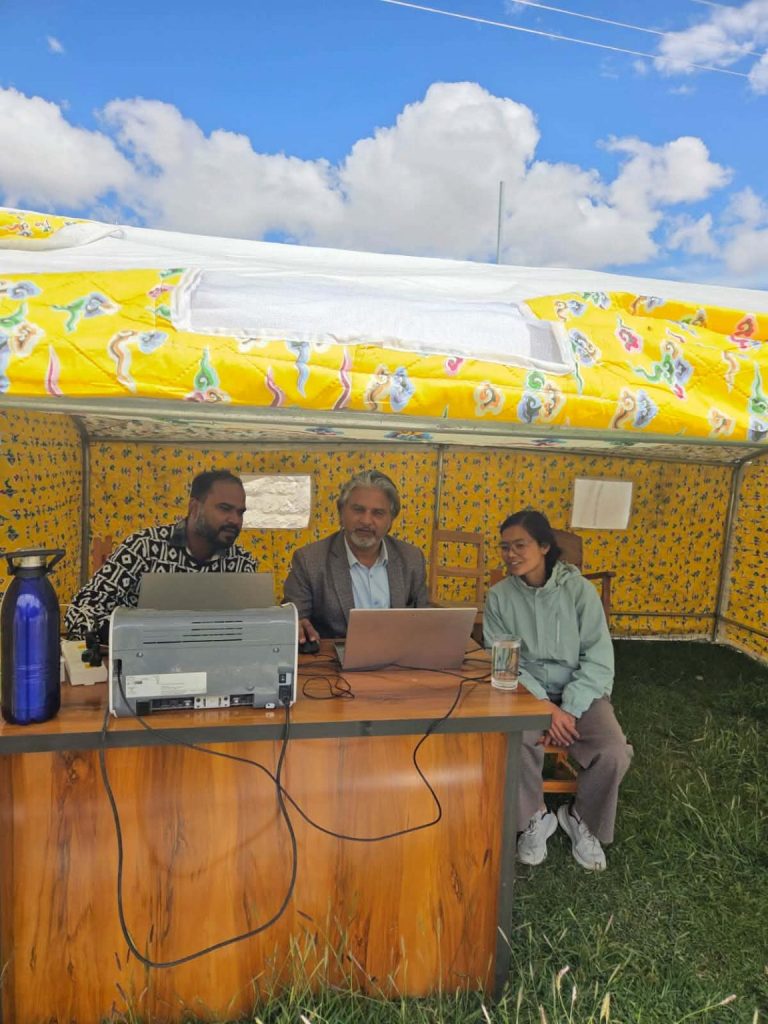
Poudel’s team, which travelled from Kathmandu, has therefore coordinated with Lomanthang Rural Municipality and set up a tent to provide emergency quarantine services.
“We have our own building, but as there was no work there in the past, it was given to the police,” Poudel said. “We are currently providing services from a tent. Because of the wind and cold, it is not possible to operate the chemicals required in the laboratory, so for now we are only checking documents and carrying out administrative work, including issuing release permits.”
According to Poudel, approval has so far been granted to divert 361 consignments from Rasuwa to Korala.
Of these, official requests have been received for around 68 vehicles. Ten vehicles are in the final stages of the diversion process, while four have already entered Nepal.
Government plans to strengthen Korala
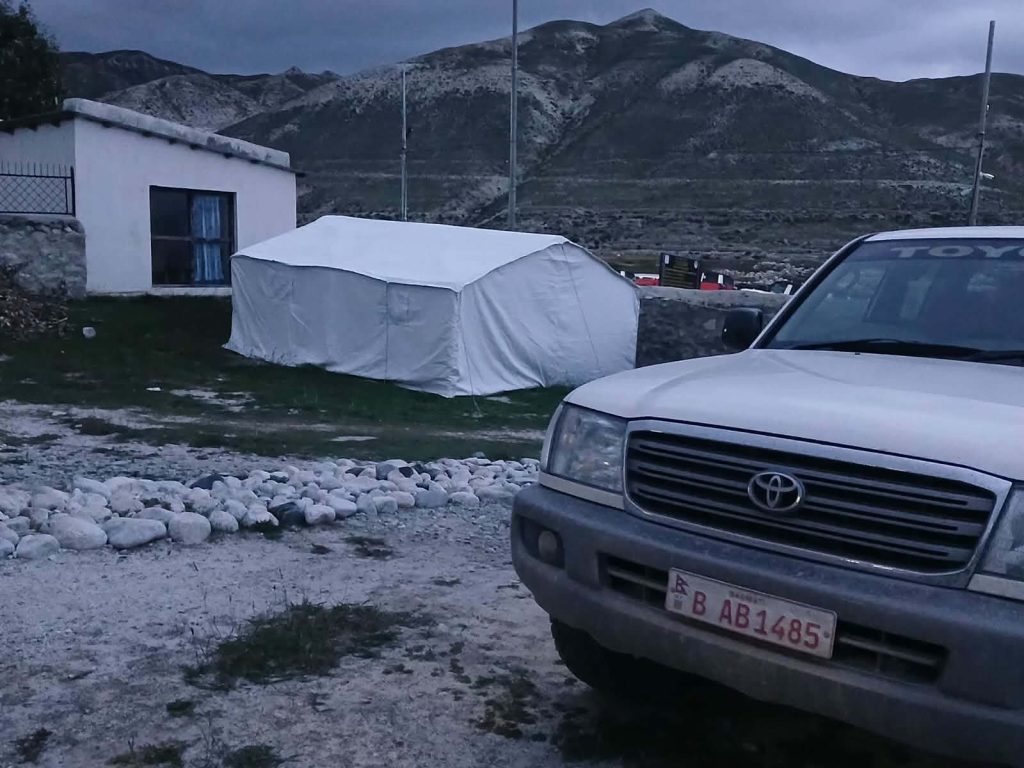
With Korala currently serving as the only operational border point connecting Nepal with China, the government has identified strengthening its infrastructure, resources and human resources as a priority.
The government is working to ensure that the border point is better equipped to handle increased trade, officials said.
The Ministry of Agriculture, Forestry and Environment has also prepared terms of reference (ToR) for a feasibility study aimed at developing a long-term management plan for the border point.
After repeated disruptions caused by natural disasters at the Rasuwagadhi and Tatopani border points, the government is now considering Korala as a more reliable and long-term trade route with China.
However, immediate challenges remain. Authorities must first create conditions for quarantine services to resume from their dedicated building and coordinate with the Chinese side to ensure customs clearance is managed according to international standards.