

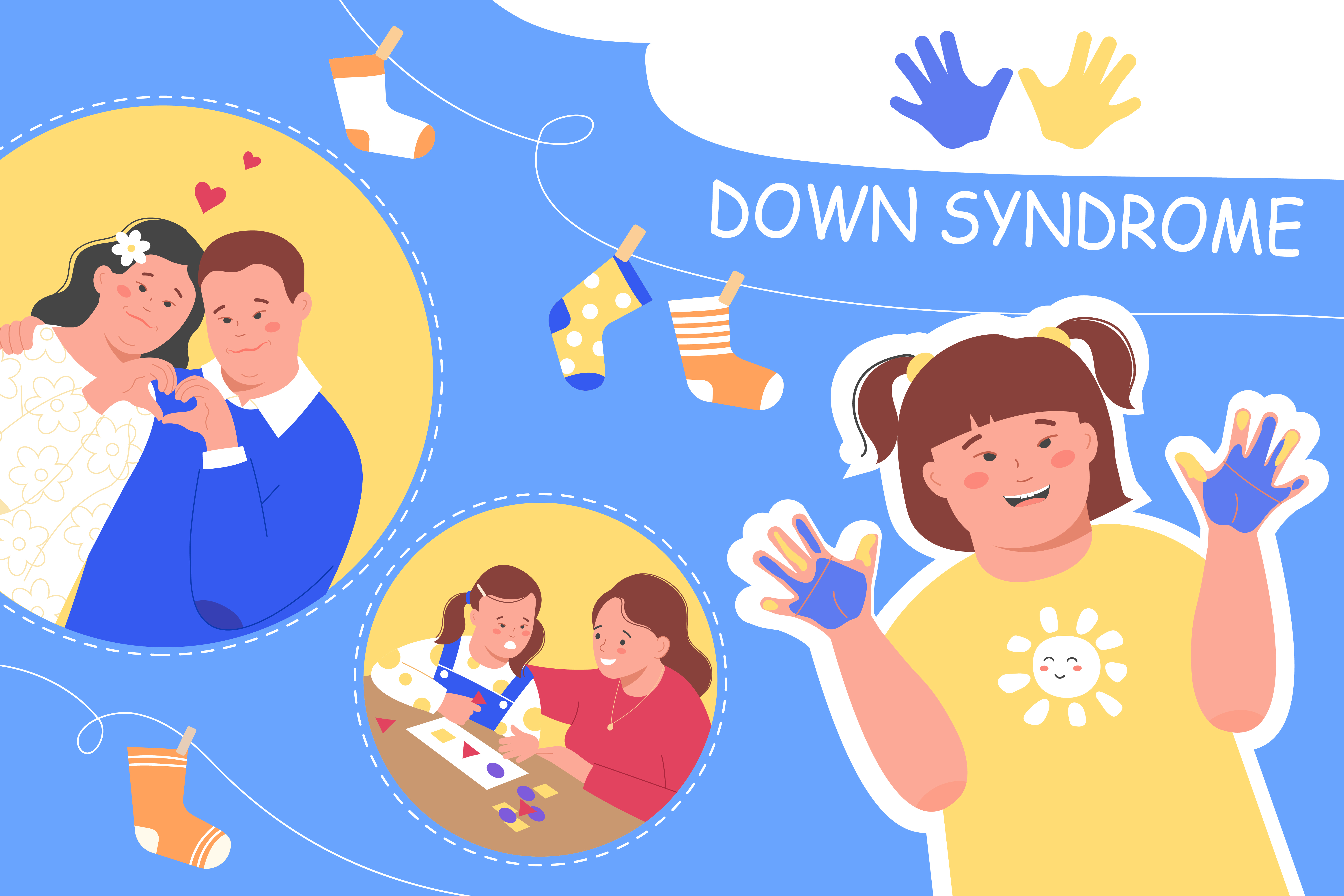
Every year on March 21, the global community observes World Down Syndrome Day (WDSD). The date itself, the 21st day of the 3rd month, is a symbolic nod to the triplication of the 21st chromosome that defines the condition. As we mark this day in 2026, the theme “Together Against Loneliness” resonates with a poignant urgency in the Nepali context.
For the thousands of Nepalis living with Down syndrome (DS), the greatest barrier to a fulfilling life is often not the genetic condition itself, but the social isolation and the “invisible” status imposed by a society that frequently looks away. To move forward, we must look back on our history, understand the medical realities of today, and demand a more inclusive future.
A heritage of care: Lessons from ancient DNA
While modern medicine often treats Down syndrome as a “diagnosis” to be managed, recent breakthroughs in paleogenomics (the study of ancient DNA) suggest that our ancestors may have viewed the condition with far more grace than we do today.
Recent research revealed that between 770 and 550 B.C.E., in a hilltop village called Alto de la Cruz in Iron Age Spain, infants with Down syndrome were not cast aside. Instead, they were buried with “extraordinary care,” laid to rest beneath the floors of elaborately decorated dwellings with bronze rings and Mediterranean shells. Similar cases have been found in Bronze Age Greece and medieval Finland.
These findings suggest that for millennia, prehistoric societies cared for and valued members with disabilities. These children were kept close to the heart of the home, even in death. This historical perspective is a powerful mirror for modern Nepal: it reminds us that the “present” isn’t necessarily more compassionate than the past. If ancient villagers could recognise the inherent dignity of a child with Trisomy 21, surely, we, in 2026, can do the same.
The science of trisomy 21
Named after the London physician John Langdon Down in 1866, Down syndrome is a genetic condition caused by the presence of all or part of an additional copy of chromosome 21. Chromosomes are the “packages” of genes that determine how a baby’s body forms and functions. Normally, humans have 46 chromosomes (23 pairs); those with Down syndrome have 47.
There are three distinct variations of the condition:
- Trisomy 21 (95%): Each cell in the body has three separate copies of chromosome 21.
- Translocation (3%): An extra part or whole chromosome 21 is present, but it is “attached” or translocated to a different chromosome.
- Mosaic Down Syndrome (2%): A “mixture” where some cells have three copies of chromosome 21, while others have the typical two. These individuals may have fewer physical features of the condition.
While the physical features, such as almond-shaped eyes that slant up, a flattened nasal bridge (naak ko dandi thepcho bhayeko), and soft, loose muscles (thalthale), are similar across all types, diagnostic profiling is essential for proper medical management.
The Nepali reality: Data, screening, and disparities
In Nepal, we face a significant “data vacuum.” While global incidence is approximately 1 in every 700 to 1,100 live births, exact records in Nepal are nonexistent. Current statistical estimates place Nepal’s prevalence rate at roughly 10.64 per 100,000 residents (within a range of 7.88 to 14.14).
However, these low numbers are likely deceptive. They reflect a lack of formal registration and the fact that many cases in rural provinces remain undiagnosed. As of late 2023, only a few hundred cases were registered with the Down Syndrome Society Nepal (DSSN). Without a direct national count, these individuals remain an “invisible population,” left out of government resource allocation.
The diagnostic gap is equally stark. In the United States, the American College of Obstetricians and Gynaecologists (ACOG) has recommended screening for all pregnant women since 2007. In Nepal, however, prenatal diagnosis is often a luxury. It is available primarily in select private institutions and government hospitals like the Patan Academy of Health Sciences, and usually only for “high-risk” women over age 35.
We must bridge this gap by expanding access to:
- Non-Invasive Prenatal Testing (NIPT): Highly sensitive tests that extract cell-free fetal DNA from maternal blood after 10 weeks of gestation.
- Diagnostic Procedures: Such as Amniocentesis or Chorionic Villi Sampling (CVS), which provide a definitive diagnosis but carry a 1% risk of miscarriage.
- Postnatal Karyotyping: A simple blood test to confirm the condition after birth.
The silent epidemic of loneliness and stigma
Medical care is only half the battle. In Nepal, the “knowledge and attitude” of the public remains the greatest hurdle. Bigotry often arises from the ignorant belief that individuals with Down syndrome are “incapable of learning” or are a “burden” to the family.
The seriousness of this stigma was starkly illustrated by a case where parents abandoned their newborn with Down syndrome at a hospital in Nepal. Such prejudice ignores the high emotional and social awareness that many with DS possess. While they may have the cognitive level of an 8 or 9-year-old in some areas, their capacity for empathy, social reasoning, and community connection is often profound.
Loneliness is not just a sad feeling; it is a human rights issue. When we deny a child a seat in a mainstream classroom (segregating them into “resource classes”) or deem an adult “unemployable,” we are effectively legislating their isolation.
From sympathy to opportunity: A call to action
The antidote to this loneliness is real inclusion. We must shift our cultural mindset from the “charity model” where we offer pity to a “rights-based model” where we offer opportunity.
- For Employers: Recognise that diversity includes neurodiversity. Organisations like DSSN have proven that with proper training, adults with Down syndrome can excel as baristas, chefs, and office clerks. They don’t need sympathy; they need a paycheck and the dignity of work.
- For Schools: Move beyond “resource classes.” True inclusion means students learning together, fostering friendships that dismantle stigma before it can take root.
- For the Government: We must enforce Article 27 of the UN Convention on the Rights of Persons with Disabilities (UNCRPD), which mandates the right to work on an equal basis with others. We also need a national registry to move beyond “estimated rates” to actual, targeted support for every province.
- For Healthcare Providers: We need “ongoing, appropriate medical care” that addresses the common secondary health conditions—congenital heart defects (affecting 50-65%), hearing loss (75%), and thyroid dysfunction. Life expectancy has risen from 10 years in 1960 to nearly 60 years today in some parts of the world; Nepal must ensure its citizens live long, healthy lives.
- For Every Citizen: Combatting loneliness starts with a simple gesture. Inclusion means being valued, not just being “present.” It means inviting a neighbour with Down syndrome to a festival or challenging the derogatory language used in local tea shops.
A society for all
As we wear our “lots of socks”—the bright, mismatched symbols of WDSD—let us remember that they represent the beauty of human diversity. A society that excludes its most vulnerable members is a society that is itself impoverished.
If ancient villagers 2,600 years ago could treat children with Down syndrome with such reverence that they kept them close even in death, surely modern Nepal can find a place for them in our schools, our workplaces, and our future. Let us end the stereotypes and stand together against loneliness, ensuring that every Nepali, regardless of their chromosomal count, feels that they truly belong.