Kathmandu, September 13
Residents of Tinkar village in Darchula have collected Rs 134,211 for survivors of the Rasuwa floods, bringing together Tinkaris from Darchula, Kathmandu, India and abroad in a rare collective initiative organised in the name of their village.
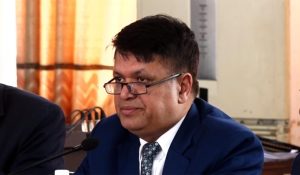
At a meeting with Finance Minister Swarnim Wagle on Friday evening, residents handed over the donation to the Prime Minister’s Disaster Relief Fund. The contribution, residents said, was meant to stand with flood victims, while putting Tinkari on the government’s radar and bringing their overlooked community into Nepal’s civic space.
The initiative began on August 29, when Kamna Tinkari, from Byas Rural Municipality, Darchula, posted a proposal in the WhatsApp group used by Tinkari residents. What initially proved difficult was gradually brought together by Tinkaris living in Kathmandu, Darchula, abroad and even daughters of Tinkar married in India.
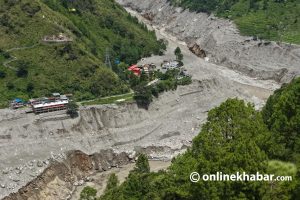
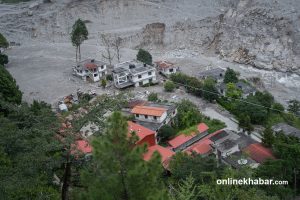
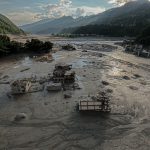
The collection came as Tinkaris were watching the devastation in Rasuwa and thinking about their own vulnerability to floods.
Kamna, who started the campaign, had rarely seen Tinkaris come forward collectively on this large scale for a cause beyond their own community. “The experience made me think about how Tinkar is seen in Nepal, so often through adversity and remoteness, with even our distinctive culture sometimes becoming another fixed lens. These are realities, but I don’t want them to become our whole identity”.
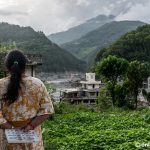
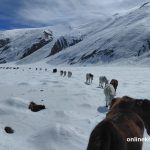
Tinkar is in Ward no. 1 of Byas Rural Municipality in Darchula, Sudurpaschim Province. The village has roughly 70 households and is home to the Rung community. It lies in the far northwest of Nepal, at the tri-junction of Nepal, India and China.
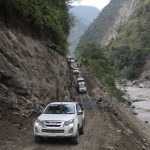
There is no road or foot trail connecting Tinkar with the district headquarters Khalanga on the Nepali side. People travelling between the settlements have to pass through the Indian territory. Tinkar is in fact the last village in the far north west Nepal.
The geographical distance has also shaped how Tinkaris are represented in the civic space and media.
According to Ranjana Tinkari, 28, one of the reasons she participated in this donation was to draw attention to Tinkar, a village that is largely unknown outside the community. She said Tinkaris often have to explain that their surname, ethnicity and language are part of Nepal too. The initiative, she said, was also a way to create a digital footprint of Tinkar’s existence and its people’s initiatives, rather than having the village appear in public discourses only during debates over border issues of Kalapani-Lipulekh.
For many Tinkaris, the decision to contribute was also shaped by their own experience with disasters.
According to Krishtal Budhathoki, 20 years old and from Tinkar, they have repeatedly suffered damaging floods every year but received little government attention.
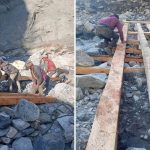
Every time after the floods, the little remaining roads get damaged, and with no attention from the government, residents had to rebuild themselves with one person from each household helping, said another 19-year-old resident, Juni Tinkari.
“Through this collective work, we hope the government recognises our vulnerability to disasters, lived experiences and also possibilities of Tinkar,” added Juni.
For Tinkaris, it is also a place whose traditions, Rung culture, natural temples and gumbas, unique natural landscape, tourism and trekking potential remain largely unseen by the government. And so, the importance of the donation goes beyond the Rs 134, 211 collected.
Tinkaris want the community to be seen beyond narratives of remoteness and victimhood.
“Yes, we are far, with limited resources and facilities, and we are in adversity but we are also much more than that,” Krishtal said, pointing to Tinkar’s agriculture, culture, and natural heritage. “Limiting a community to victimhood also takes away its voice and agency.”
For Tinkaris, the initiative is also a message to the state.
“Just because we are geographically far from Kathmandu, it doesn’t mean we have to be far or sidelined from national civic space too,” Kamna said. “It is our way of saying- though we are in one of the farthest places, we as a community have come forward to our fellow Nepalis, so the government too should reach out to us despite the distance.”
Kamna hopes the initiative will encourage attention to Tinkar, its basic facilities, lived experiences there and to its potential for tourism and trekking.