
Kathmandu, November 16
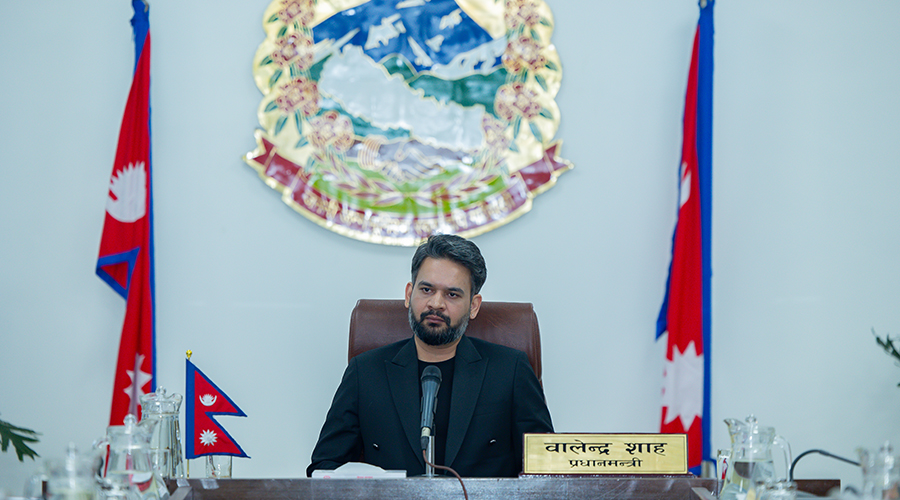
As Prime Minister Balendra Shah prepares for his upcoming visit to India, former diplomats and border experts have urged him to make Nepal’s long-standing border disputes a priority in talks with the Indian leadership.
They say the visit offers an opportunity to revive diplomatic dialogue that has remained stalled for years, particularly over Kalapani, Lipulekh, Limpiyadhura and Susta.
The dispute intensified in November 2019, when India’s Survey of India published the seventh edition of its political map following the separation of Ladakh from Jammu and Kashmir. Nepal objected after the map included Kalapani, Lipulekh and Limpiyadhura within Indian territory.
Nepal sent three diplomatic notes through the Ministry of Foreign Affairs, but India did not respond.
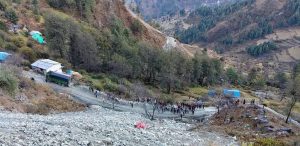
Tensions escalated further in May 2020, when Indian Defence Minister Rajnath Singh inaugurated a road connecting Pithoragarh in Uttarakhand to Lipulekh via Nepal’s Gunji area. The road was intended to facilitate the Kailash Mansarovar pilgrimage in Tibet.
Nepal protested the move and called for dialogue to resolve the border dispute. However, India did not respond positively to its efforts. In May 2020, Nepal’s Parliament endorsed a revised political map incorporating Limpiyadhura, Lipulekh and Kalapani. The move further strained relations between the two countries.
A diplomatic mechanism that never became functional

The current border dispute could perhaps have been contained had an agreement reached during Indian Prime Minister Narendra Modi’s first visit to Nepal in August 2014 been implemented.
During the visit, then Prime Minister Sushil Koirala and Modi agreed to establish a mechanism led by the foreign secretaries of both countries to address outstanding border issues, particularly in Kalapani and Susta.
A joint statement issued on August 4, 2014, said the two prime ministers had welcomed the decision of the Joint Commission to direct the foreign secretaries to work on unresolved border issues, including Kalapani and Susta, with technical support from the Boundary Working Group (BWG) as necessary.
However, the foreign secretary-level mechanism never held a meeting.
Former Nepali ambassador to India Nilamber Acharya believes the border dispute would not have reached its current level had the mechanism been made functional.
“If there had been continuous dialogue, the border dispute between the two neighbours might not have reached this level,” Acharya said. “Had the secretary-level mechanism functioned, disagreements from both sides could have been discussed in those meetings, potentially paving the way for a solution.”
Acharya, who was also a member of the Eminent Persons’ Group (EPG) formed to review Nepal-India relations and recommend ways to improve them, says Shah should clearly communicate Nepal’s position on the border issue during his visit.
“Some problems may not be resolved overnight, but the border issue should not be left pending. The prime minister must clearly say that dialogue needs to begin,” he said.
Two different kinds of border disputes

Experts say Nepal must first clearly identify the nature of its border disputes before deciding which issues to prioritise during the visit.
Nepal and India share a border of approximately 1,880 kilometres, with disputes broadly falling into two categories.
The first concerns territorial claims and alleged encroachment. The main disputed areas are Kalapani and Susta. Both Nepal and India have formally acknowledged that disputes exist in these locations.
Under the 1816 Treaty of Sugauli, the territory east of the Kali (Mahakali) River belongs to Nepal. Nepal maintains that the river originates at Limpiyadhura and therefore claims the Limpiyadhura-Kalapani-Lipulekh area as its territory.
India, however, does not accept the river originating at Limpiyadhura as the Mahakali. Its official maps identify different streams as the Kali River. Indian security forces are also stationed in Kalapani.
The second category involves cross-border encroachment and disputes over the no-man’s land, or the area between the two countries’ border lines. These include damaged or missing boundary pillars and encroachment into the no-man’s land.
Experts say such disputes can largely be addressed through meetings of the Nepal-India Joint Working Group on Border Management, led by officials at the joint secretary level.
Former ambassador Acharya cautions against mixing the two categories.
“Territorial encroachment and disputes over the no-man’s land are different issues. The first thing is to be clear about what each dispute involves,” he said.
Balen’s parliamentary remarks sparked controversy
Prime Minister Shah’s remarks in the House of Representatives on May 31 also brought the border issue into political controversy.
Responding to a question from CPN-UML lawmaker Padma Aryal about the construction of a trade route by India and China through a bilateral understanding, Shah said he had recently learned after becoming prime minister that Nepal had not only faced encroachment by India but had also encroached on considerable Indian territory.
His remarks prompted opposition parties to obstruct parliamentary proceedings.
Foreign Minister Shishir Khanal later clarified that Shah was referring to cross-border encroachment. Parliament resumed after the clarification, although the opposition’s demand to remove the prime minister’s remarks from the parliamentary record was not met.
Shah subsequently attempted to clarify his position at the Rastriya Swatantra Party’s Chitwan convention, saying Nepal had evidence to support its claims over Kalapani and Lipulekh, without referring directly to his earlier parliamentary remarks.
In 2023, when he was mayor of Kathmandu Metropolitan City, Shah had also displayed a map of Greater Nepal in his office amid controversy over the ‘Akhand Bharat’ map displayed in India’s new Parliament building.
Experts call for evidence-based preparation
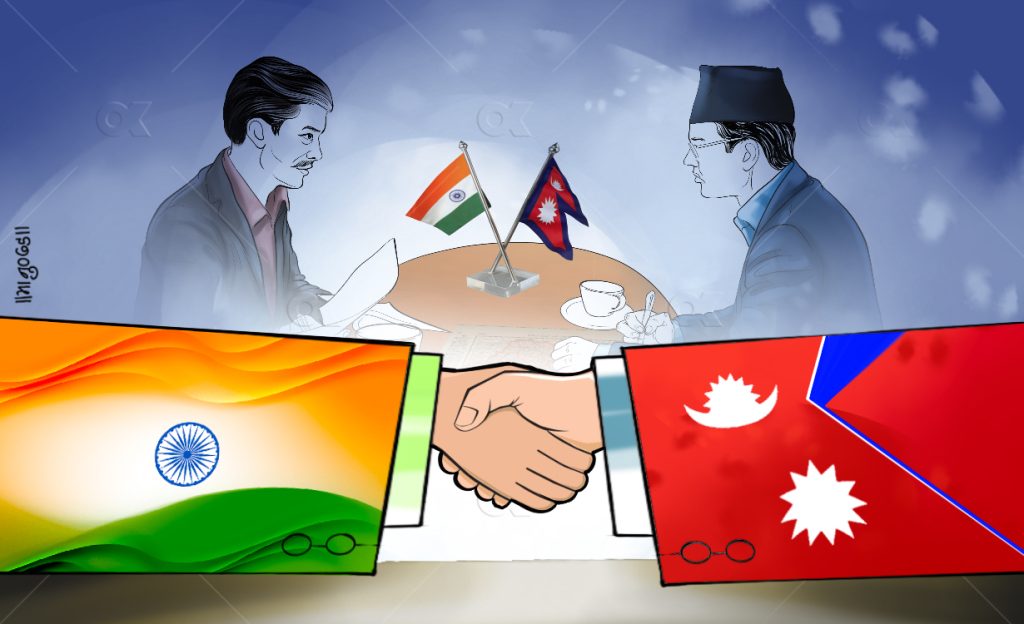
Former ambassador Dinesh Bhattarai says the government does not appear to have undertaken adequate preparations for Shah’s proposed visit in the first week of Mangsir.
“Given the number of issues that need to be discussed with India, I have not seen evidence of comprehensive consultations ahead of the visit,” Bhattarai said.
He added that the prime minister must first have a clear understanding of the border dispute and prepare to present Nepal’s position at the highest political level with supporting evidence.
One unresolved issue is the signing of 182 strip maps jointly prepared by Nepal and India. The maps cover almost the entire border, but their formal endorsement has remained pending because of the disputes over Kalapani and Susta.
Border experts say formalising the strip maps could resolve around 98 per cent of the boundary-related issues between the two countries.
Bangladesh offers a lesson in resolving border disputes
Experts say resolving the Nepal-India border dispute is not impossible, pointing to the example of India and Bangladesh.
The two countries implemented their Land Boundary Agreement in 2015, resolving decades of disputes over enclaves and territorial boundaries. Under the agreement, India received 7,110 acres of land, while Bangladesh received 17,160 acres.
The settlement followed decades of diplomatic efforts. India had not ratified the 1974 land boundary agreement signed by Indian Prime Minister Indira Gandhi and Bangladeshi leader Sheikh Mujibur Rahman.
Bangladesh continued pursuing the issue, and a settlement was eventually reached more than four decades later, during the premiership of Mujibur Rahman’s daughter, Sheikh Hasina.
Experts say Nepal should draw lessons from Bangladesh’s sustained diplomatic efforts rather than allowing its border disputes to remain unresolved because of India’s reluctance.
Nepal and China settled their border dispute through dialogue
Nepal’s experience with China also demonstrates how sustained high-level engagement can resolve sensitive territorial disagreements.
The two countries established diplomatic relations in 1955 and settled their border dispute within a few years. Prime Minister BP Koirala held five rounds of discussions with Chinese Premier Zhou Enlai before Nepal and China signed their boundary treaty on October 5, 1961.
The agreement followed the resolution of a dispute over the ownership of Mount Everest.
Bhattarai says Koirala’s preparation was instrumental in reaching the agreement.
“BP Koirala used to explain the issues at the negotiating table with the help of maps. Prime Minister Balen, who has received such a strong mandate, should also prepare himself to present Nepal’s position with similar clarity,” he said.
However, the tri-junction where the borders of Nepal, India and China meet remains undetermined. Nepal and China could not establish the point in the absence of India, and the unresolved issue has repeatedly resurfaced in disputes over Lipulekh.
Tri-junction must be a priority
The issue gained renewed attention in April this year after India and China agreed to reopen the Kailash Mansarovar pilgrimage route through Lipulekh, which Nepal claims as its territory.
India maintains that it has been using the route for the pilgrimage to Mount Kailash in Tibet since 1954. However, when India and China signed the Sino-Indian Agreement that year, Nepal had not yet established diplomatic relations with China.
The two neighbours had also decided to use Lipulekh without consulting Nepal following the 2015 earthquake. The Sushil Koirala-led government at the time sent diplomatic notes to both countries protesting the decision.
Border expert Buddhi Narayan Shrestha says Shah should give priority to establishing the tri-junction during his visit to New Delhi.
“The issue of establishing the tri-junction, which could not be determined in India’s absence at the time, must be given top priority by Prime Minister Balendra,” Shrestha said.
Mahesh Bhatt, a member of the ruling Rastriya Swatantra Party’s Department of International Relations and Diplomacy, says preparations for the visit are progressing.
“The foreign minister, who also heads the party’s international department, has just returned after participating in COP. Although the preparations have not taken a concrete public shape, internal work is progressing rapidly,” Bhatt said.
Experts say that clear priorities, adequate preparation and sustained diplomatic engagement will be essential if Shah’s visit is to make progress on Nepal’s long-standing border concerns.