Kathmandu, September 15
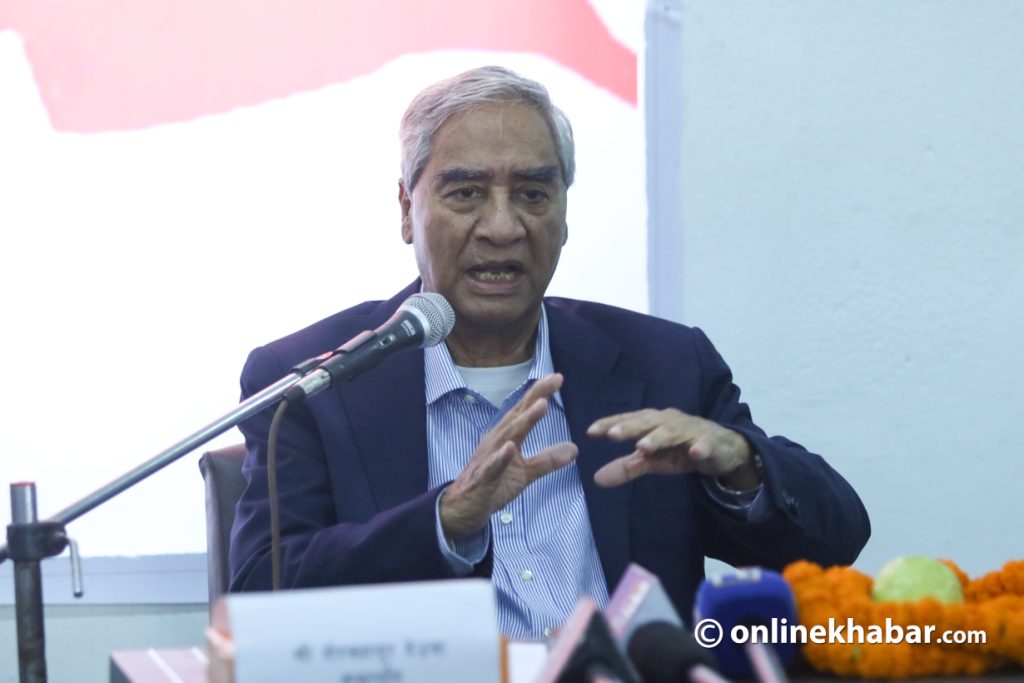
Former Nepali Congress president Sher Bahadur Deuba has described the general convention being pursued by the party’s establishment faction as illegal, warning that he will not remain a silent spectator if the process moves ahead.
In an appeal issued on Tuesday, Deuba urged party leaders and cadres not to participate in the convention, calling the move against the interests of the Nepali Congress.
“I cannot remain a silent spectator when actions are taken to weaken the Nepali Congress,” Deuba said in his appeal.
Expressing serious concern over the latest dispute and differences within the party, Deuba accused the group advocating the general convention of attempting to move ahead unilaterally in violation of the party’s procedures, statute, established practices and decisions of the Central Working Committee.
He argued that proceeding with the convention while its legality remains under consideration at the Supreme Court would go against established procedures, the party statute and legal principles.
Deuba also pointed to the Supreme Court’s decision to grant leave for a review petition, saying it demonstrates that serious constitutional and legal questions remain surrounding the proposed convention.
He accused the Gagan Thapa-led faction of attempting to move forward while ignoring experienced party leaders and a majority of party members.
Such a tendency, he warned, would not strengthen the Nepali Congress but instead weaken the party.
Sher Bahadur Deuba also said party leaders and the public had yet to receive a convincing answer as to why a special convention was necessary in the first place.
The former party president clarified that he had no personal desire for any party position or responsibility.
However, he said he would continue to serve if the party or the state felt that his experience was needed.
Deuba argued that, as the duly elected president of the 14th General Convention, he has a legal, political and moral responsibility to complete the 15th General Convention and hand over leadership.
He called for resolving the dispute through consensus and cooperation, while signalling that he would oppose any attempt to proceed with the proposed convention unilaterally.