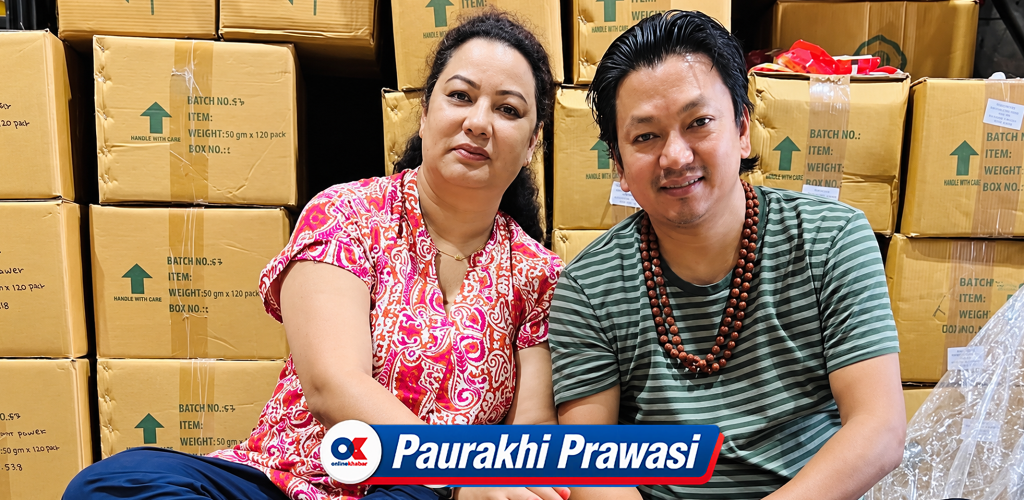
When Bhushan Kakshapati first arrived in Australia around 16 years ago, he was looking for an opportunity. Today, from a warehouse and office in Sydney, he and his wife, Celina, run Sagoon Group, a business that has helped build a growing market for Nepali products across Australia.
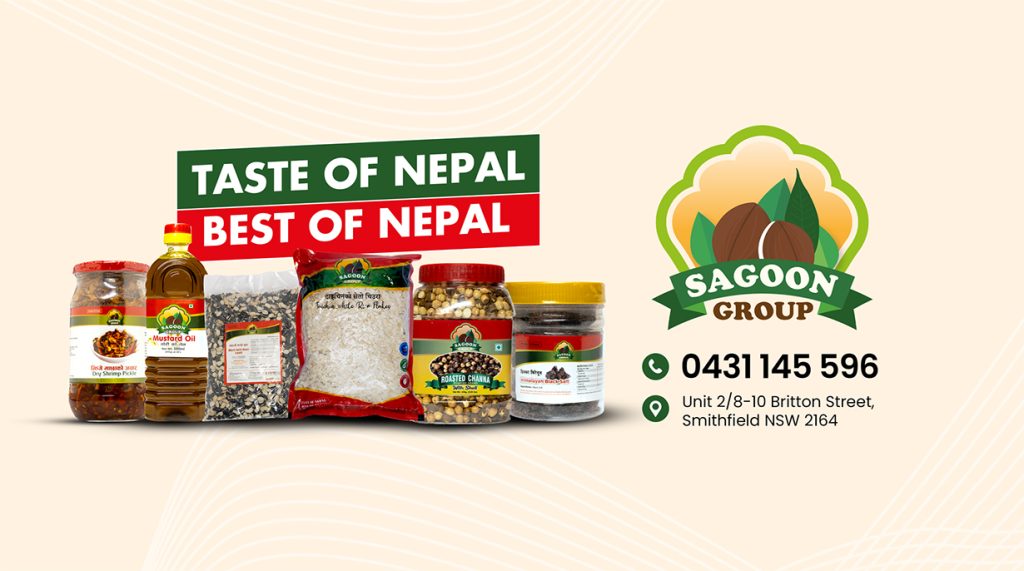
Their company imports more than 200 types of Nepali products and distributes them through more than 250 outlets across the country.
But Sagoon is about more than selling food and consumer goods.
From pickles and noodles to beer and furandana, and from the utensils used during Dashain and Tihar to Nepali flags and other cultural items, the Kakshapatis have built a business around something larger than commerce: keeping Nepal connected to its diaspora.
For a growing Nepali community in Australia, Sagoon has become a way to find familiar tastes, traditions and objects from home.
And for the couple, it is also a way of introducing younger generations to a culture they fear could otherwise become distant.
Bhushan was born in Kathmandu. Celina was born in Kalimpong, India. Their relationship began almost by coincidence. Celina had travelled from Darjeeling to Kathmandu to stay with relatives. Bhushan happened to be there as well. Their families knew each other, and the meeting eventually developed into a relationship and later marriage.
Bhushan completed his schooling at Anand Kuti Vidyapeeth before finishing Grade 12 at United Academy. He then earned a bachelor’s degree in business from Everest College.
Celina completed Grade 12 in Kalimpong and later pursued her bachelor’s degree in Australia.
Both initially arrived in Australia as students. Today, the couple has built a business together, becoming an example of what can happen when two people combine their efforts and ambitions.
From car washes to a business of their own
Bhushan’s working life in Australia began far from the business he runs today. He worked at car washes, cut grass and eventually worked in restaurants.
Although he came from a business family in Nepal, starting out in Australia was difficult. After 2011, however, he began focusing on importing products from Nepal and selling and distributing them in Australia. The idea was simple: products that were familiar in Nepali homes could also find a market among Nepalis living abroad.
“We saw the demand in the market,” Bhushan recalls. “When we put products found in Nepali homes on sale here, it is not only about business. It also brings the country’s identity.”
The business initially began with friends before gradually developing into a separate, institutional operation.
For Celina, the appeal went beyond nostalgia.
“There are many products here that are extremely popular even though some younger people living in Nepal are beginning to forget them,” she says. “These products help preserve our culture and connect us with our identity.”
Today, Sagoon’s range includes traditional products such as kurkure nanglo, spices, pickles and chillies, as well as everyday food products and healthier options such as titaura, tofu and salad products.
The products are increasingly finding customers not only among Nepalis but also within Australia’s wider South Asian community.
Getting Nepali products through Australia’s strict borders
Building a market for Nepali products in Australia has not been easy.
One of the biggest challenges is Australia’s strict quarantine and biosecurity system.
Direct shipments from Nepal are limited, increasing the business’s dependence on routes through India.
Every shipment must meet stringent biosecurity requirements. Once a consignment reaches a designated location, government inspectors inspect it, and distribution can begin only after it has been certified.
Bhushan sees the strict regulations as a lesson rather than simply an obstacle.
“This strictness itself is a lesson,” he says. “If Nepal adopts strict testing before production, packaging, labelling and traceability at home, it will be easier to enter high-standard markets.”
Sagoon operates a warehouse-to-retail model from Sydney, managing demand forecasting, stock and transportation through cold and dry supply chains.
After strengthening its order-management system, the company expanded its partnerships with retail stores across Australia.
It has also sought to connect directly with consumers through Nepal-related cultural fairs, exhibitions and tasting events.
Building for quality, not just quantity
As the business has grown, so has the couple’s focus on quality and regulation.
Products exported to Australia need the required phytosanitary and food-safety documentation, appropriate labelling, allergen information and details such as “use-by” and “best-before” dates.
The couple say their experience has shown that preparing these requirements in Nepal before shipment increases the likelihood of consignments passing inspection.
Celina believes Nepal can make exports easier by creating a more integrated system.
“If the Nepal government and stakeholders could bring pre-export certification, grading centres, packing houses and traceability systems into one framework, export costs would fall and buyer confidence would increase,” she says.
A showroom and a bigger digital presence
The Kakshapatis are not stopping with their existing network. Their team plans to open a new experience centre, or showroom, in Sydney next year.
They also plan to strengthen their e-commerce capabilities, introduce real-time tracking and click-and-collect services, and add regional distribution partners.
The goal is to establish an omnichannel model and give Nepali products a more permanent place in Australia’s mainstream retail space.
Keeping culture alive far from home
Food is only part of what Sagoon brings to Australia.
The company has also expanded into products used during Nepali festivals and religious traditions.
Dashain, Tihar, Chhath, Nepal Sambat and Lhosar are among the festivals for which Sagoon supplies items to Nepali households across Australia.
The couple say the motivation is partly cultural.
“We believe Nepali culture should not disappear in the diaspora simply because people cannot find the materials needed for religious and cultural practices,” they say.
They believe this also helps second-generation Nepalis—those born and raised in Australia—learn about Nepali art, culture, festivals, traditions and religious practices.
Sagoon has therefore become not only a retail business but also a bridge between generations.
Two people, one journey
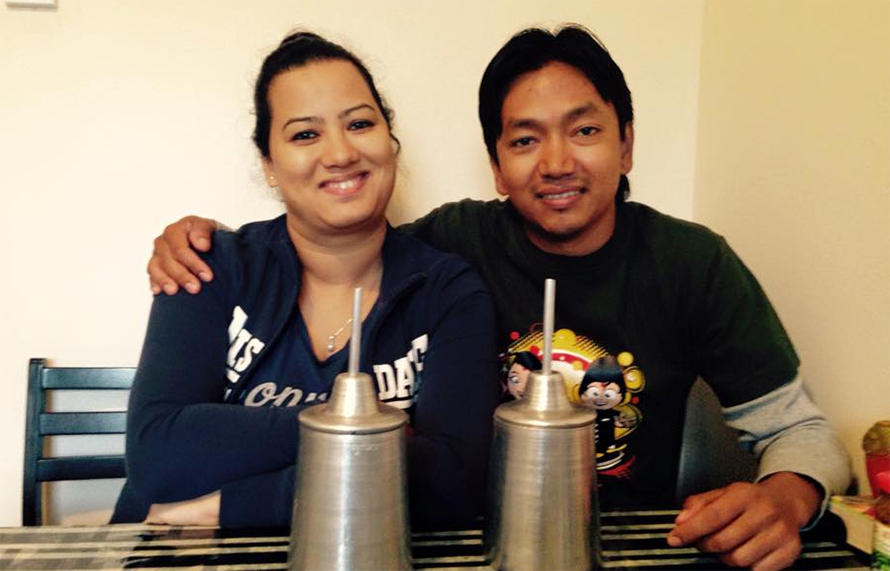
Bhushan and Celina describe themselves as two wheels of the same chariot.
If both wheels are strong, they say, the chariot can keep moving.
Their life in Australia has involved balancing business with raising two children while also supporting dozens of Nepali employees and participating in community events organised by the Nepali community.
Sagoon regularly supports and participates in Nepali community programmes across Australia.
“Our relationship and support are particularly dedicated to the Nepali community,” Bhushan says. “Their love and support have helped us move forward, so we feel that we should also support their programmes. We consider it our responsibility.”
A business built around a connection to Nepal
The Kakshapatis’ story is rooted in a mixture of struggle, practicality and a willingness to take risks.
Bhushan’s family business background gave him the confidence to take risks, but his Australian journey began with the same ordinary jobs taken up by many migrants.
“Starting a business and knowing where it will take you are two different things,” Bhushan says. “But the value of being connected to our culture is what motivates us.”
When asked whether they plan to return to Nepal, their answer is straightforward.
“For now, Australia is the place from where we can connect with Nepal and contribute the most,” they say. “But the connection and contribution continue to flow in both directions.”
For the Kakshapatis, Sagoon has become more than a company selling Nepali goods.
It has created a commercial market for Nepali products in Australia while carrying pieces of Nepal’s traditions, festivals and everyday life into homes thousands of kilometres away.
And in a market as tightly regulated as Australia’s, its growth also points to a larger opportunity for Nepal: the possibility of exporting more products to the world if quality, packaging, certification and traceability systems are strengthened at home.
For now, the Kakshapatis are continuing to build that bridge—from Nepal’s producers to Australia’s shelves, and from one generation of Nepalis to the next.