Kathmandu, October 6
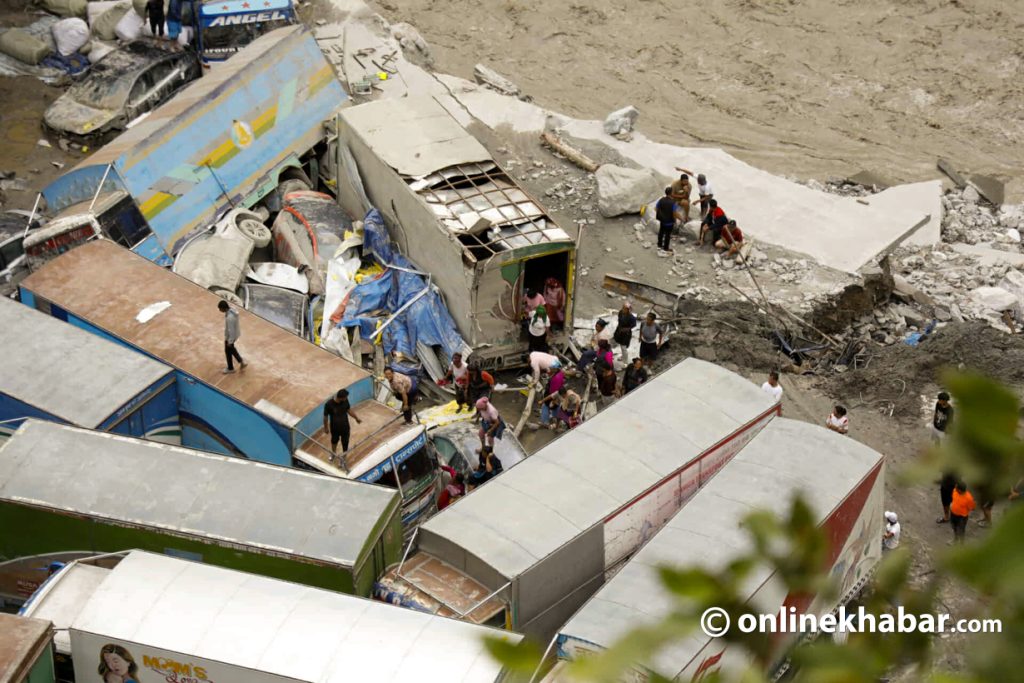
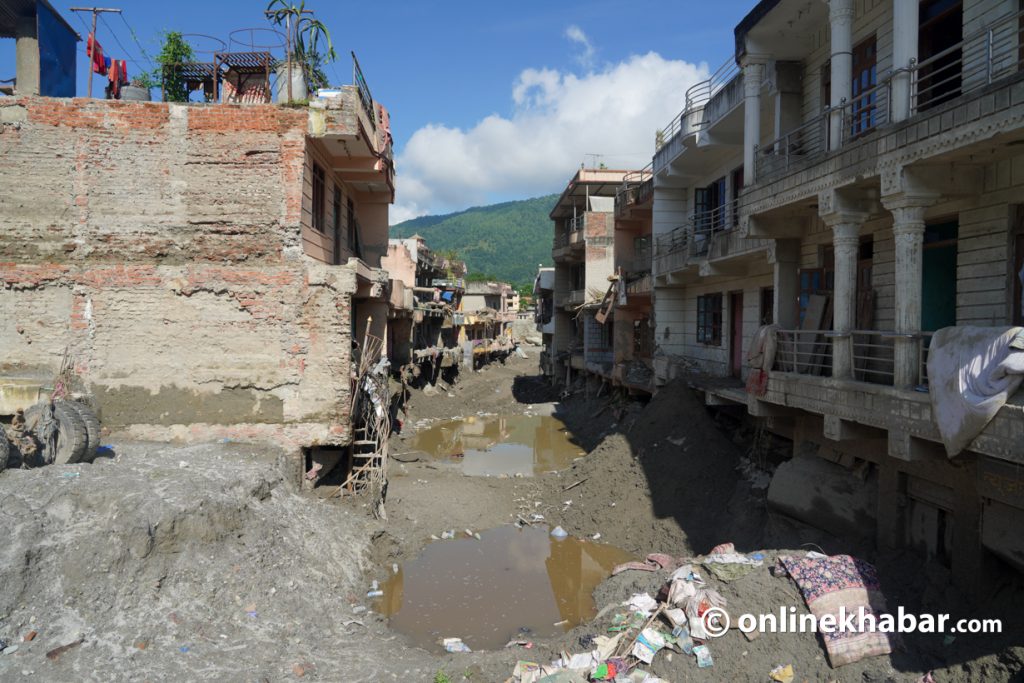
The World Bank has projected that Nepal’s economic growth will slow in the current fiscal year due to the Rasuwa floods on August 26. It has estimated that disruptions in the industrial and services sectors caused by the floods will bring economic growth down to 3.7 per cent.
According to the World Bank’s latest Nepal Development Update, economic activity is expected to receive a boost once reconstruction and rehabilitation activities begin. The bank has projected economic growth to rise to 5.2 per cent in fiscal year 2027/28.
The Nepal Development Update, titled “Building Back Differently for the Future”, states that Nepal’s economic growth and industrial sector are expected to be significantly affected by the widespread damage caused by the floods.
Extensive damage to hydropower, solar energy, electricity transmission and transport infrastructure will directly affect power generation, manufacturing activities and the movement of goods, the report says.
The services sector is also expected to be affected by disruptions to trade, transport, tourism and financial activities. Although damage to the agriculture sector is expected to have a limited impact on overall production, it could have a significant effect on the livelihoods of people in affected areas.
“The Rasuwa floods have caused significant human and economic losses. They also provide Nepal with an opportunity to rethink its infrastructure, roads, communications, energy, water supply and sanitation, health and education services,” said David Sislen, World Bank Division Director for Maldives, Nepal and Sri Lanka.
He said resilience and alternative arrangements should be given greater priority in infrastructure planning and investment, particularly in the context of climate change and changing risks. He added that the World Bank was ready to support the Nepal government in investing in systems and implementing appropriate policies to put Nepal on a more resilient and sustainable development path.
As Nepal moves from rescue and relief towards reconstruction, the report recommends that the recovery process should go beyond restoring damaged structures and include updated assessments of multi-hazard risks.
It also recommends careful consideration of the location and design of infrastructure and ensuring additional alternatives for critical transport, energy and communication networks.
The report also highlights the importance of strengthening disaster early warning systems. It calls for an integrated social protection system to provide the basis for rapidly delivering post-disaster assistance to vulnerable households.
The Nepal Development Update is a related report to the South Asia Economic Update, which is published twice a year and analyses economic developments and prospects in the South Asia region.
The latest South Asia Economic Update has projected the region’s economic growth at 6.9 per cent this year. The region’s economies are expected to remain resilient to global shocks due to strong domestic demand, while growth is projected to slow to 6.7 per cent in 2027.
The report also examines how strategic use of artificial intelligence can create new sources of economic growth. Although AI adoption is increasing in South Asia, its use remains significantly lower than in advanced economies. Despite this gap, AI adoption is growing rapidly, with businesses using it to identify new market opportunities.
“AI offers the potential to transform South Asia’s development trajectory by raising labour productivity, expanding export opportunities and improving public service delivery,” said Franziska Ohnsorge, World Bank Group Chief Economist for Asia. “But to realise these benefits, governments need to address the underlying weaknesses that hinder AI adoption.”
The report recommends policy measures to strengthen workforce skills, create a business-friendly environment and improve physical and digital infrastructure. It also calls for removing barriers faced by small businesses in adopting AI, promoting AI-related innovation at the local level and establishing clear regulatory frameworks.
Such regulatory frameworks should reduce uncertainty while ensuring data security and privacy, the report says.