Kathmandu, July 27
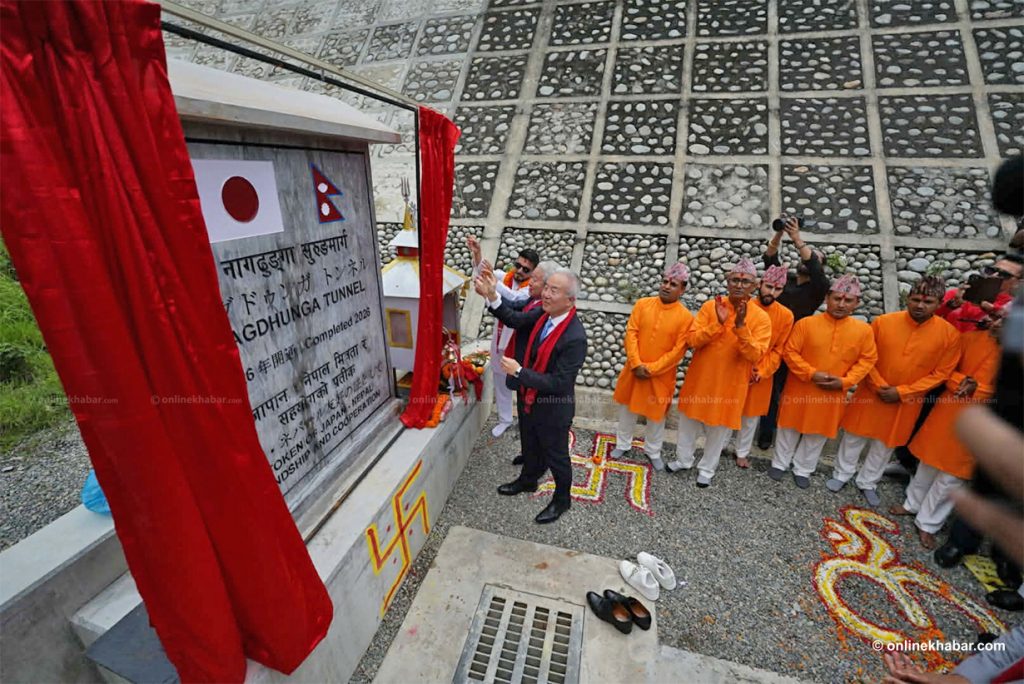
The Nagdhunga–Sisnekhola tunnel has been formally inaugurated. Infrastructure Development Minister Sunil Lamsal inaugurated the tunnel in the presence of Japanese Ambassador Maeda Toru and Japan International Cooperation Agency (JICA) President Tanaka Akihiko.
According to Deputy Project Director Sanjay Panthi, the tunnel will not immediately open to all vehicles. Initially, only ambulances, fire engines, security agency vehicles, and other vehicles providing essential services will be allowed to operate through it.
Following a trial period of about three months, during which safety and traffic management will be assessed, other vehicles will be allowed entry in phases.
The tunnel’s foundation stone was laid by then Prime Minister KP Sharma Oli, while the main tunnel’s breakthrough was achieved under another Prime Minister, Pushpa Kamal Dahal “Prachanda.” The formal inauguration has now taken place during the tenure of Prime Minister Balen.
Fees based on vehicle type
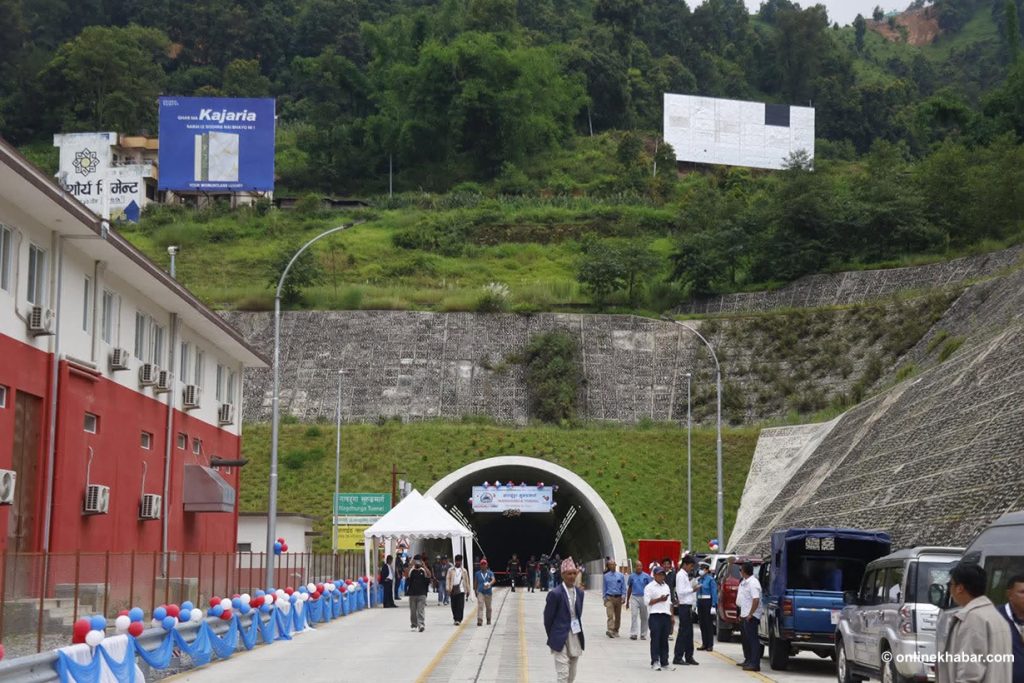
The project has said no charges will be levied on vehicles using the tunnel during the trial period; fees based on vehicle type will apply after regular operations begin.
According to the Department of Roads, cars and vans will pay Rs 65 to enter Kathmandu and Rs 60 to exit. Minibuses, trucks, and tippers will pay Rs 115 to enter Kathmandu and Rs 80 to exit. For buses and large trucks, the fee is set at Rs 260 for entry and Rs 200 for exit. The Cabinet had earlier fixed fees ranging from Rs 60 to Rs 600 depending on vehicle type.
Pedestrians, motorcycles, scooters, three-wheelers, and vehicles carrying flammable substances such as diesel, petrol, or gas, or explosive materials, are barred from entering the tunnel.
Coming into operation roughly 80 months after construction began, the tunnel is being seen as a new chapter in Nepal’s physical infrastructure development.
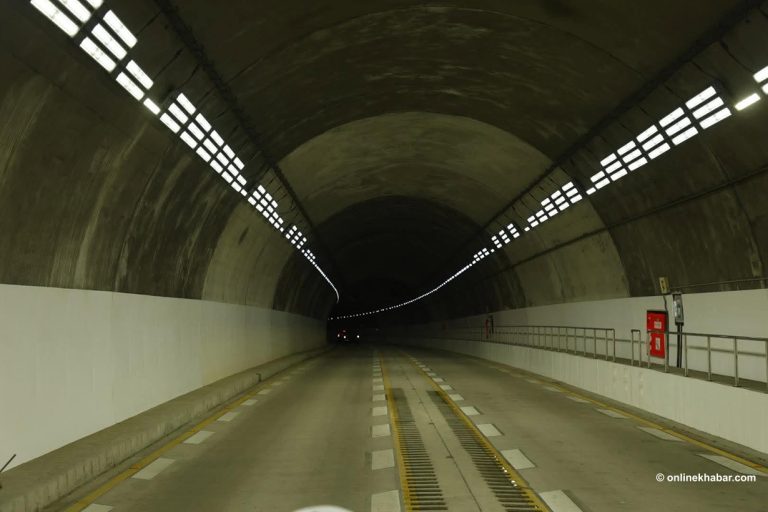
The tunnel begins at Dahachok Totipakha- 1 of Chandragiri Municipality, Kathmandu, and ends at Sisnekhola in Dhunibesi Municipality, Dhading. By bypassing the traffic jams, steep climbs, and winding road of the current Nagdhunga section, it is expected to save around an hour of travel time.
The project cost approximately Rs 25 billion, funded through a concessional loan from the Government of Japan and investment from the Government of Nepal. Of this, about Rs 17 billion was spent on construction, an additional Rs 2 billion arose from exchange rate fluctuations and rising construction material costs, and around Rs 6 billion was spent on land acquisition and compensation. A total of 480 ropanis of land was acquired for the project.
Although the tunnel was originally targeted for completion within 42 months, the project was delayed well beyond schedule due to the COVID-19 pandemic and other technical complications.