
Kathmandu, November 4
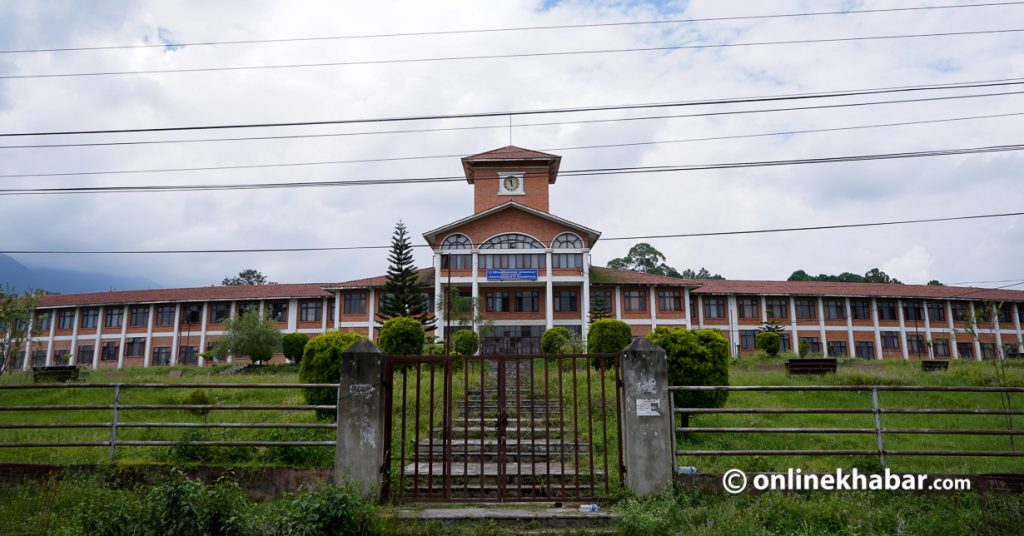
Professors at Tribhuvan University (TU) have continued receiving pensions by adding periods of unpaid leave to their years of service, despite a decision by the university’s Executive Council to stop the practice.
In February 2025, Onlinekhabar reported that professors were receiving pensions by including unpaid leave in their service periods. Following the report, the TU Executive Council decided on May 28, 2025, through decision number 777, that unpaid leave would no longer be counted when calculating pensions.
However, TU’s Employee Administration Division is still allowing some professors to receive pensions calculated by including unpaid leave.
“They were already receiving pensions before the Executive Council’s decision, so they continue to receive them. The restriction applies only to those who come to apply for new pension books,” an official at the division said.
Pensions received in violation of the rules should be recovered. Instead, some teachers and employees have continued receiving pensions with their unpaid leave counted as part of their service. Those who took unpaid leave before April 21, 2011, are still receiving pensions after having that period added to their years of service.
TU’s Teachers and Employees Service Regulations, 1993, provide for extraordinary leave, or unpaid leave. Employees taking such leave are not entitled to salary or allowances during the period, and the leave is not counted towards their service period.
On July 5, 2018, TU’s Appellate Commission ruled that unpaid leave taken by Bimal Rimal, a section officer at the commission, should also be counted when issuing his pension book. Citing that precedent, Professor Shankar Bhandari also had his unpaid leave included in his service period for pension purposes.
Following Bhandari’s application, the then Executive Council decided on January 25, 2020, to count unpaid leave taken before April 21, 2011, towards the service period. On the basis of this decision, 126 professors have been receiving pensions with their unpaid leave included in their service records.
According to TU officials, the actual number is higher. Onlinekhabar had previously published a list of 126 people identified during its investigation. Since then, further cases have emerged of people obtaining pension books by adding unpaid leave to their service periods. Former university office-holders are also among those receiving such pensions.
Even teachers and employees who have not completed 20 years of service are receiving monthly pensions after adding unpaid leave to their service periods.
The regulations state that teachers or employees who have served the university for at least 20 years after becoming permanent are entitled to a pension from the date of retirement.
However, some who have not completed 20 years of service are still receiving pensions after counting unpaid leave. Many professors who should instead have received a gratuity are reportedly drawing monthly pensions through this arrangement.
Under the rules, pensions are calculated on the basis of an employee’s length of service and the final salary scale they were receiving at the level from which they retired.
The practice of counting unpaid leave towards pensionable service has caused financial losses to TU. The Office of the Auditor General has also noted in its annual reports that the university has been paying pensions by including unpaid leave without obtaining government approval.
The Auditor General’s report for fiscal year 2024/25 states that TU paid more than Rs 3 billion in pension-related amounts without government approval.
“Under the Executive Council’s decision of January 21, 2020, extraordinary leave taken before April 21, 2011, was also counted towards the service period for calculating pensions for teachers and employees. The university paid Rs 3.114 billion in pensions last year and Rs 3.021 billion this year, along with Rs 192.25 million in grade increments, without obtaining approval from the Government of Nepal,” the report states.
The Auditor General has pointed out that the arrangement is not in accordance with the rules and has resulted in billions of rupees in losses to the university.
After the audit raised questions over the legality of the practice, the TU Executive Council decided to seek government approval and, until a government decision was re