

Kathmandu, September 22
The dispute over Malaysia’s plan to limit Nepali worker recruitment to a small group of manpower companies has now reached the prime minister’s level.
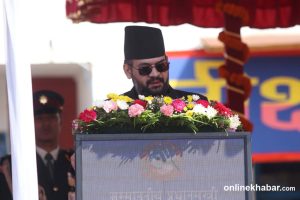
Prime Minister Balendra (Balen) Shah, speaking by phone with his Malaysian counterpart Anwar Ibrahim on Tuesday morning, urged an end to the syndicate and middleman system seen in Malaysia’s employment sector.
He made clear that such an arrangement is not acceptable to Nepal and urged the Malaysian prime minister to have the two countries’ labour ministers hold direct talks to resolve the problem.
In his conversation with the Malaysian prime minister, PM Shah stressed the need to make the Nepal-Malaysia labour relationship dignified, transparent and free of exploitation.
“We do not like the syndicate and middleman system, and it is not acceptable under any circumstances. It has hurt workers,” PM Shah said. “So I request that your labour minister sit down for direct talks with our labour minister and take the necessary steps to remove this problem for good.”
In response, Malaysian PM Ibrahim also said he opposes the syndicate and middleman practice. He committed to directing his labour minister to coordinate with the Nepali counterpart and work out a concrete solution.
Even before this prime-minister-level exchange, Nepal had been carrying forward continuous dialogue with Malaysia at the diplomatic and administrative levels.
Nepal has formally objected since Malaysia initially listed only 25 manpower companies as “registered recruitment agencies” for Nepali worker recruitment under the Foreign Workers Centralised Management System (FWCMS).
Through the Ministry of Foreign Affairs, Nepal had written to the Malaysian government saying that even if the new system is implemented, it should proceed only through discussion and agreement between the two countries.
Nepal has stated that this matter should be settled through the Joint Technical Committee and bilateral mechanism under the Nepal-Malaysia labour agreement.
However, Nepal did not accept it even after Malaysia went on to list a further 250 manpower companies as “support agencies” under the 25 main companies. Nepal has objected on the grounds that a structure of 25 main and 250 support companies would limit competition and place the Nepali worker recruitment process under the control of a few entities.
To resolve this dispute, Nepal is now making diplomatic efforts to convene a Joint Technical Committee (JTC) meeting between the two countries at the earliest.
According to the Ministry of Labour, coordination is continuing at the diplomatic level on holding the meeting, though the date and other technical matters remain to be settled.
According to ministry spokesperson Mira Acharya, the Malaysian side has been giving a positive response on labour market matters. Nepal, for its part, has asked for clarity on the process, evaluation system and criteria used in selecting the 25 main and 250 support manpower companies.
From departmental investigation to holding pre-approvals
Alongside the diplomatic effort, Nepal has also advanced administrative and legal processes of its own.
Under the direction of the Ministry of Labour, Youth and Employment and a ministerial-level decision of September 11, the Department of Foreign Employment has held back new pre-approvals for Malaysia related to the 250 manpower companies said to be affiliated with the 25 main entities under the FWCMS. The department is investigating those companies’ dealings, their relationship with the 25 main companies, and the basis of their selection.
The department has also opened an investigation into the 25 main manpower companies themselves, seeking details of their past involvement in Malaysian employment, the basis on which they were selected as main entities under the FWCMS, and the process they followed in affiliating other companies.
In the latest stage, the department has asked the 25 manpower companies to submit their complete business and financial details, including financial transactions for the last five fiscal years. They have been directed to provide the details within 15 days under Section 34 of the Foreign Employment Act, 2064.
According to the department, the necessary process under the Foreign Employment Act will move forward as the investigation continues, during which the companies’ explanations, transactions and business relationship with Malaysia are also being studied.
Although the government has objected to Malaysia’s new system, it has said it will not halt the departure of Nepali workers who have already obtained labour approval under it.
The department has said only new pre-approvals for Malaysia for the 250 companies affiliated under the FWCMS are on hold until the investigation concludes; the government says the departure of workers who had already received labour approval will not be affected.
Since Malaysia is a major destination for Nepali workers, the government also faces the risk that a prolonged dispute could affect new workers’ foreign employment. For this reason, Nepal is simultaneously rejecting the limited manpower structure and pursuing an investigation, while also seeking dialogue at the diplomatic level and a Joint Technical Committee meeting.
The latest conversation between PM Shah and his Malaysian counterpart Ibrahim shows that the matter is no longer confined to the Ministry of Labour or the administrative level alone.
With the two prime ministers reaching an understanding to advance direct dialogue at the labour minister level to resolve the problem, Nepal’s push to end the syndicate system, secure a transparent recruitment system, and find a solution through the Joint Technical Committee has now reached an even higher political level.