
Tehrathum, August 20
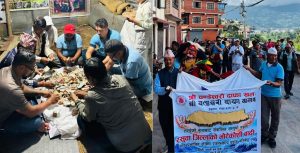
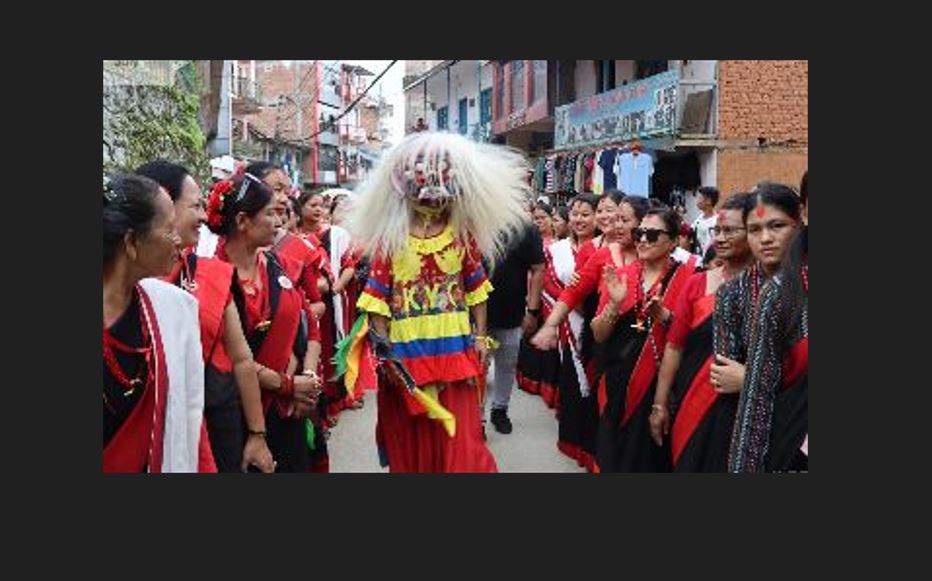
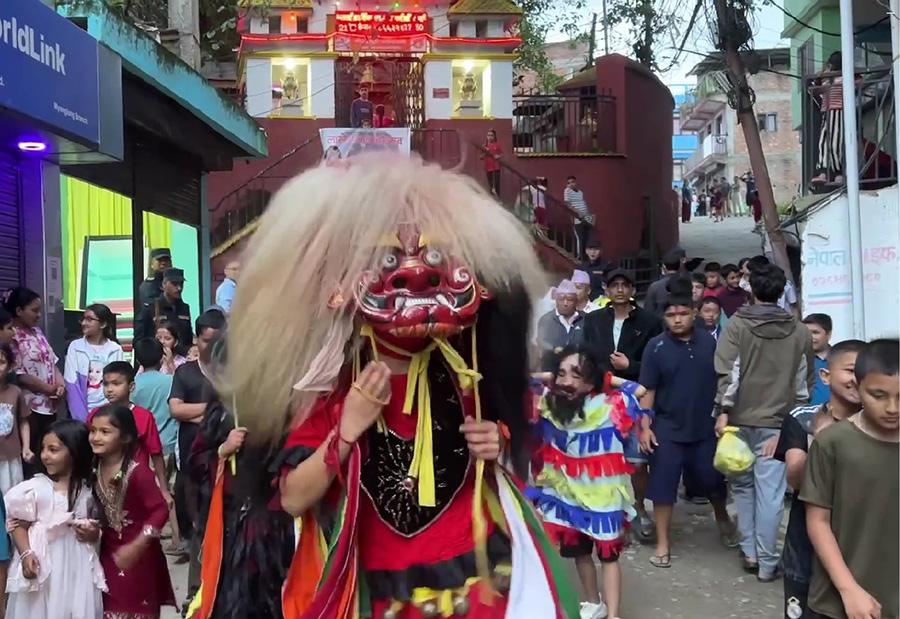
Myanglung, the district headquarters of Tehrathum, has taken on a festive appearance in recent days, with increased crowds in the streets and squares. The sound of traditional musical instruments and appearances by Lakhe performers have created a distinct cultural atmosphere in the town as the Newa community’s traditional Lakhe Festival 2083 gets underway.
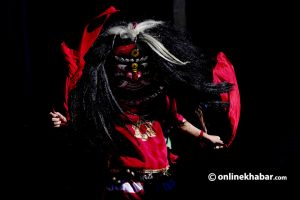
Organised by Newa Dey Daboo Myanglung under the slogan “Our Culture, Our Identity,” the festival is more than a celebration of entertainment. It is a living expression of culture, tradition and community identity passed down through generations. The Lakhe dance, performed to the rhythm of traditional instruments, not only adds excitement to the streets but also connects the younger generation with an old cultural tradition.
The history of the Lakhé festival in Myanglung is closely linked to the settlement of the Newa community in the area. According to Rajeshraj Joshi, district president of Newa Dey Daboo Tehrathum, the tradition began with the arrival and settlement of the Newa community. Traditionally, the festival begins on Naag Panchami and concludes the day after Krishnashtami.
Children watch the Lakhe dance with curiosity, young people record it on their mobile phones, while older generations connect the celebration with memories of the past. In this way, the festival brings three generations together in one place.
Shubh Bhagat Pradhanang, president of Jhigu Paropakar Samaj Tehrathum, stressed the need to preserve the Lakhe tradition and pass it on to younger generations. He said efforts should also be made to develop a sense that Lakhe is a shared cultural heritage of all communities, not just the Newa community. The organisation said funds collected through the festival are also used for social activities.
The festival is no longer confined to Newa households. Residents, businesspeople, people from different communities and visitors from outside the district also participate in the celebrations. It has contributed to social unity in Myanglung as well as local commerce and cultural tourism.
Myanglung Municipality Mayor Sanjay Tumbahangphe said the local government has been supporting the preservation and promotion of endangered traditional arts and cultures. Continued community participation and government support, he said, could help ensure that Lakhe and other indigenous traditions are preserved for future generations.
The Lakhe dancing through the streets of Myanglung is therefore more than a cultural character; it is a living memory of the community’s heritage. The rhythm of the traditional instruments echoes history, while the gathering of people reflects a collective commitment to their cultural identity. Myanglung will remain filled with the festive spirit of Lakhe until Krishnashtami, as traditional music continues to resonate and the younger generation experiences its culture firsthand.