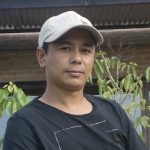


A short walk from the Bouddha Dham in Ilam, there’s a small house. From inside, you can hear a tanpura playing. This is where singer Kuber Rai lives.
I saw Rai practising music alone. But his voice wasn’t the same as before. His body wasn’t the same either. Somewhere along the way, something in his life had broken. What had happened to him?
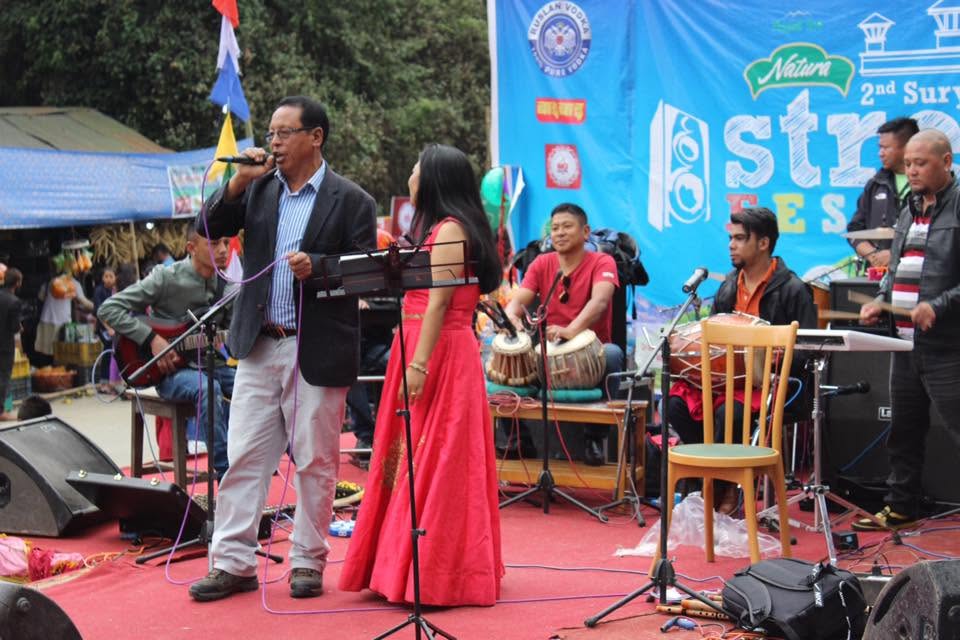
There was a time when he performed at almost every event in the district: fairs, festivals, football matches, and Phulpati celebrations. Announcers would call his name with excitement, “And now, here comes Kuber Rai.”
He’d walk on stage with folded hands, get wrapped in a khada, and sing a few songs.
He never turned down an invitation. He’d show up everywhere, even while still managing farm chores like feeding the cattle. In return, he’d get gifts like a shawl, a token of appreciation, sometimes an envelope of cash.
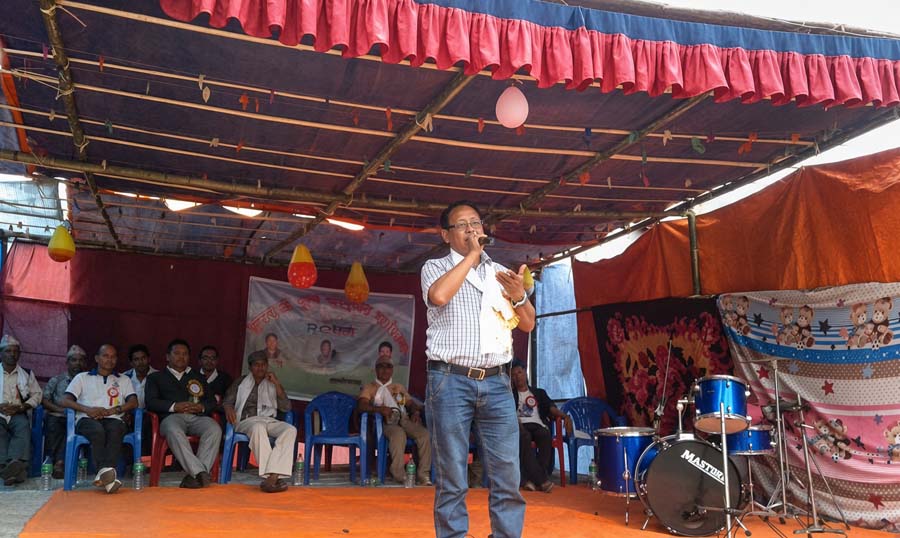
He’d keep the money and ride his motorbike home to his village, Shreeantu.
Back then, the village was lively. Every evening you’d hear harmonium, tabla, madal, guitar. Students would come to his hillside house to learn music from him.
In exchange for lessons, they’d help him dig roads. He was determined to build a proper road to Shreeantu, Salleri. He badly wanted to see a vehicle reach his home someday.
Nepali migrants abroad would also invite him to perform. He’d pack a bag, arrange his visa, and fly off. So far, he has performed in the UK, Hong Kong, and Australia. These yearly trips kept him busy, often pulling him away from farm work back home.
Abroad, people welcomed him like family. He’d talk warmly with everyone and perform solo evening shows.
As soon as he returned from the shows, he’d be back in the fields, weeding maize, cutting grass, carrying manure. In the evenings, he’d pick up his harmonium and riyaz.
That was his life before. Now, things are different.
When life fell out of tune
One day, at a memorial gathering, he felt thirsty and someone gave him sweetened coffee. He drank it and went home.
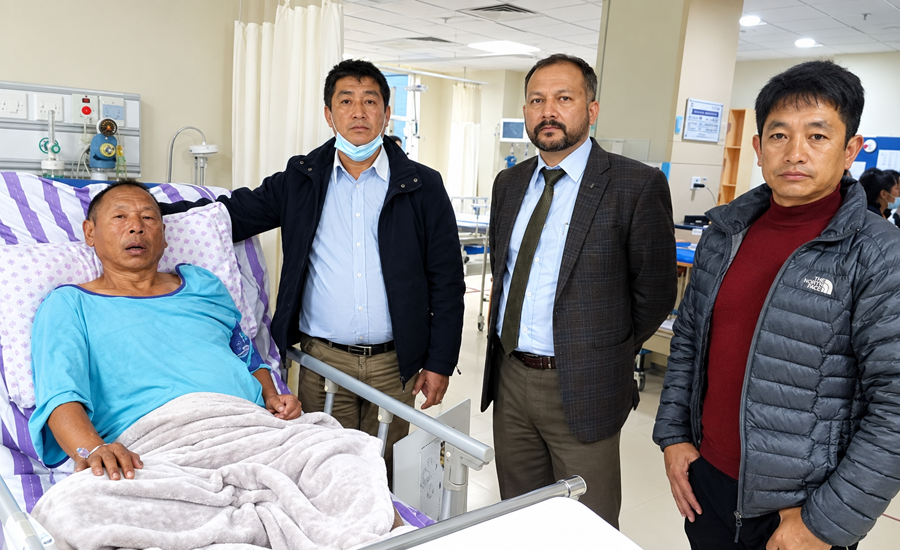
While working in the field, his face suddenly felt like it was burning. Someone splashed water on him, but he still felt unwell. He went home, lay down, and when it didn’t improve, his daughter and son-in-law took him to hospital.
After a long stretch of treatment, he came home with the left side of his body paralysed. He’d had a stroke; on top of existing high blood pressure and diabetes, it affected his hand, leg, mouth and eye on that side.
After that, everything changed. The busy life of performances, friends, recordings and concerts came to a stop.
But from that low point, something new began. Alongside yoga, breathing exercises and therapy, he started writing the story of his life, as if this pause had given him time to finally tell it.
Finding his own story again
Back in 1981, he left his hillside home in Shreeantu, Salleri, to “become a singer.”
Now, sitting near the Bouddha Dham, he’s going through that whole journey, page by page.
He writes about winning first place in Ratna Recording’s National Youth Song Competition and Radio Nepal’s singing contest.
He writes about hard evenings when he survived on bread bought with money borrowed from musician Dinesh Subba. He writes it all down carefully, telling his present self, “You’re not someone who gives up.”
That same stubbornness is helping him recover from paralysis. He’s regaining strength, standing, walking and writing.
Through this recovery, one thing has helped him most: creativity. When his voice failed him, his fingers took over, keeping his mind active. That’s how he started writing his own story.
As he fills the pages of his diary, his energy keeps growing and that same energy now brings him back to music practice every morning and evening.
As mist settles around his quiet house near the Bouddha Dham, his voice rises again with the tanpura, sa re ga ma…