Kathmandu, October 29
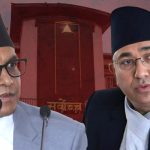
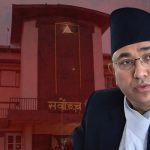
Supreme Court Justice Hari Phuyal has acknowledged communicating with Inam Sapkota, saying Sapkota introduced himself as a special representative of Prime Minister Balendra Shah amid rumours that Phuyal and two other judges faced possible impeachment after Dr Manoj Kumar Sharma became chief justice.
Phuyal made the remarks while speaking to a group of journalists after details of WhatsApp exchanges between him and Sapkota became public. He said he had initially been contacted through a relative and that Sapkota presented himself as a messenger of the prime minister.
The meeting with Phuyal was attended by Nepal Bar Association President Professor Dr Vijay Prasad Mishra, General Secretary Kedar Koirala and several journalists. Phuyal spoke from his chamber, the office where judges work outside the courtroom.
According to Phuyal, Sapkota claimed to be not only a representative of Prime Minister Shah but also a trusted person of the US Embassy and someone who enjoyed the special goodwill of Sergio Gor, the US ambassador to India.
“Amid rumours of impeachment against us, he came with a special message from the prime minister, saying there was no danger to us and that we did not need to be afraid,” Phuyal told the journalists. He urged them to consider the episode in the context of the circumstances at the time.
Sapkota is currently in police custody, with the Kathmandu District Court extending his remand. Police reportedly uncovered contacts with various current and former public officials from his electronic devices. He is also under investigation on money-laundering charges.
Sapkota allegedly began discussing pending cases
Phuyal said Sapkota subsequently established contact with six or seven other Supreme Court justices. During their interactions, Sapkota allegedly began showing unusual interest in cases and attempting to influence judicial decisions.
According to Phuyal, Sapkota wanted the Supreme Court to overturn the Election Commission’s decision recognising the Nepali Congress’s special general convention. Phuyal said Sapkota repeatedly invoked Prime Minister Shah while discussing the matter.
Sapkota sometimes discussed current affairs and at other times brought up cases pending before the courts, Phuyal said. During meetings with groups of five to seven Supreme Court justices, Sapkota allegedly conveyed that the prime minister was dissatisfied with court orders in financial crime cases and other matters.
Phuyal also referred to WhatsApp messages concerning Rohit Gupta. According to his account, Sapkota initially urged him to order Gupta’s detention, claiming this was the prime minister’s wish.
Phuyal said he did not initially examine that message and later argued in court that Gupta should be released on bail of Rs 20 million.
He said that, after reviewing the facts of the case and Gupta’s role in the company that evening, he concluded that Gupta was eligible for bail. In the same message exchange, Phuyal replied that they could meet at Hotel Himalaya at 7 pm the following evening.
During their meetings, Sapkota allegedly warned judges that a major coup could occur and plunge the country into turmoil. He reportedly offered to protect them if the situation became more complicated.
Phuyal said Sapkota met him and five to seven other Supreme Court justices collectively at Hotel Himalaya the following day. During that meeting, Sapkota became angry and warned that the judges could face impeachment, Phuyal said.
Sapkota subsequently allegedly sought favourable treatment in cases involving Nepali Congress, detained businessman Deepak Bhatta and former Insurance Authority chairperson Sharad Ojha.
He directly sought favourable consideration of Bhatt’s habeas corpus petition, urging Phuyal and other judges to take up the matter, according to Phuyal.
After Sapkota began openly recommending outcomes in pending cases, five to seven Supreme Court justices held a collective discussion and decided to inform the police, Phuyal said. They summoned Inspector General of Police Dan Bahadur Karki and asked him to look into Sapkota’s background, explaining that he had been discussing court cases with them.

Police chief reportedly warned judges about Sapkota’s connections
Phuyal said the office of the police chief contacted the judges several days later. According to Phuyal, IGP Karki told them that Sapkota had connections with people at higher levels of power and advised them to remain cautious.
“He is connected to people above us; we cannot do much,” Phuyal quoted Karki as telling them, adding that the police chief had advised them to be careful because of Sapkota’s high-level connections.
Phuyal said the judges subsequently discussed contacting the army chief after receiving little response from the prime minister’s office team and failing to obtain what they considered adequate assistance from the police.
He said several other judges agreed with the proposal.
The judges contacted Chief of Army Staff Ashok Raj Sigdel to ask about Sapkota. Sigdel reportedly told them that the Nepal Army had neither used Sapkota personally nor institutionally, that there was no need to do so, and that he had no connection with the army.
Sigdel also offered to convey information about Sapkota’s activities to the prime minister’s office, Phuyal said.
“We began complaining to the prime minister’s team after Inam Sapkota started talking about court cases,” Phuyal said. “We were the ones who first spoke out about his involvement in different places. It was judicial vigilance that led to the investigation into him.”
Phuyal said suspicion surrounding Sapkota grew particularly after he began claiming that Prime Minister Shah had directed that Bhatt be released. Sapkota allegedly invoked the names of various judges while contacting them and encouraged them to assist one another.
Chief justice denies contact with Sapkota
Phuyal said Sapkota repeatedly urged him to support Chief Justice Dr Manoj Kumar Sharma, claiming that he had personally helped Sharma become chief justice and met and spoke with him regularly.
However, Chief Justice Sharma issued a statement on Thursday denying any direct or indirect contact or acquaintance with Sapkota.
Justice Shrikant Paudel, who issued the order releasing Gupta on bail, also issued a statement on Thursday. He said the order had been based on lawyers’ arguments and the merits of the case, and that he had neither met nor spoken by phone with anyone before or after issuing it.
Phuyal said he had himself raised concerns at a full court meeting of the Supreme Court about problems at the Special Court and the growing influence of intermediaries in the judiciary.
“I have never felt this defensive or distressed before. I feel I have been victimised in particular,” he said.
He maintained that the order in the case had gone against Sapkota’s wishes, demonstrating, in his view, that the judicial process had not been influenced.
“I met him only because I believed he represented the prime minister’s office. There was no other arrangement or fixing,” Phuyal said. “I am ready to cooperate with any investigation into me, the judicial leadership and other judges.”