Gulmi, October 26
Sarai, a traditional cultural dance performed in western Nepal during Dashain, is facing challenges to its preservation as interest among younger generations declines.
However, residents of Taltung in Isma Rural Municipality-2, Gulmi, have launched collective efforts to keep the tradition alive by bringing older and younger generations together.
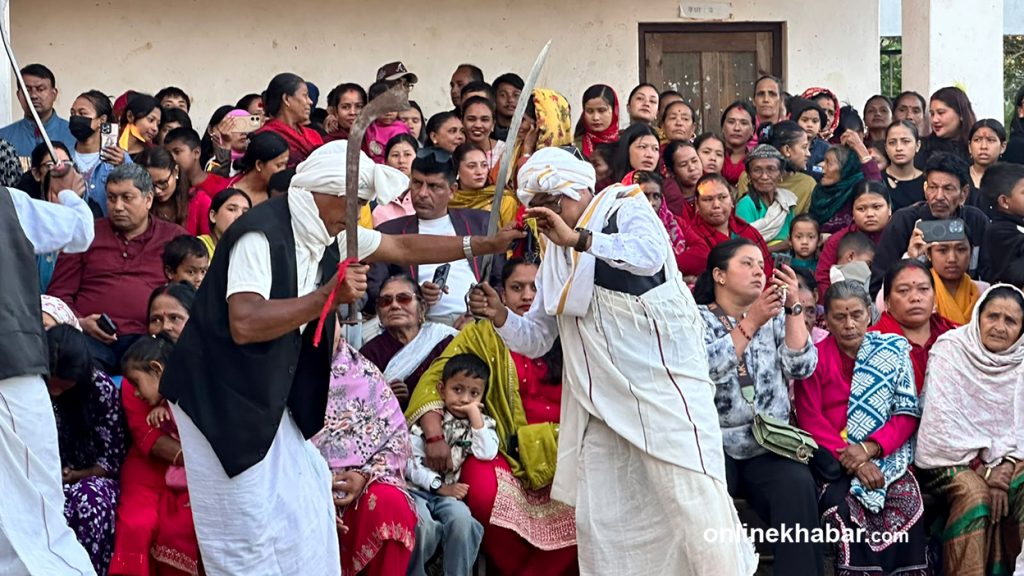
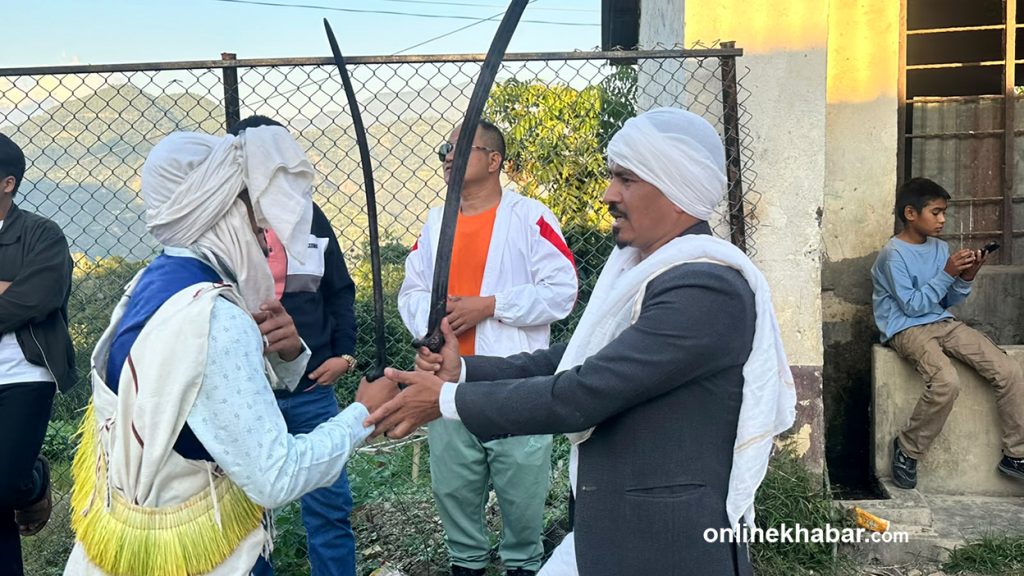
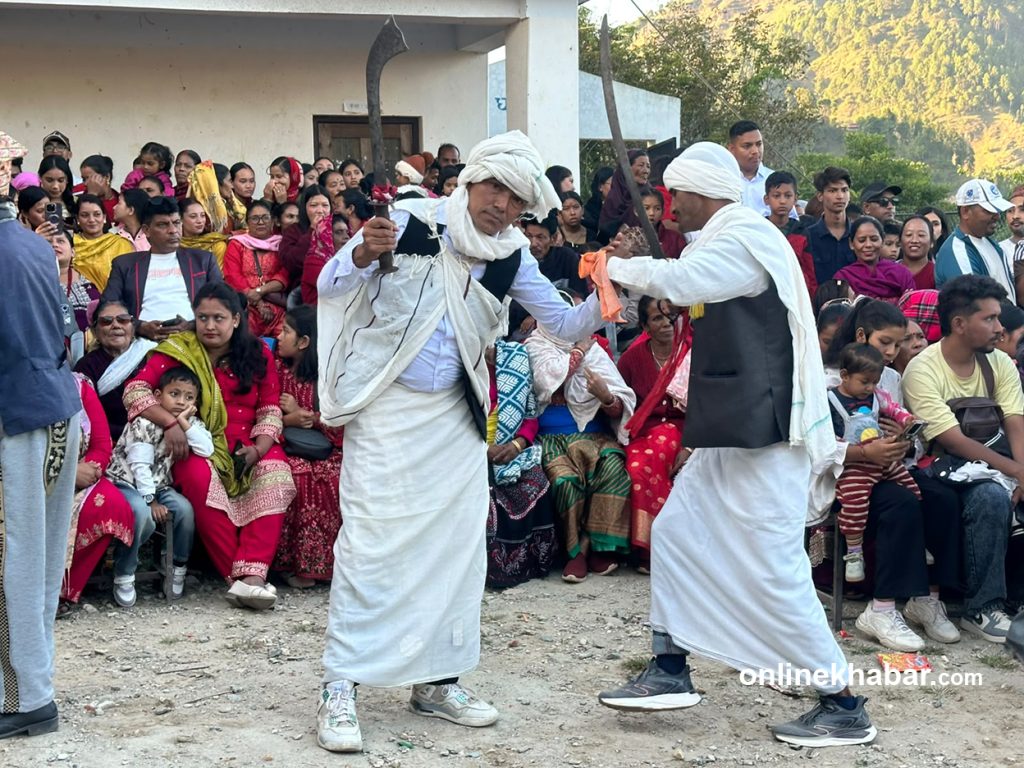
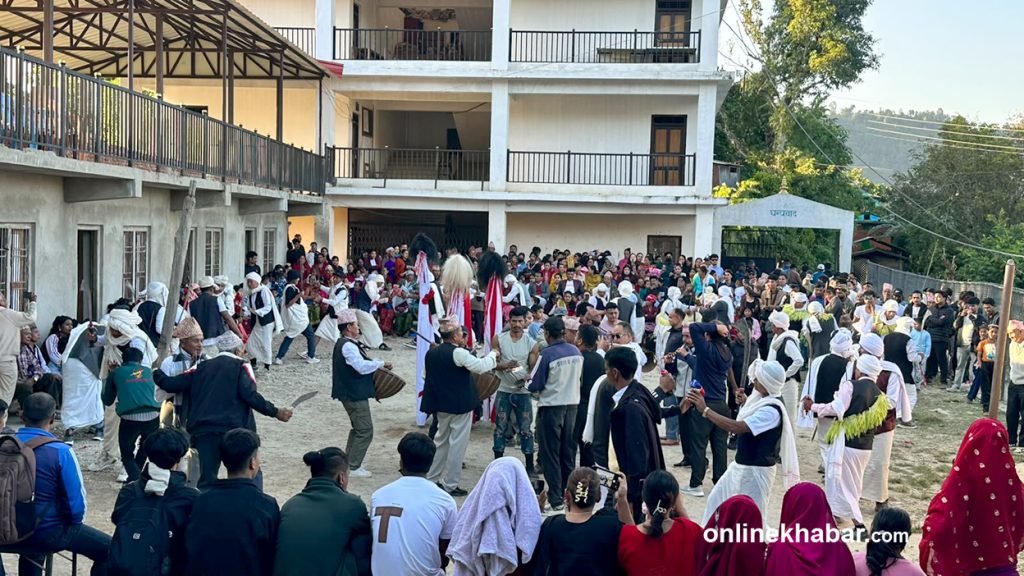
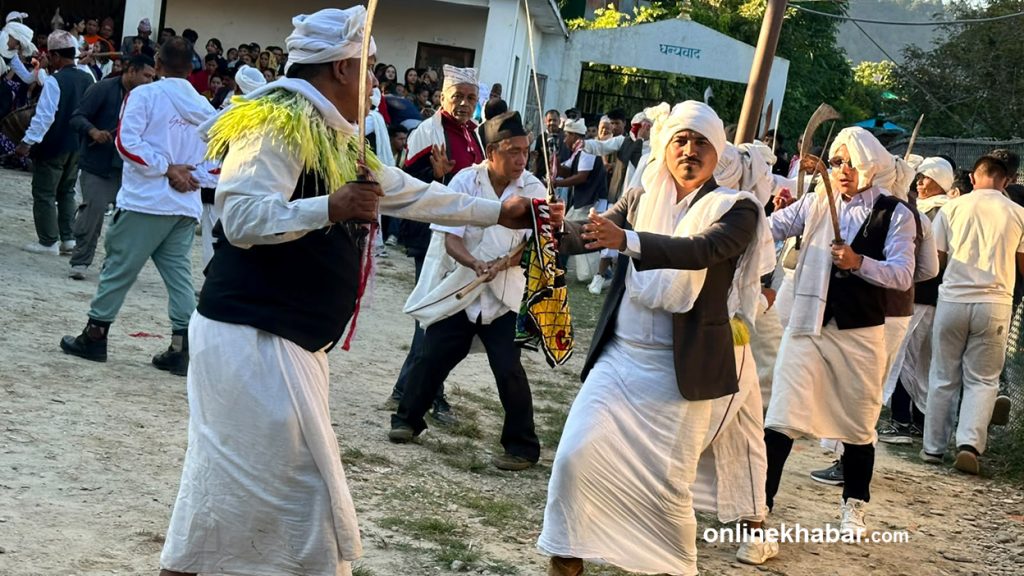
Traditionally, Sarai dance performances begin after Dashain Tika and continue until the full moon day at various forts and temples. Dancers dressed in traditional attire carry swords and perform in groups to the rhythm of traditional musical instruments, expressing devotion to Goddess Bhagwati and celebrating community bonds.
The dance is not only a form of entertainment, but also a cultural heritage passed down through generations. However, changing lifestyles and declining interest among young people have raised concerns about its continuity.
Rajendrabikram Kunwar, a local youth from Taltung, said Sarai dance represents the village’s identity and ancestral heritage. Preserving it means safeguarding the community’s history and cultural identity, he said.
Locals are encouraging young people to participate in performances and regular group rehearsals to pass traditional knowledge and skills to future generations.
Sarai dance is traditionally performed during Dashain in several parts of Gulmi, including Arjai, Amarpur, Isma Maidan, Dhurkot, Jogithum, Taltung, Dhagithum and Choyga.
Loknath Acharya, ward chair of Isma Rural Municipality-2, said the local government was committed to supporting efforts to preserve local arts, culture and traditions, including Taltung’s Sarai dance and Bhailo.
Resident Suryabahadur Pachadhai said Sarai dance was a valuable cultural legacy left by ancestors and should be preserved so future generations could learn about their traditions.