
Kathmandu, September 8
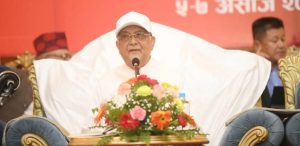
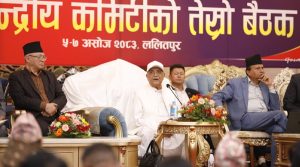
September 7, 2025, a day before last year’s Gen Z uprising, former Prime Minister KP Sharma Oli had amended the CPN-UML’s party statute in a move that would have allowed him to seek a third term as party chair.
The second Statute Convention of the UML, held in Godavari, Lalitpur, scrapped both the 70-year age limit and the provision limiting the party chair to two terms.
By amending the statute with a plan for an early general convention—and later deciding not to renew the party membership of former President Bidya Devi Bhandari, who had expressed interest in leading the UML—Oli had effectively secured the basis for remaining at the helm of the party.
Had the political course gone according to Oli’s plan, 80-year-old Sher Bahadur Deuba would have been Nepal’s prime minister today.
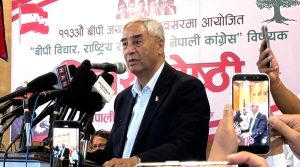
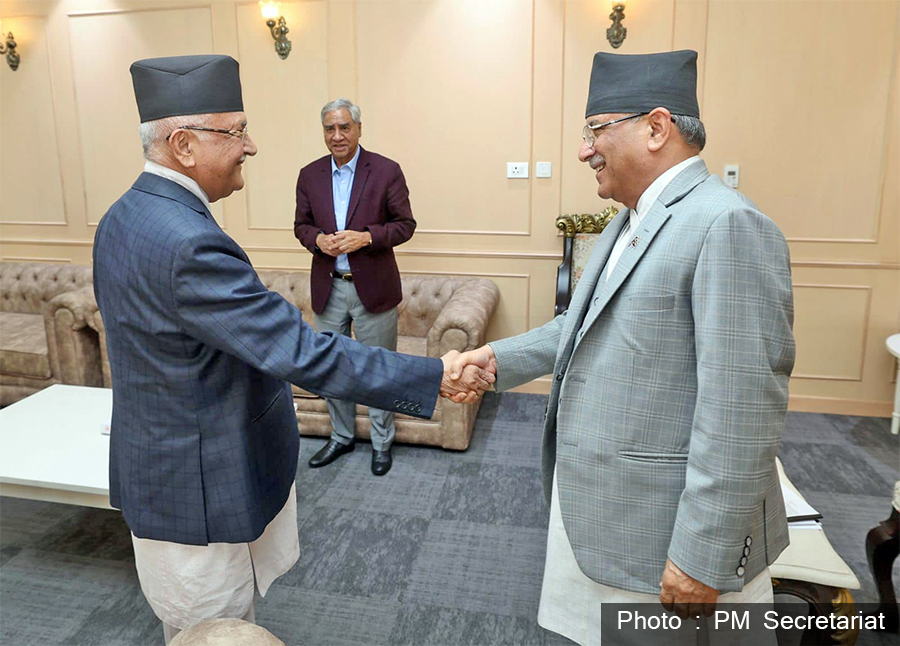
On June 29, 2024, Oli and Deuba had reached a seven-point agreement to take turns serving as prime minister. The agreement between the Nepali Congress, then the largest party in the House with 79 seats, and the UML, with 78 seats, had paved the way for Deuba to become prime minister for a sixth time.
Based on the leaders’ public statements and their political plans at the time, the rotation between Oli and Deuba could potentially have continued until 2032.
Oli had even told a UML Central Committee meeting that the Constitution would be amended in 2030. The proposed constitutional amendment was also seen as an indication that the power-sharing arrangement with the Nepali Congress could continue.
But two days after returning to Baluwatar from Godavari following the UML convention, Oli found himself in a very different situation. On September 9, he had to be evacuated by a Nepal Army helicopter to save his life.
Instead of Deuba becoming his successor under the earlier agreement, former Chief Justice Sushila Karki became the country’s first woman prime minister, heading an interim government tasked with holding elections.
Youth activist Ojashwi Bhattarai says one of the Gen Z movement’s major achievements was breaking the grip of ageing leaders over state power.
“The Gen Z movement proved that change is possible when people want it,” she said. “It also ended the musical chairs that had long been played among a handful of leaders over the prime minister’s post.”
Gen Z leader Uparjun Chamling makes a similar argument, saying the movement effectively transferred the opportunity to lead the country from the grandfather generation to younger people.
“The young people who used to stand in queues at Tribhuvan International Airport were brought to places where they could manage those very queues,” Chamling said. “That is one of the visible changes after the movement.”
The political developments that followed the Gen Z uprising appear to support their argument.
Had the Gen Z uprising not taken place on September 8 and 9 last year, Nepal’s next parliamentary elections would have been held in 2027. Political parties—old and new—were preparing accordingly, with “Mission 2027” campaigns becoming common.
As Gen Z protesters took to the streets in Kathmandu demanding an end to corruption and the lifting of the social media ban, the then CPN (Maoist Centre) was conducting a campaign focused on the Mid-Hill Highway. The UML, CPN (Unified Socialist) and other parties were also running election-oriented campaigns.
The Rastriya Swatantra Party (RSP), which emerged from the 2022 election, was likewise preparing for its own “Mission 2027.”
But the Gen Z movement ultimately created circumstances that led to the dissolution of the very House of Representatives those parties had been preparing to contest.
Following the state crackdown on the peaceful Gen Z protests and the destruction witnessed the following day, the House elected in the November 2022 elections was dissolved and an interim government was formed to oversee elections.
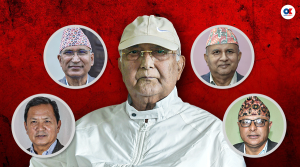
UML leader Dr Binda Pandey says the former leaders of the three major parties—Deuba of the Nepali Congress, Oli of the UML and Pushpa Kamal Dahal of the Maoist Centre—bear much of the responsibility for creating the conditions in which the Gen Z movement altered Nepal’s political course.
“We abolished the Panchayat system and brought democracy, and later abolished the monarchy and established a republic,” Pandey said. “But the belief that three leaders could control everything created deep frustration among young people. That frustration eventually took the form of the Gen Z movement.”
Bhattarai believes the political course could have been different had the leadership of the time responded more prudently.
“There was already frustration among young people over the lack of visible change. But the incompetence of the government turned what was intended as a peaceful demonstration into something much more destructive,” she said. “People also wanted change, and that is why they ultimately supported young people through the elections.”
The trend changed, and so did the leadership
The transition triggered by the Gen Z movement came to an end with the House of Representatives election on March 5. The election also dealt a major blow to the parties that had built and shaped Nepal’s existing political system and Constitution.
In a peaceful election, the RSP won 182 of the 275 seats—close to a two-thirds majority. Balendra Shah, 36, the former mayor of Kathmandu, was appointed prime minister on March 27.
Shah’s rise to the premiership, along with several other records set by the election, left the parties that had carried the legacy of Nepal’s political transformation in a dramatically weakened position.
The Nepali Congress was reduced to 38 seats, the UML to 25 and the CPN to 17. The Rastriya Prajatantra Party, representing the former royalist establishment, won five seats, while Madhesh-based parties were wiped out.
The Shram Sanskriti Party led by former Dharan mayor Harka Sampang, meanwhile, won seven seats and emerged as another major talking point.
The result had not been widely expected in political circles. Even RSP leaders had not anticipated such a sweeping victory.
While unveiling the party’s election manifesto in Surkhet, RSP vice-chair Dr Swarnim Wagle had predicted that the party would win 155 seats.
“We need 138 seats to form a government. We will win 155,” Wagle had said.
The RSP eventually won nearly 30 more seats than Wagle had predicted.
The party’s victory also brought a strikingly different group of faces into parliament.
Around 93 percent of RSP lawmakers—169 out of 182—are first-time MPs. Only 13 had previously served in parliament.
The dominance of younger and new lawmakers has also produced a leadership profile unlike that seen in previous governments.
Shah became the country’s first prime minister from the Madhesi community. The home minister is 38, while Sasmit Pokhrel, the education and sports minister and government spokesperson, is under 30. Apart from Mahabir Pun, the other ministers are aged 50 or younger.
This represents a sharp break from the pattern that had characterised elections before the Gen Z uprising, when political records were often measured by how many times a leader had won elections or served as minister or prime minister.
Until the 2022 election, Deuba stood at the top of the list of repeat election winners, having won parliamentary elections seven times.
There was also a long list of politicians who had won six, five or four elections. KP Sharma Oli, Ram Chandra Paudel, Bijay Kumar Gachhadar and Prakash Man Singh had each won six times, while Pushpa Kamal Dahal, Madhav Kumar Nepal, Jhalanath Khanal and Upendra Yadav had won five times.
It had also become increasingly common for politicians defeated in one constituency to contest from another.
Dahal is perhaps the most prominent example. He has contested from Rolpa, Kathmandu, Siraha and Chitwan before eventually moving to Gorkha and later Rukum. Upendra Yadav, Narayan Kaji Shrestha, Barshaman Pun and even Gagan Thapa have also changed constituencies over the years.
Shrestha, who entered the first Constituent Assembly in 2008 through nomination and later served in the National Assembly, returned to contest the House of Representatives before completing his National Assembly term. He has contested parliamentary elections from Makwanpur, Gorkha and Sarlahi.
The list of politicians who benefited repeatedly from proportional representation was similarly long, stretching from Girija Prasad Koirala to Ram Bahadur Thapa, Balkrishna Khand, Shankar Pokhrel, Krishna Bahadur Mahara, Arjun Narsingh KC, Raghuji Pant, Kamal Thapa, Binod Chaudhary and DP Aryal.
The number of politicians repeatedly appointed as ministers also continued to grow.
Sharad Singh Bhandari, who has served as minister 20 times, became the most prominent example. Gachhadar, Bishnu Prasad Paudel, Prakash Sharan Mahat, Bhim Rawal, Krishna Bahadur Mahara, Janardan Sharma, Balkrishna Khand, Gyanendra Bahadur Karki, Ram Sharan Mahat and Top Bahadur Rayamajhi were among those who had held ministerial positions repeatedly.
Such patterns increasingly fuelled frustration among younger generations.
After the Constitution was promulgated in 2015, the same political figures continued to rotate through ministerial positions, while Oli, Deuba and Dahal repeatedly alternated as prime minister.
Coalitions were formed and dismantled largely around the question of who would control the government. Even after the 2022 election, four different coalitions had been formed and broken up.
As political parties focused on winning elections and capturing power by whatever means necessary, ideological differences increasingly appeared secondary.
Pandey argues that the Gen Z uprising grew out of a system in which democracy was increasingly controlled by the interests of a small group of political leaders.
“Democracy is not only about state power; it is also about power within political parties,” she said. “When parties carrying the political legacy failed to govern properly, the political course developed in a different direction.”
New concerns and a warning
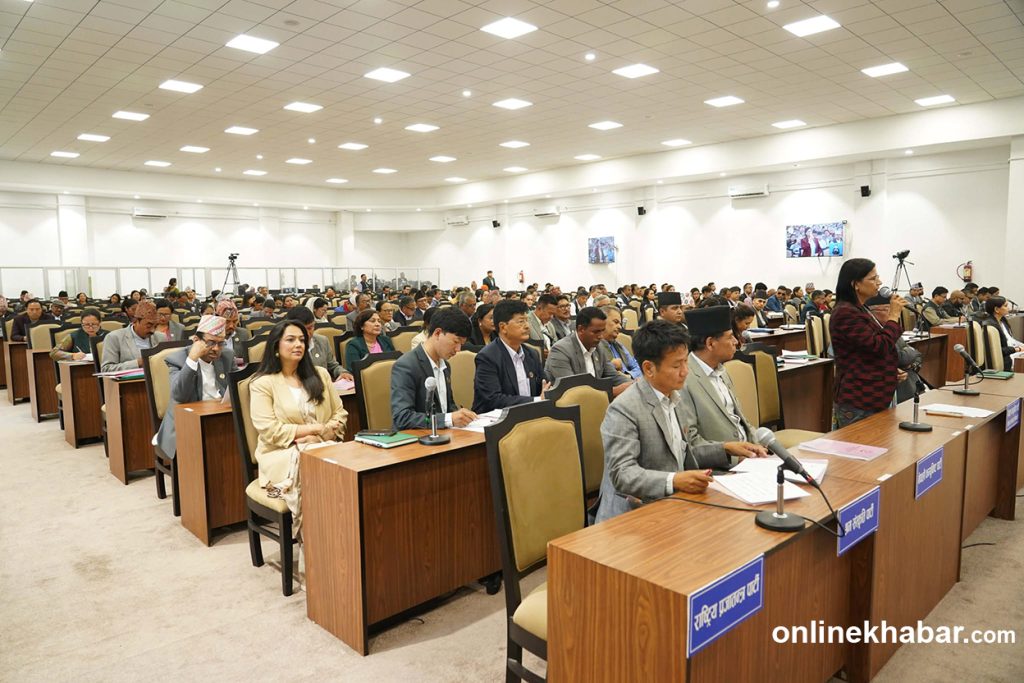
The old parties suffered a crushing defeat largely because of the mistakes and weaknesses of their leadership, while the RSP secured enough seats to form a government.
But even before the first anniversary of the Gen Z uprising, questions have begun to emerge over the new government led by Balen Shah.
The government has faced criticism over its handling of squatters and landless communities, investigations into corruption, the prime minister’s absence from parliament and his public remarks.
Political economist and analyst Ghanshyam Bhusal says some of the same tendencies associated with the old political establishment are already visible among the new forces.
“When people said there should be something new, they meant there should be something better,” Bhusal said. “But the same tendencies seen in the old system are visible among those who came in promising to be new.”
“Gen Z was a sentiment—the desire for things to improve. But as soon as it reached the streets, the movement was hijacked. Those who came in as new forces have not been able to do better,” he said.
Bhusal describes the current situation as one in which the old system has died but a new one has yet to be born.
“The old has died, but the new has not been born. That is why we are seeing a lack of system, shortages and a state of things not being properly established,” he said. “This is a time of social meteors. Experiments will continue.”
Pandey reaches a similar conclusion.
“The central demand of the Gen Z movement was good governance. We have not seen governance that people can actually feel as good governance,” she said. “The current government needs to learn from history, but it appears to be failing to do so.”
According to Pandey, public trust in the old political establishment has already eroded, while dissatisfaction with those currently running the government is beginning to grow.
Gen Z leader Chamling, meanwhile, believes the future of the movement is closely tied to the performance of the current government and says it needs to be held accountable.
“If this government fails, it will create a narrative that September 8 and 9 were wrong, that the Gen Z movement was wrong and that Khadga Prasad Oli was right,” Chamling said. “No Gen Z activist wants the movement to fail.”
He also warns that failure by a government led by young people could damage public confidence in younger generations taking political leadership.
“If this government fails, people may start mocking the idea that young people were given an opportunity to lead,” Chamling said. “That could make it harder for young people to receive the courage and opportunity to lead in the future.”
“The government needs to understand this. Avoiding the mistakes made by the old political leadership would itself be one way of respecting the Gen Z movement,” he said.