

Pokhara, November 1
For years, health institutions in remote and mountainous areas, such as Mustang and Manang hospitals, lacked permanent medical officers, leaving many people without access to healthcare. District hospitals across Gandaki Province were forced to rely on scholarship recipients and contract doctors to provide medical services due to a shortage of staff.
The situation was so difficult that finding permanent doctors to serve as hospital chiefs was also a major challenge.
The implementation of federalism not only changed the country’s system of governance but also laid a strong foundation for ensuring people’s right to healthcare by addressing the shortage of doctors in these remote hospitals.
The Gandaki Provincial Government has taken several far-reaching decisions to strengthen health infrastructure. As part of these efforts, the provincial government established the Infectious and Communicable Disease Hospital on its own initiative and moved forward with a landmark decision to upgrade various hospitals across the province to provincial-level facilities and improve their services.
The changes brought about by upgrading hospitals under its jurisdiction have demonstrated the positive impact of federalism on healthcare delivery, enabling people to access better health services.
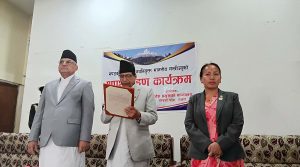
The provincial government has appointed 46 medical officers recommended by the Provincial Public Service Commission.
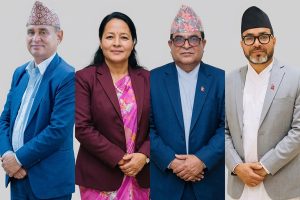
Nand Prasad Neupane, who also holds the portfolio of health minister, said Gandaki was the first among the country’s seven provinces to appoint such a large number of doctors at once for deployment in provincial hospitals.
A total of 46 doctors have been deployed to 14 hospitals in Gandaki based on their merit rankings. At the beginning of federalism, only 10 medical officers had been adjusted to Gandaki Province. The number has now reached 250 doctors, including specialists and medical officers, and 500 nursing staff.
Previously, district hospitals had only 15 sanctioned beds and operated with one specialist and two medical officers. They now have approved positions for 11 specialist doctors and 12 medical officers.
This has brought an end to the difficult and embarrassing situation in which hospitals in places such as Syangja, Manang, Mustang and the Maternal and Child Hospital had to assign health assistants or staff nurses as acting chiefs because no permanent doctors were available.
The number of specialist doctors at the 11th and ninth levels alone has now exceeded 50. With a larger number of doctors available, people have started receiving quality treatment locally, and patients no longer have to travel outside their districts for treatment except in serious cases.
The impact is also reflected in hospital service delivery. While 326,000 people received services in the fiscal year 2020/21, the number rose to 935,000 last year. The policies adopted by the provincial government under federalism have expanded healthcare access and improved service quality for the people of Gandaki.
In Jestha 2081 BS, the Gandaki Provincial Government decided at a Cabinet meeting to upgrade nine hospitals under its jurisdiction. Before the upgrade, the hospitals had a combined approved capacity of 300 beds. This was increased to 800 beds following the upgrade.
The total number of approved staff positions at the hospitals was also increased from 398 to 1,025.
Following the implementation of federalism, the Government of Nepal transferred the former district health offices and district hospitals to provincial governments in 2075 BS.
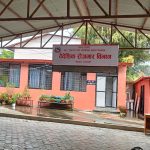
Gandaki Province currently has 14 hospitals: 10 district hospitals, the Infectious and Communicable Disease Hospital, the Maternal and Child Hospital, Ampipal Hospital in Gorkha and Burtibang Hospital in Baglung.
Acting Secretary at the Ministry of Health Suraj Gurau, Chief of the Medical Services Division Dr Ramesh Kumar KC and Undersecretary Pradeep Kumar Regmi, among others, urged the newly deployed medical officers to provide the best possible services to the public and make significant contributions to improving the health sector.
After the district hospitals came under the provincial government’s jurisdiction, the Gandaki Provincial Government decided through Cabinet meetings in 2077 BS and 2078 BS to upgrade them from 15-bed facilities to provincial hospitals with 50 beds each.
In 2081 BS, Burtibang Hospital and Ampipal Hospital in Gorkha were also brought under the Gandaki Provincial Government and upgraded to provincial hospitals.
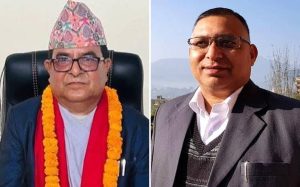
While the provincial government has strengthened the health sector since the implementation of federalism, the Ministry of Health has also faced questions over its functioning. Former Health Minister Laxman Pandey, who was appointed from the CPN-UML, and Health Secretary Dr Yuwanidhi Basoula have been accused of negotiating large sums of money in exchange for increasing the number of hospital beds.
The UML has recommended disciplinary action against the minister, while the secretary has been transferred to the Office of the Chief Minister. Questions had also been raised earlier over the procurement of health supplies, although the allegations have not yet been substantiated.
However, the figures show that the provincial government has been working to make healthcare services more effective since the implementation of federalism.