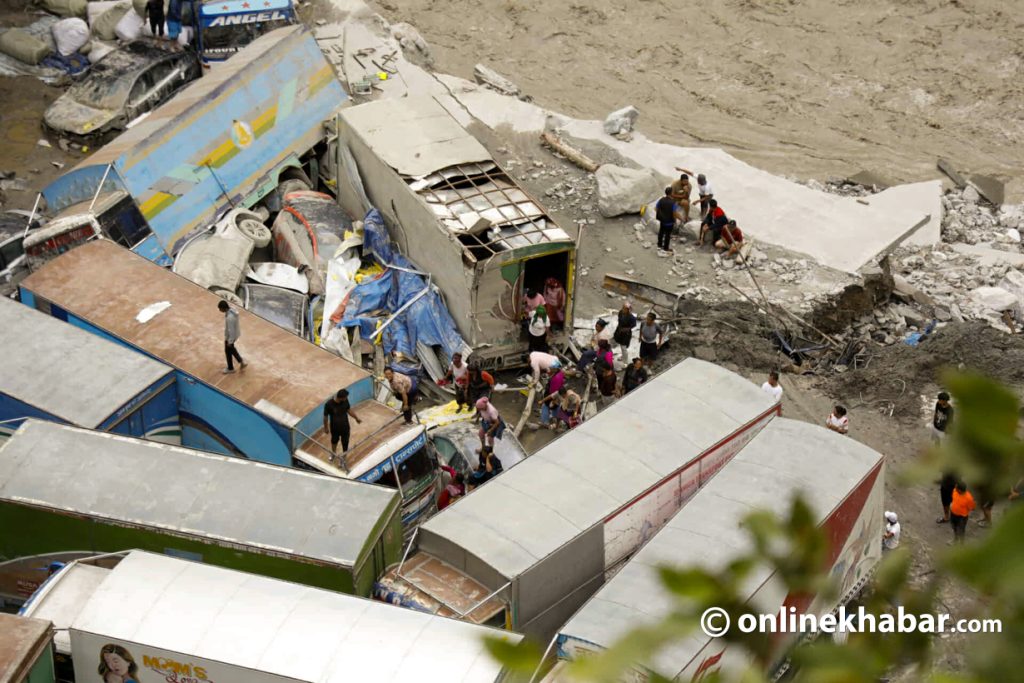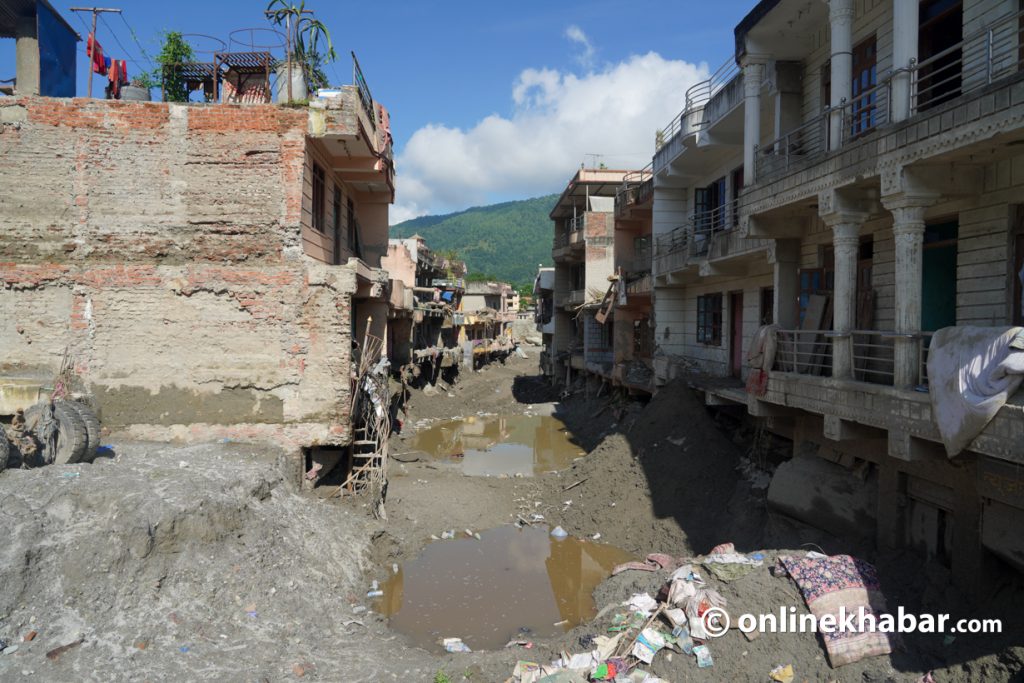


Nepal is highly exposed to natural and non-natural disasters, including floods, landslides, earthquakes, inundation, fires, epidemics and other hazards. Their impact extends far beyond the immediate humanitarian emergency. Disasters can destroy homes and productive assets, interrupt livelihoods, reduce household income, disrupt children’s education, create health risks and increase the financial burden on already vulnerable families.
For this reason, disaster response cannot end with immediate relief. It must also consider how affected households’ circumstances change over time and how social protection can support them through response, recovery and reconstruction.
The Disaster-Sensitive Social Protection and Relief Distribution Standard, 2081 provides an important policy context for this discussion. It creates an opportunity to view disaster relief and social protection not as separate interventions, but as complementary mechanisms for supporting people whose circumstances change because of a shock.
The challenge now is to translate this policy direction into practical arrangements that can identify affected households, understand their changing needs, coordinate appropriate assistance, track delivery and support recovery.
Nepal already has a broad range of social protection, social assistance and disaster-response programmes covering social security allowances, disaster relief, health, education, agriculture, employment, insurance, housing, rehabilitation and reconstruction. These programmes are managed by different ministries, departments, agencies, funds, development partners and local governments.
Over time, many institutions have also developed information systems and databases to support their responsibilities. These systems contain valuable information and have improved service delivery in many areas. However, much of this information remains within individual institutional systems. When a disaster occurs, this separation can make it difficult to develop a complete picture of what has happened to a particular household.
This is one of the central challenges of Shock-Responsive Social Protection (SRSP). A household affected by a flood, for example, may need emergency relief, healthcare, temporary shelter, agricultural support, livelihood assistance, education support and eventually housing or reconstruction assistance.
Relevant information about these needs may already exist within different government systems. The challenge is therefore not necessarily a lack of information, but the ability to connect and use relevant information securely, lawfully and at the right time so decision-makers can understand a household’s circumstances and coordinate an appropriate response.
Traditional social protection programmes generally focus on determining who is eligible for a particular benefit. A shock-responsive approach requires an additional perspective: what happened to the household when the shock occurred, how has its situation changed, and what additional support does it now require?
A family may have been receiving social protection before a disaster, but a flood, landslide or earthquake may subsequently destroy its home, reduce its income, damage agricultural production or affect access to health and education. Assistance that was adequate before the disaster may no longer be sufficient afterwards.
Understanding this change requires information about the household both before and after the disaster. Existing government information may already indicate household composition, location, social protection status, livelihood characteristics and other relevant vulnerabilities. Following a disaster, damage and needs assessments, local government records and sectoral systems may provide information about new losses and requirements.
If these sources can be appropriately connected, government can develop a better understanding not only of which households have been affected, but also of how their circumstances have changed.
This does not mean Nepal needs to create a single, massive database containing all government information. Institutions should continue to own and manage the information for which they are responsible. Health information can remain within the health system, education information within education systems, agricultural information within agricultural systems and disaster information within disaster-management systems.
The objective should instead be to establish trusted mechanisms through which authorised information can be exchanged when there is a legitimate and clearly defined purpose.
The principle should be straightforward: information should be shared because it is necessary, authorised and relevant — not simply because it exists.
This is particularly important because social protection and disaster-response systems may handle personal, financial, health and other sensitive information. Strong access controls, authentication, encryption, audit trails and clear rules governing information use are therefore essential. Interoperability should strengthen cooperation between institutions without weakening the privacy and rights of citizens.
A household-centred approach provides a practical way to connect these different systems. The process can begin by identifying the individual and household, understanding where they live and their situation before the disaster, identifying the disaster event and determining whether the household has been affected. This can then be followed by damage and needs assessment, connection with appropriate relief and social protection programmes, tracking of assistance and payments, grievance management and continued support through recovery and reconstruction.
The central idea can be expressed simply as “One Person. One Household. One Location. One Shock Event. One Connected Case.”
This does not mean creating a new database for every disaster. Where legally permitted and technically feasible, existing information can be securely reused so that an affected household does not have to repeatedly establish the same basic information with every government programme.
A connected case can also help authorities understand what assistance a household has already received and what important needs remain unresolved.
This is particularly relevant because the impacts of a disaster are often interconnected. A flood may damage a family’s home, destroy crops, interrupt employment and create health and education challenges at the same time. If each issue is addressed independently, different programmes may struggle to understand the household’s overall circumstances.
A coordinated household view can allow different programmes to contribute their respective forms of support while each institution retains responsibility for its own mandate and information.
The same principle should apply to payment and service delivery. Approval of assistance does not necessarily mean that it has actually reached the affected household. A responsive system should, where possible, allow authorised users to determine whether support has been approved, scheduled, delivered, paid, delayed or unsuccessful.
This can help identify failed payments and unresolved cases. Digital and banking-based payments can improve efficiency and transparency, but alternative arrangements remain important for people who lack adequate banking access or face difficulties using digital services.
Grievance management should also be treated as part of the assistance journey. An affected household may be excluded from an assessment, experience a payment problem or believe that its damage has been incorrectly recorded. A grievance mechanism connected to the relevant household case can help authorities follow an issue from submission and review through action and resolution. This can strengthen accountability and provide affected citizens with a clearer pathway for seeking correction or assistance.
The role of local government is particularly important. Local governments are often closest to affected communities and are well placed to understand the actual conditions of households, neighbourhoods and communities following a disaster.
Their role should therefore extend beyond data collection. They can be important partners in identifying affected households, validating information, assessing needs, coordinating services and managing grievances. Effective coordination among federal, provincial and local levels will be essential for translating national policy into practical support.
At the same time, SRSP should not be treated simply as a technology project. Connecting computer systems is only one component of a broader institutional challenge. Government agencies need to agree on information ownership, access rights, data quality, responsibilities, information-sharing arrangements and accountability.
Legal and institutional frameworks must provide clarity about when information can be shared and how it can be used. Technology should support this cooperation rather than create another institutional boundary.
Proposed national SRSP interoperability architecture
The 2026 Bhotekoshi flood could provide a practical opportunity to test this approach. Rather than attempting to connect every government system across Nepal immediately, a geographically focused pilot could examine how the complete household journey can be supported in an actual disaster context.
Such a pilot could explore how available information about households before the disaster can be appropriately connected with information about affected locations, damage, needs, relief, social protection, payments, grievances and recovery.
The National Disaster Risk Reduction and Management Authority is already maintaining disaster information and situation-reporting systems, providing an institutional base from which such an approach could be explored. The recent Bhotekoshi disaster has also generated substantial damage and needs information across affected districts.
The success of such a pilot should not be measured only by how much relief is distributed or how many households receive assistance. It should also examine whether affected households can be identified more quickly, whether their needs can be assessed more effectively, whether different programmes can coordinate better, whether payments reach households on time, whether unresolved needs can be identified and whether families can be followed through the recovery process.
These lessons could provide practical evidence for developing a broader national approach.
Nepal does not need to transform every information system at the same time. A gradual approach may be more practical.
The first step could be to map existing systems related to identity, social protection, disaster management, payments, health, education, agriculture, employment, insurance, housing, rehabilitation and reconstruction.
This could be followed by agreement on common definitions, identifiers and data standards that allow institutions to understand and exchange relevant information consistently. Secure information-sharing mechanisms could then be established and tested through practical pilots before being gradually expanded.
The broader objective is to move from programme-centred intervention towards more coordinated support around the affected household. This does not require replacing existing social protection programmes or creating a single institution responsible for every aspect of disaster response. Instead, it requires enabling existing institutions to work together more effectively when a household experiences a shock.
The Disaster-Sensitive Social Protection and Relief Distribution Standard, 2081 provides an important policy foundation for this direction. The opportunity now is to connect that policy foundation with institutional coordination, responsible information sharing, practical interoperability and household-centred case management.
If these elements are developed together, Nepal can strengthen the link between disaster relief, social protection, recovery and reconstruction.
Ultimately, a responsive system should help government answer a simple set of questions: Who was affected? What was the household’s situation before the disaster? What changed? What does the household need now? What support has it received? What remains unresolved? And how can it be supported through recovery?
The answers do not require every government system to become one system. They require trusted institutions, appropriate information sharing, common standards and a shared commitment to putting affected households at the centre of the response.
Nepal therefore has an opportunity to move beyond a model in which disaster relief and social protection operate largely as separate programmes. By building on the policy direction of the 2081 Standard and connecting existing institutional and information resources in a secure and accountable manner, Nepal can gradually develop a social protection system that is better able to respond when households face major shocks.
The ultimate vision is simple: One Person. One Household. One Location. One Shock Event. One Connected Case.
The purpose is not to build another database. It is to ensure that when a disaster changes a family’s life, government has the ability to understand that change, coordinate the right support and continue following the household until the path to recovery becomes clearer.