

Kathmandu, October 30
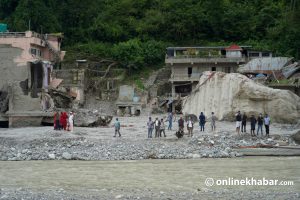
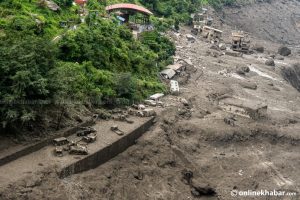
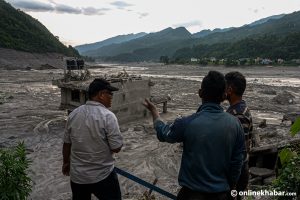
Nepal has put forward four major proposals to the international community to combat the effects of climate change and manage cross-border risks. It presented them at a high-level regional dialogue titled “From Sagarmatha to the Sea,” held at the headquarters of the United Nations Economic and Social Commission for Asia and the Pacific (ESCAP) in Bangkok.
Minister for Energy, Water Resources and Irrigation Biraj Bhakta Shrestha said the crises caused by climate change in the mountain region are not confined within the geographical borders of any one country. He presented the proposals on behalf of Nepal.
The first proposal is to share space technology and data. Nepal has proposed that international space agencies, scientific institutions and governments work together to build a multi-hazard early warning system based on satellites, AI and modern technology. The system would monitor risky slopes and glaciers in the Himalayan region.
The second proposal is to share information and knowledge. Prime Minister Balen Shah had earlier proposed a “Himalayan Climate Resilience Mechanism” to exchange data, monitor glacial lakes and coordinate early warnings across the mountains. On that basis, Nepal has proposed turning the Himalaya into a laboratory for cooperation.
The third proposal is to release financial support as quickly as disasters strike. Minister Shrestha said monitoring the Himalaya costs millions of dollars, but failing to monitor it causes losses worth billions. He therefore proposed accessible, grant-based financial support for monitoring, preparedness and recovery.
“Let us create a permanent window for the rapid addressing of loss and damage and fill it with adequate funds. For monitoring and early warning in the high Himalaya, give grants, not loans. And let every investment, from hydropower on our riverbanks to border towns, be made risk-sensitive from source to sea,” he said.
The fourth proposal is to invest in a green future for Himalayan communities. Minister Shrestha proposed opening a path to prosperity through clean energy, sustainable agriculture, herbs and responsible tourism for mountain communities that protect forests and watersheds. He also proposed giving Himalayan products duty-free market access.
Representatives of 53 countries have supported the proposals Minister Shrestha presented on behalf of Nepal. The dialogue was attended by ministers from various Asia-Pacific countries, UN representatives, scientists and diplomats.