


A few years ago, most people bought a smartwatch mainly to count steps, track exercise, or check messages. Today, the same small device can continuously monitor movement, physical activity, heart rate, and sleep. This has led neuroscientists to ask whether information collected from the wrist might also tell us something useful about neurological health.
A smartwatch cannot see the brain. It cannot perform an MRI, measure dopamine, or examine neurons. What it can do is repeatedly measure functions that the nervous system controls, including how we move, walk, sleep, and respond to our surroundings. Neurological diseases can gradually alter these functions, sometimes before the changes become obvious in everyday life. Researchers are therefore studying wearable devices as sources of digital biomarkers, objective measurements collected through digital technologies that may provide information about health and disease.
The brain leaves clues in movement
Walking across a room seems simple, yet it requires the brain to coordinate the legs, arms, muscles, posture, balance, and vision. When neurological disease affects these networks, walking can gradually change. Steps may become shorter, one arm may swing less, turning may slow, or the timing between steps may become less consistent. These subtle differences can be difficult to recognize during ordinary observation, but accelerometers and gyroscopes in wearable devices can convert movement into measurable data.
Parkinson’s disease is an important example. Tremor is its most recognizable symptom, but the disease can also cause slowness of movement, stiffness, reduced arm swing, postural changes, and difficulty walking. Studies suggest that walking speed, stride characteristics, stance time, and related gait measures can provide useful information about Parkinson’s disease severity, progression, and treatment response. Wearable sensors are also being studied for freezing of gait, when a person’s feet can suddenly feel stuck despite the intention to keep walking. A systematic review found considerable promise while emphasizing that further validation is still needed before these technologies become routine clinical tools.
The broader potential goes beyond Parkinson’s disease. Masurkar and Rikame reviewed 17 systematic reviews encompassing 308 primary studies and found substantial interest in using wearable technologies to assess gait, mobility, balance, and fall risk across neurological conditions. The attraction is easy to understand. Instead of observing someone walking for a few minutes every several months, researchers and clinicians could potentially study gradual changes during normal daily life.
Sleep, heart signals, and artificial intelligence
Movement is only one source of information. Sleep disturbances are common in neurological disorders and, in some conditions, can appear before more recognizable symptoms. A 2026 systematic review by Mijnsbergen and colleagues examined 70-studies using movement sensors for nighttime monitoring in Parkinson’s disease. The authors found potential for actigraphy and related sensors to assess sleep and nocturnal behavior, but they also highlighted major differences in methods and the need for greater standardization. A smartwatch is therefore not a replacement for formal sleep study, but repeated measurements over weeks or months may add another piece to the neurological picture.
Wearables can also measure cardiovascular signals such as heart rate variability, the small differences in time between heartbeats. Because this measure is influenced by the autonomic nervous system, researchers are interested in whether it could contribute to neurological monitoring. It must be interpreted cautiously because exercise, stress, sleep, medication, and illness can all affect it. Its value may ultimately come from combining it with movement, gait, sleep, and other signals rather than interpreting any single measurement in isolation.
This is where artificial intelligence becomes especially interesting. A slightly slower walking speed alone may mean little. A change in sleep alone may also have many explanations. But imagine a device collecting information about walking, arm movement, tremors, activity, sleep, and cardiovascular signals over months or years.
Artificial intelligence could search across these measurements for patterns that would be difficult for a person to recognize manually. More importantly, an algorithm could compare a person not only with a population but also with his or her own long-term baseline. If several measurements gradually changed together, the system might flag that something deserves attention. That would not be a diagnosis, but it could eventually provide a reason to seek medical evaluation earlier.
A neurological examination is extremely valuable, but it is also a brief snapshot. A person with Parkinson’s disease may see a neurologist every few months, while symptoms fluctuate from morning to evening and change with medication, fatigue, stress, and activity. Someone may walk relatively well in the clinic yet struggle more while shopping, climbing stairs, or moving around at home. Because wearable devices travel with the person, they could complement clinical examinations by showing what happens between appointments.
Why could this matter for Nepal?
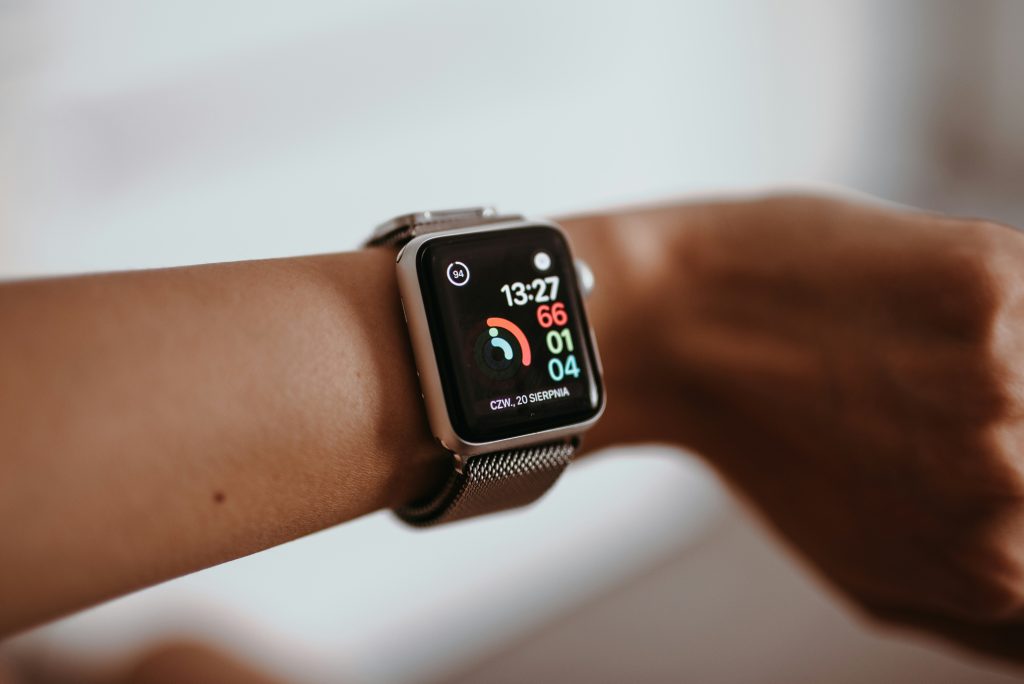
This possibility is especially relevant in Nepal, where geography and the concentration of specialist services in major urban centers can make neurological care difficult to access. A patient living far from a specialist center may have to travel considerable distances simply for an assessment. In the future, some information about walking, movement, sleep, and activity could potentially be collected remotely and reviewed by health professionals. This would not replace a neurologist or an in-person examination. It could, however, provide additional information about visits and help clinicians decide when closer assessment is needed.
For Nepal, the promise of digital health should therefore be judged not only by technological sophistication but also by accessibility. A system that requires expensive devices, constant high-speed internet, or complex technical support may widen existing health inequalities. The more meaningful goal would be accurate and affordable tools that can function in real communities, including places where specialist neurological care is limited.
Your smartwatch is not a neurologist!
The excitement around wearable technology should not obscure an essential limitation: a consumer smartwatch cannot currently diagnose Parkinson’s disease, Alzheimer’s disease, or most other neurological disorders. Poor sleep, fewer steps, an unusual heart rate, or a change in movement can occur for countless reasons. Even in Parkinson’s disease, where wearable technology has been studied extensively, researchers use different sensors, algorithms, body locations, and measurement methods. Stronger clinical validation and greater standardization are still needed.
There is also a fundamental difference between detecting a pattern associated with disease and diagnosing the disease itself. A smartwatch may eventually recognize that something has changed, but understanding why it changed will still require clinical judgment, medical history, examination, and, when appropriate, further testing.
Privacy deserves equal attention. Continuous monitoring can generate years of information about sleep, movement, activity, and physiology. As these devices become more medically useful, societies will need clear answers about who owns that data, who can analyze it, how securely it is stored, and what should happen if an algorithm suggests increased neurological risk before symptoms are apparent.
Neurologists have always relied on careful observation: how a patient walks, moves the hands, balances, speaks, and coordinates movement. Those skills will remain essential. What wearable technology adds is the possibility of observing selected aspects of neurological function repeatedly during everyday life.
The real breakthrough may therefore not be a watch that suddenly announces that someone has Parkinson’s disease. A more realistic future is subtler. One day, a wearable device may simply recognize that a person is no longer moving, sleeping, or behaving quite like his or her usual self. That change may not provide a diagnosis, but it could provide something valuable: a reason to pay attention and begin an important conversation with a doctor.