
Kathmandu, November 29
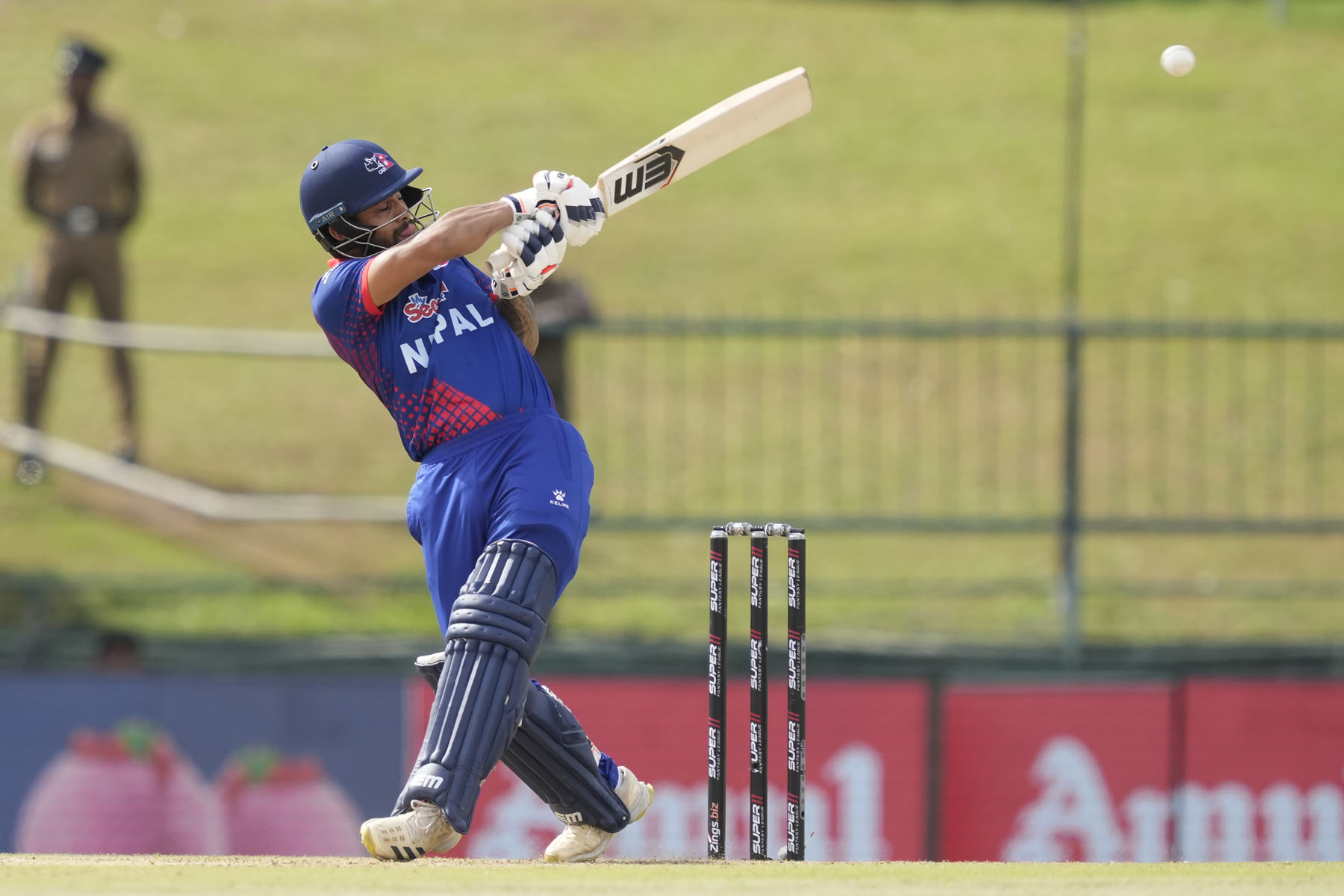
Nepal have several options across batting, all-rounders and bowling in their 15-member squad for the ICC Men’s Cricket World Cup Qualifier Play-off. But the team’s biggest concern remains its batting, which will need to deliver more consistently if Nepal are to progress to the next stage.
The squad, led by Sandeep Lamichhane, includes three changes from the team that last played in the ICC Cricket World Cup League 2 series. Rashid Khan, Abhishesh Gautam and Kushal Bhurtel have been included, while Sher Malla, Shahab Alam and Sundeep Jora have been left out.
Experienced fast bowler Sompal Kami is also absent from the squad. He was initially included in the team for the Rising Stars Asia Cup but withdrew from the tournament due to injury.
The play-off, which will be held on home soil, is particularly important for Nepal after they failed to finish in the top four of League 2 and missed out on direct qualification for the World Cup Qualifier. Nepal will be aiming to use home advantage to secure a place in the next round.
However, the team’s recent batting performances have raised questions about its readiness. Nepal’s batting struggles were exposed during the Rising Stars Asia Cup in Qatar, where the team travelled without some of its key players. Nepal were bowled out for 26 runs against India A and 72 against Pakistan A, highlighting the lack of depth and consistency in the batting unit.
The challenge for Nepal will be to address those weaknesses in the play-off. Although the squad has several all-rounders, their contributions with both bat and ball will need to be more consistent.
Batting options, but consistency remains a concern
Kushal Bhurtel, Aasif Sheikh, Arjun Kumal, Dev Khanal, Ishan Pandey and Rohit Paudel are the main batting options in the squad. They provide choices from the opening positions to the middle order, but consistency remains a concern.
Aasif and Bhurtel are likely to be the main options at the top of the order. Bhurtel’s return adds experience to the top order, while Kumal is another option as an opener. Kumal had recently been given opportunities in the national team in Bhurtel’s place and had a chance to establish himself.
Aasif, who scored a century against the UAE in the final of the ACC Premier Cup, has struggled since then, scoring only 35 runs in his last four ODIs.
Bhurtel has also been unable to find consistent form. He scored 58 runs in three matches at the Rising Stars Asia Cup, including 57 against the UAE. He scored just one run against India A and was dismissed for a duck against Pakistan A.
Kumal is known for his ability to spend time at the crease. However, Nepal can accommodate only one of Bhurtel and Aasif alongside him if Kumal is selected to open.
Dev Khanal and Ishan Pandey offer options in the middle order. Both have previously represented the national team. Rohit Paudel’s role will be particularly important, as he will be expected to stabilise the innings and accelerate the scoring when required.
With the top order having struggled to deliver, the middle order could face additional pressure. The batters at the top will need to negotiate the new ball and provide a solid platform.
Nepal have several options, but how the middle order handles pressure will be crucial. Against stronger opponents, the team will need partnerships to post competitive totals and chase down targets.
An abundance of all-rounders

Dipendra Singh Airee, Gulshan Jha, Basir Ahamad, Rashid Khan and Karan KC are the key all-rounders in the squad. Bhurtel and Rohit have also increasingly taken on all-rounder roles in recent times.
Their ability to contribute with both bat and ball gives Nepal flexibility in selecting the playing XI.
Dipendra is among Nepal’s most important all-rounders. He can bat in the middle order and contribute with his off-spin. His fielding is another strength, and he can change the course of a match in the field.
Gulshan provides a pace-bowling option and can contribute with the bat in the lower order. Basir can also be useful with both his spin bowling and batting.
Karan’s experience will be important for Nepal. Capable of bowling with the new ball, he can also add valuable runs in the lower order.
The number of all-rounders gives Nepal the opportunity to build a balanced playing XI. However, the team will need regular contributions from them in both departments rather than relying on their versatility alone.
Bowling remains Nepal’s main strength
Bowling has traditionally been Nepal’s strongest department. The team has often managed to defend modest totals through disciplined bowling, but it cannot afford to rely on that approach in every match.
Captain Sandeep Lamichhane, Lalit Rajbanshi, Nandan Yadav, Karan KC and Abhishek Gautam are among the main bowling options. Gulshan Jha and Rashid Khan also provide pace-bowling alternatives.
In the spin department, the combination of experienced campaigners Sandeep and Lalit, alongside Abhishek, could be important. Sandeep’s experience and wicket-taking ability remain among Nepal’s key assets.
Karan will lead the pace attack alongside Gulshan, while Rashid’s recent performances have added another option.
Rashid took five wickets against Pakistan A at the Rising Stars Asia Cup, conceding 39 runs in eight overs. Earlier, he made his ODI debut against the UAE, taking one wicket while conceding 13 runs in four overs. Nepal will hope he can carry that form into the play-off.
Lalit brings experience to the spin attack, while Nandan provides another pace option. The absence of Sompal, however, could put additional responsibility on Karan, Nandan, Gulshan and Abhishek to share the fast-bowling workload.
Abhishek made his List A debut at the Rising Stars Asia Cup and took two wickets against Pakistan A. He could now get an opportunity to make his ODI debut for Nepal.
His role in the squad will be worth watching. With experienced left-arm spinner Lalit also in the team, competition for a place in the playing XI will be strong. Nevertheless, Abhishek could be in contention for an opportunity.
Sompal’s absence is notable. Having been included in the squad for the Rising Stars Asia Cup, he was forced to withdraw due to injury and has not been selected for the World Cup Qualifier Play-off either.
Playing XI will determine the balance
Nepal’s squad offers several batting options, while the all-rounders could add depth to the batting order. In spin, Sandeep, Abhishek and Lalit provide different options. The pace attack can draw on Karan, Gulshan, Nandan and Rashid.
But the team’s actual balance will depend on the playing XI selected for each match. Decisions on batting depth, the number of spinners and the combination of fast bowlers will be crucial.
The squad has a notable abundance of all-rounders. Apart from wicketkeepers Aasif Sheikh and Arjun Kumal, 13 players are capable of bowling. Yet the central challenge remains the batting, and Nepal will need a stronger showing from that department.
Playing at home gives Nepal a competitive advantage, but the team must make the most of it.
Nepal will begin its campaign against Italy at the Tribhuvan University International Cricket Ground on December 4. With home support behind them, the players will need to deliver according to their roles and the team management will need to find the right combination if Nepal are to progress to the next stage.