Kathmandu, September 7
International tunnel rescue expert Professor Arnold Dix, who gained global attention for leading the successful rescue of 41 workers trapped inside India’s Silkyara tunnel, has described Nepal’s ongoing efforts to rescue people from flood-hit tunnels as the toughest test of his career.
The Australian geologist and engineer, who is providing technical advice and field leadership for the rescue operations in Nepal, shared his experience and a message on social media on Monday morning.
“I have never experienced anything like this,” Dix wrote.
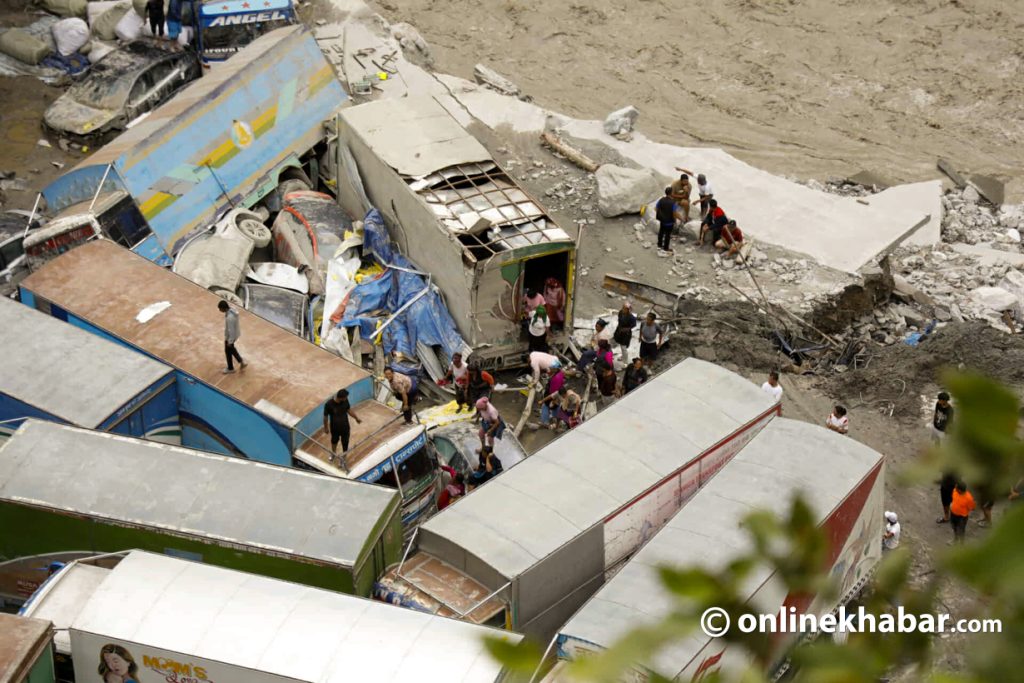
Dix said the situation in Nepal was fundamentally different from previous rescue operations, with several potential rescue sites being dealt with simultaneously.
“Here in Nepal, we are facing something I have never experienced before. This is not just one rescue. There are multiple potential rescues happening at the same time, in different locations, each with its own dangers, uncertainties and lives that may still be saved,” he wrote.
A test of duty and ‘dharma’
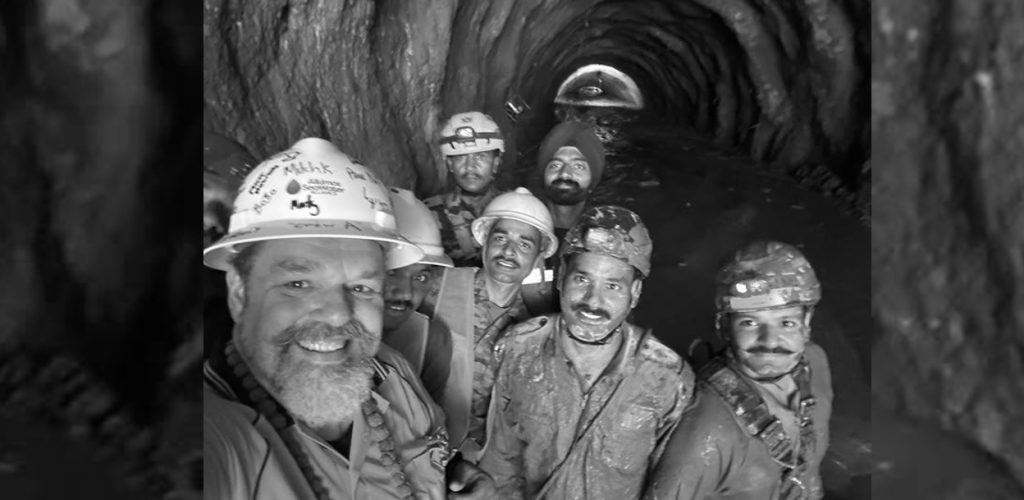
Dix reflected on the 2023 rescue operation at India’s Silkyara tunnel, where 41 workers remained trapped underground for 17 days.
“At Silkyara, there were 41 people underground and we had what seemed like an almost impossible responsibility to bring them home alive. We passed that test together,” he wrote.
“But passing one great test does not mean the test is over. Perhaps it means we have been entrusted with an even greater one.”
Dix contrasted the Western idea of “duty” with the Eastern philosophical concept of “dharma”.
In the Western tradition, he said, duty means doing what is right even when success is uncertain. Eastern traditions, he added, offer another powerful perspective through the concept of dharma.
“The test is not simply whether we succeed or fail. The real question is whether, as the path becomes harder, responsibilities increase and the outcome remains unknown, we continue to do what is right,” he wrote.
Dix said Silkyara taught him the difference between low probability and impossibility, while Nepal was teaching him something more.
“When multiple lives depend on us at the same time, we must turn hope into discipline and compassion into action, and duty must not depend only on certainty of success,” he wrote.
From Australia to Nepal’s flood-hit tunnels
Dix, a senior expert associated with the International Tunnelling and Underground Space Association (ITA), initially provided technical advice remotely from Australia to the Nepal Electricity Authority during the early days of the Rasuwa floods.
Following his advice and coordination, two technicians were rescued alive from the flooded tunnel of the Trishuli 3A hydropower project 10 days after the disaster.
Dix subsequently travelled to Nepal and is now directly involved in field operations.
He has been guiding inspection and search efforts at several tunnels, including the Chilime Hydropower Project, based on the technical possibility that even structures completely buried by flood debris and mud could contain pockets of breathable air where people may still be alive.
Dix has vowed to continue the rescue effort to the end.
“Whether East or West, the principle is the same — we are not judged only by how many lives we save, but also by the lives we refuse to give up on,” he wrote.