

Kathmandu, November 25
Several longstanding issues in Nepal-India relations, including the disputed Lipulekh territory, the pending report of the Eminent Persons Group (EPG) and India’s Agnipath military recruitment scheme, were not discussed during Prime Minister Balendra Shah’s recent state visit to India, according to Indian Foreign Secretary Vikram Misri.
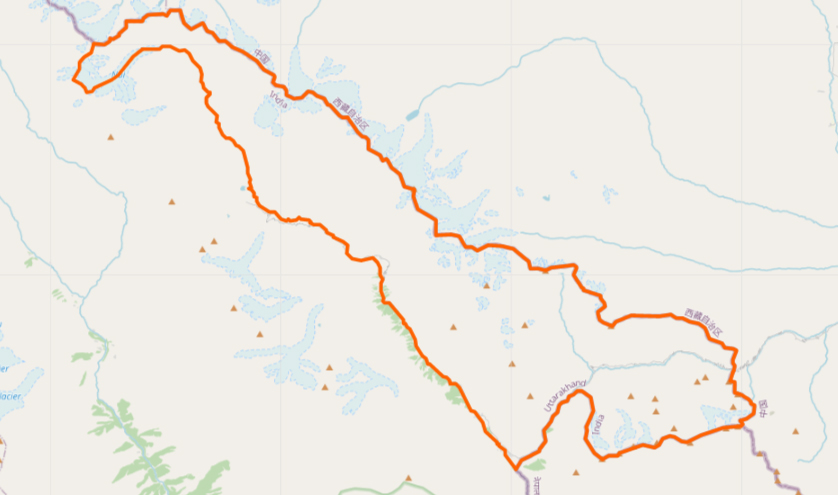
The omission is notable given that Nepal had formally raised objections with both India and China over the use of Lipulekh for the Kailash Mansarovar pilgrimage just six months earlier.
In April, after India invited applications for the 2026 Kailash Mansarovar pilgrimage through Lipulekh, Nepal sent a six-point diplomatic note expressing its disagreement with the plan.
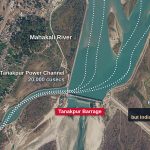
In a statement issued at the time, the government reiterated that Limpiyadhura, Lipulekh and Kalapani, all east of the Mahakali River, were integral parts of Nepal under the 1816 Treaty of Sugauli.
“The Government of Nepal has once again conveyed its clear position and concerns through diplomatic channels to both India and China regarding the proposed Kailash Mansarovar pilgrimage through Lipulekh, which is Nepali territory,” the statement said.
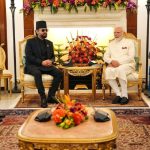
However, during Shah’s two-day state visit to India, the issue was not raised in talks with Indian Prime Minister Narendra Modi.
On November 23, shortly after Shah returned to Tribhuvan International Airport, Indian Foreign Secretary Misri told journalists that the two sides had not discussed Lipulekh.
He also said that India and China had been conducting trade and other activities through the Lipulekh Pass for a long time.
Former director general of the Department of Survey Punya Prasad Oli said that under the Treaty of Sugauli, not only Lipulekh but also the territory extending to Limpiyadhura belonged to Nepal.
“It is not surprising that India would say that, but we must continue to present our position on the basis of historical evidence,” he said.
Border dispute mechanism remains inactive
Both Nepal and India have formally acknowledged the existence of unresolved border disputes, particularly in the Kalapani and Susta areas.
During Modi’s first visit to Nepal as prime minister in 2014, the two countries agreed to direct their foreign secretaries to work on outstanding border issues, including Kalapani and Susta, with technical advice and assistance from the relevant boundary mechanisms.
The understanding reached during the tenure of then Nepali Prime Minister Sushil Koirala and Modi has been reiterated during Shah’s visit.
The joint statement issued in November also mentions that the two prime ministers directed their foreign secretaries to work on resolving the remaining border disputes.
However, the foreign secretary-level mechanism has not held a meeting in the 12 years since the original understanding was reached.
Border experts say the renewed instruction to the foreign secretaries to activate the mechanism should be viewed positively, even though concrete progress remains to be seen.
India says EPG report belongs to the past
Another longstanding issue that did not feature prominently in the discussions was the report of the Eminent Persons Group (EPG), formed to review Nepal-India relations and recommend changes to bilateral arrangements.
During Modi’s 2014 visit to Nepal, the two prime ministers had agreed to review, revise and update the 1950 Treaty of Peace and Friendship and other bilateral agreements.
The agreement led to the formation of the EPG, which completed its report. However, the document has remained unsubmitted, as the Indian prime minister has not agreed to receive it.
The understanding was that the report would first be handed over to the Indian prime minister and subsequently to the Nepali prime minister.
Following Shah’s visit, India has now formally indicated that it considers the report outdated.
Asked about the EPG report, Misri struggled to recall its name before saying that it belonged to the past.
“What was that? The report of the Eminent Persons Group? I would say that is a matter of the past. We are looking ahead on this particular issue, not looking backwards,” he said.
Asked whether the joint vision document, titled Developed India and Prosperous Nepal: Reimagining the Partnership, had replaced the EPG report, Misri did not explicitly say so but suggested that the new document served that purpose.
He described the joint vision document as forward-looking, progressive, comprehensive and detailed in its approach to Nepal-India relations.
Foreign Minister Shishir Khanal also said that the issues intended to be addressed through the EPG had been incorporated into the new vision document.
Speaking at a press conference at Tribhuvan International Airport after the prime minister’s visit, Khanal said the two countries had clearly expressed their willingness to review the 1950 treaty and other bilateral agreements.
“Once both countries have clearly stated that they are ready to review the 1950 treaty and various other agreements between Nepal and India, we have brought the current vision document in a way that also addresses the contents of the EPG,” he said.
Khanal added that the vision document sought to give Nepal-India relations a new dimension, with both countries also expressing their readiness to negotiate new treaties where necessary.
However, Nilambar Acharya, a member of the EPG, said the report remained relevant because it had been prepared with the agreement of both governments.
“The Indian prime minister has simply refused to receive it. That does not mean the report has lost its relevance,” Acharya told Onlinekhabar.
Agnipath and Gen-Z uprising also not discussed

The Agnipath military recruitment scheme, another issue affecting Nepal-India relations, was also absent from the talks between Shah and Modi, Misri said.
Nepal halted the recruitment of Gurkha soldiers into the Indian Army after India introduced the Agnipath scheme in 2022.
Asked whether the two prime ministers had discussed the issue, Misri said they had not.
“If you want to understand the policy aspects of Agnipath, I would suggest contacting the Ministry of Defence,” he told journalists.
Indian journalists also asked Misri whether the two prime ministers had discussed Nepal’s Gen-Z uprising.
Misri said the issue had not come up in their conversation. However, he added that he was not at liberty to disclose details of private discussions between the two leaders.