Kathmandu, November 19
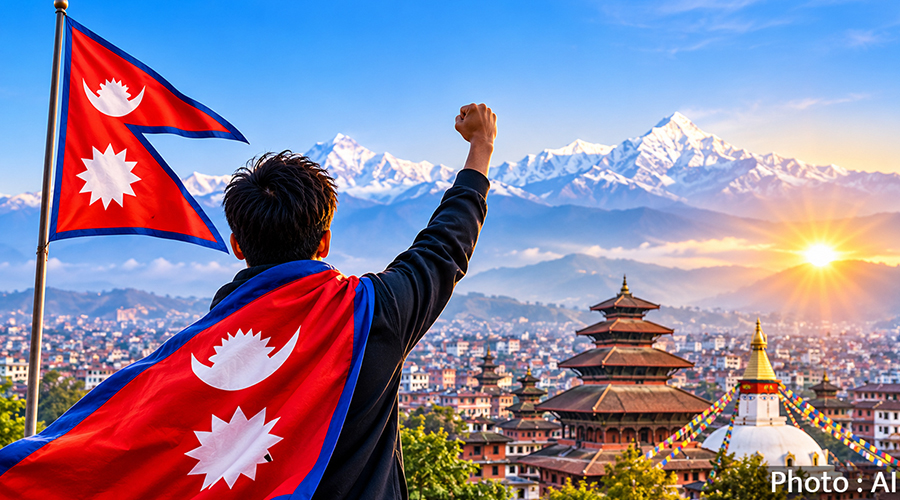
Nepal has ranked third globally among countries with the most optimistic youth about the future, according to a global survey conducted by the UK-based Oxford Scholastica Academy.
In the survey, Nepali youth scored 4.24 out of five in personal optimism, placing Nepal third among 41 countries surveyed.
Sri Lanka ranked first with 4.32 points, followed by Kenya with 4.31 points.
Nepal scored a perfect five points in optimism about personal prospects. It also ranked first among the participating countries in optimism about economic prospects, scoring 4.80 points. This indicates that despite economic challenges, young people in Nepal remain highly confident about their personal futures and economic opportunities.
Nepali youth scored 4.00 in optimism about the future of society, 3.80 in political optimism and 3.60 in environmental optimism.
Among the top 10 countries with the highest overall optimism, Kazakhstan ranked fourth with 4.17 points, Cyprus fifth with 4.09, Canada sixth with 4.08 and Nigeria seventh with 4.08. Indonesia and Russia scored 4.07 points each, while Armenia ranked tenth with 4.06.
At the other end of the spectrum, Kuwait ranked as the country with the least optimistic youth, scoring 2.92 points. Rwanda scored 3.20, Turkey and France 3.22 each, and Poland 3.24, placing them at the bottom of the list.
The United Kingdom ranked 33rd among the 41 countries, with 3.61 points. British youth scored just 3.04 in optimism about the political future and 3.06 in environmental optimism.
According to the Oxford Scholastica Academy, the survey initially sought to include young people from 100 countries. However, data from students in 41 countries with sufficient responses were analysed. A total of 1,433 students participated in the study.
The survey found that young people were most optimistic about their personal futures. Globally, the average score for personal optimism was 4.40, while optimism about the political future was the lowest at 3.29.
Releasing the findings, Lavinia Abel, co-director of the Oxford Scholastica Academy, said artificial intelligence (AI), wars, the rising cost of living and employment challenges could increase anxiety and pessimism among young people.
The high levels of optimism among Nepali youth about their personal and economic futures offer an encouraging message. However, the relatively lower levels of confidence in the political and environmental future indicate that building young people’s trust in these areas remains a challenge, the survey findings suggest.