Syangja, November 8
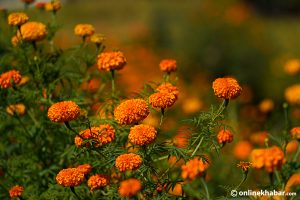
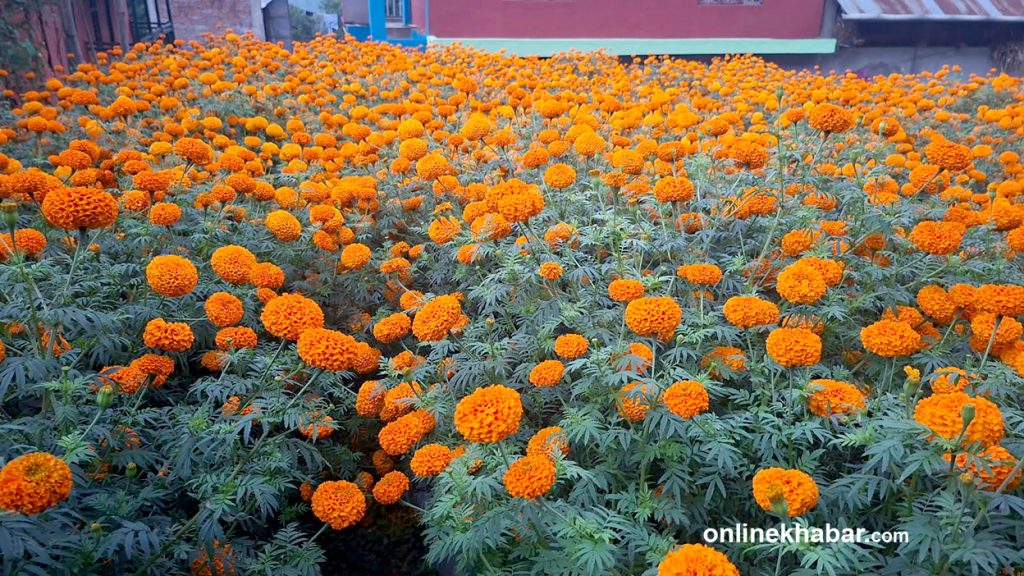
Farmers in Syangja are increasingly replacing traditional millet and other cereal crops with commercial marigold farming, attracted by strong market demand and lower risks of crop damage from monkeys.
Commercial flower farming, initially introduced to meet demand during Tihar, has become a source of good income for farmers. Marigold cultivation is now practised in Kaligandaki and Arjunchaupari rural municipalities and Galyang, Chapakot and Waling municipalities.
Dhan Bahadur Thapa, 71, of Barichaur, Kaligandaki Rural Municipality-7, has been cultivating marigolds for five years on four ropanis of land. He produced 4.5 quintals of flowers this fiscal year. Last year, he harvested six quintals and earned around Rs 300,000 by selling flowers at Rs 250 to Rs 400 per kilogram.
Similarly, Pushpa Singh Rana of Lasarga has produced four quintals from two ropanis, while Rabilal Gaudel of Bastari earned Rs 200,000 from flower sales.
Kaligandaki Rural Municipality initially promoted flower farming by providing farmers with seeds and an annual subsidy of Rs 9,000 per ropani for two years. Fifteen farmers across six of its seven wards are now cultivating marigolds on around 40 ropanis. The municipality estimates that farmers will sell flowers worth more than Rs 1.5 million this fiscal year.
With local production increasing, flower imports from other districts have declined. Flowers and garlands produced in Syangja are now reaching markets in Pokhara and Butwal.