


An imperial power that once shaped global diplomacy is now struggling to contain an uprising led by its own children. On Monday, October 19, French Prime Minister Sébastien Lecornu convened an emergency crisis cabinet following a weekend of destructive urban unrest.
More than 550,000 demonstrators took to the streets nationwide, while 1,500 businesses were ransacked or damaged across Paris, Marseille and Lyon. Flames consumed the historic 19th-century city hall and clock tower in Limoges. The Interior Ministry reported nearly 2,400 arrests within 24 hours and around 1,000 police officers injured, seven of them critically.
From the Élysée Palace, President Emmanuel Macron addressed the nation, expressing “anger and shame” and attempting to distinguish legitimate grievances from unlawful violence. With more than 5,000 arrests reported in a single week, 85 per cent of them involving minors, the French state faces a deepening crisis of confidence among its younger generation.
The smoke rising over Paris carries a warning for Singha Durbar. In Nepal, Prime Minister Balen Shah’s administration, swept into power in March by an energetic youth mobilisation, has completed seven months in office. The political honeymoon is over, and the realities of governing are beginning to catch up with the promises of revolution.
Cooking gas shortages, soaring fuel prices, controversial judicial appointments, evictions of riverbank squatters (sukumbasi) and an unabated brain drain have all contributed to growing public disquiet. The failure to deliver justice to the families of the 76 Gen-Z martyrs and the suspension of search operations following the Bhotekoshi floods, which reportedly left 1,457 dead and more than 5,000 missing, have further tested public confidence.
A government that rises on the promise of generational transformation cannot expect that mandate to remain intact indefinitely. The young people who helped bring Balen to power did not take to the streets simply to change the faces occupying Singha Durbar. They demanded a different way of governing. Seven months on, the question is whether the administration understands the difference.
A continental firestorm and the crisis of decaying institutions

The unrest in France did not begin with an elaborate ideological movement. It grew out of the everyday failures of public institutions. Students across hundreds of schools protested freezing classrooms, vermin infestations, crumbling infrastructure and teacher shortages that had cost them months of instruction.
The Élysée responded with budgetary figures, highlighting a proposed 2027 education allocation of €65.5 billion, exceeding its €63.4 billion defence budget, and promising 3,000 emergency substitute teachers. But financial allocations and official assurances did little to address the frustration of students whose immediate experience of the state was one of neglect.
The anger has also spread beyond France, with youth protests reported in Germany, Switzerland, Italy and Portugal. In Germany, students walked out of schools plagued by water damage, collapsing ceilings and chronic underfunding. Their demands were not particularly radical. They wanted safe classrooms, functioning facilities and an education system that treated them as citizens deserving of basic dignity.
As Jean-Jacques Rousseau argued in The Social Contract, political authority depends on the relationship between the state and its citizens. Governments cannot expect institutional legitimacy to survive when the institutions meant to serve people repeatedly fail them. No amount of impressive macroeconomic data can compensate for a leaking classroom ceiling.
Nepal’s leadership should pay attention. The Balen administration came to power promising administrative modernisation and a break from the inertia of established political parties. Yet, seven months into office, there is little evidence of a structural transformation in public service delivery, e-governance or education. Community schools across the country remain under-resourced, Tribhuvan University continues to struggle with institutional inertia and delayed academic calendars, and thousands of young people continue to look abroad for opportunities.
Changing the people at the top means little if the institutions beneath them remain broken. For a generation that expected meritocracy, accountability and better public services, the persistence of these failures is not merely disappointing; it is a betrayal of the promise that brought them into politics. When young people begin to believe that a change of government will not change their prospects, political hope can quickly turn into anger. The protests across Europe demonstrate that institutional neglect does not remain confined to classrooms and government offices. Eventually, it spills into the streets.
Subsistence, housing evictions and the cost of living
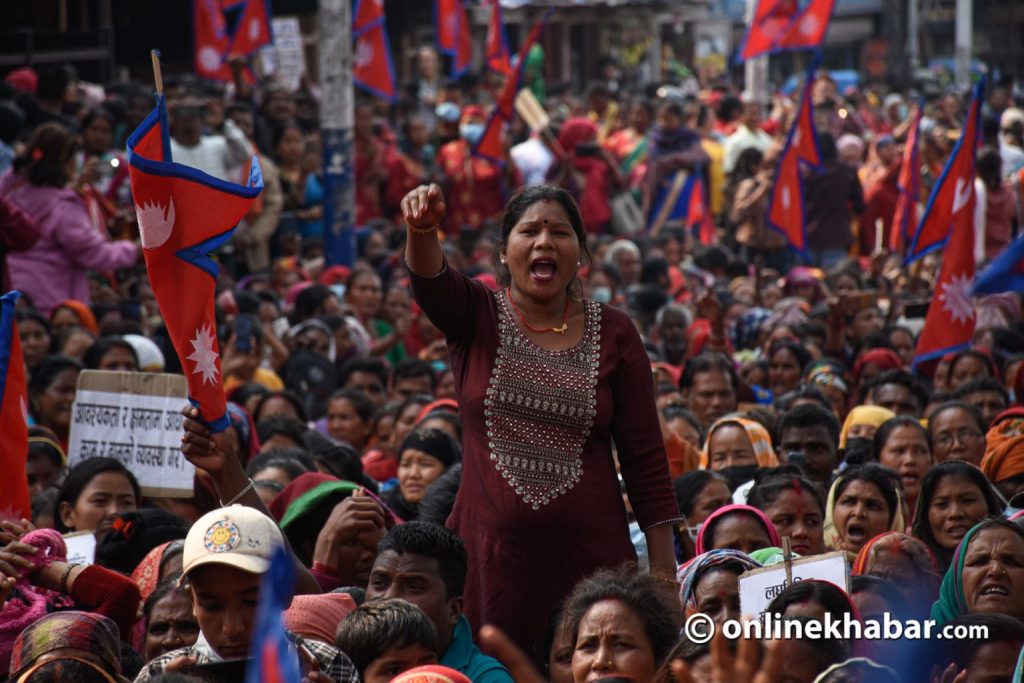
The student protests across Europe have also intersected with a wider cost-of-living crisis. Following military strikes that closed the Strait of Hormuz, international fuel prices surged, putting further pressure on household budgets. Rising rents, housing costs, energy bills and inflation have made economic security increasingly elusive for young people.
Trade unions, led by Sophie Binet’s Confédération Générale du Travail (CGT), joined student marches demanding wage protections and price controls. In Portugal, mounting frustration over the housing crisis contributed to violent confrontations, as riot police moved against protest camps in Lisbon and Porto, arresting 13 people and leaving dozens injured.
The lesson is that political unrest rarely has a single cause. It grows when economic insecurity combines with the perception that those in power are indifferent to ordinary people’s struggles. Alexis de Tocqueville’s observations on political instability remain relevant here: discontent becomes particularly dangerous when citizens lose faith in the institutions expected to protect their interests.
Kathmandu is hardly insulated from these pressures. Ordinary households are struggling with rising petroleum prices and severe cooking gas shortages, while the government has yet to offer convincing solutions. The state’s handling of disaster relief has also come under scrutiny following the suspension of search operations after the Bhotekoshi floods, with more than 5,000 people reportedly still missing. At the same time, the eviction of vulnerable sukumbasi settlements has raised serious questions about the administration’s understanding of social justice and its responsibilities towards the poorest citizens.
A government cannot claim to represent a new political order while treating the vulnerabilities of ordinary people as administrative inconveniences. Evicting people from their shelters without addressing where they are expected to go is not governance; it is the exercise of power without an adequate sense of responsibility. Raymond Aron, in The Opium of the Intellectuals (1955), warned against confusing political appearances with substantive progress. Singha Durbar would do well to remember that visible displays of administrative control do not amount to effective governance. Stability is built by protecting people when they are most vulnerable, not by deploying bulldozers against their homes.
Compromised courts and institutional complicity
France’s crisis also highlights the limits of executive centralisation and the fragility of public trust. President Macron’s reliance on special decrees to overcome legislative gridlock has deepened his political isolation. His televised remarks expressing “anger and shame” drew criticism across the political spectrum.
Far-left leader Jean-Luc Mélenchon accused the government of incompetence and playing with fire, while far-right leader Marine Le Pen blamed it for losing control of public safety. National Assembly President Yaël Braun-Pivet called for a parliamentary inquiry into both the rioters’ actions and the police response, ahead of a nationwide strike scheduled for November 5 alongside a revival of the gilets jaunes movement.
The underlying question is whether executive authority can retain legitimacy when it increasingly relies on bypassing institutional checks rather than building public confidence. In The Spirit of the Laws (1748), Montesquieu argued that political liberty depends on the separation and balance of powers. Governments may temporarily restore order through policing and executive authority, but neither can manufacture public consent. When institutions lose credibility, the state may retain its coercive power while steadily losing its moral authority.
Nepal faces its own crisis of institutional confidence, particularly within the judiciary. Public faith in the legal system has been shaken by controversies surrounding judicial appointments and widely circulated recordings alleging that intermediaries, including Inam Sapkota, were involved in illicit case-brokering arrangements between litigants and members of the bench. These allegations require proper investigation, but their circulation alone points to a serious erosion of public trust. Courts must not only deliver justice; they must also be seen to operate independently and impartially.
For a government elected on an anti-corruption platform, such controversies cannot be dismissed as someone else’s problem. The administration cannot demand accountability from every other institution while remaining indifferent to allegations of impropriety within the judiciary. Judicial appointments must withstand scrutiny, and allegations of corruption must be investigated transparently. Otherwise, the very institutions that should provide citizens with a peaceful and constitutional avenue for resolving grievances risk becoming objects of public suspicion.
The consequences could be profound. When citizens lose faith in the neutrality of the courts, they begin to question whether the legal system can deliver justice at all. A government that allows this confidence to collapse risks pushing public grievances beyond institutional channels and back onto the streets.
The double-edged sword of generational revolt
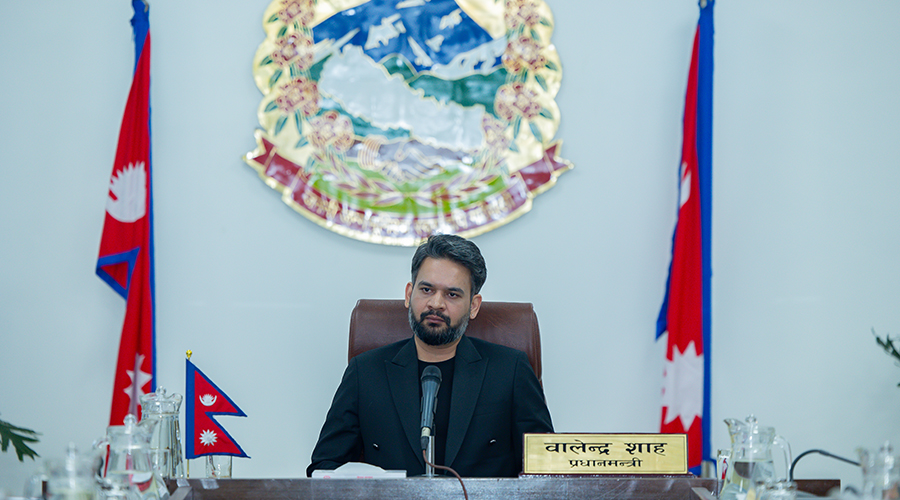
The greatest challenge before the Balen administration is not simply administrative. It is moral and political. Its five-year mandate was secured through a generational revolt in which 76 Gen-Z protesters lost their lives demanding meritocracy, transparency and clean governance. Seven months into office, justice for these martyrs and their families remains an unfinished democratic obligation. Meanwhile, the old patterns of institutional inertia appear to be reasserting themselves within Singha Durbar.
In The Rebel (1951), Albert Camus explored how rebellion emerges when people reach the limits of their endurance against injustice and the absurdities of established systems. Nepal’s Gen-Z uprising was driven by a similar rejection of a political order that had repeatedly failed to meet public expectations. Those who sacrificed their lives in the spring of 2026 did not do so to replace one group of self-serving rulers with another, or to watch familiar bureaucratic complacency return under a different political leadership.
Balen Shah’s administration must understand that the generational wave that carried it into power is not a permanent political possession. It is a mandate that must be earned through action. Gen-Z did not demand a new government so that business-as-usual politics could continue under a different name. They demanded functioning institutions, accountable leadership, economic opportunity and a state that treats citizens with dignity.
The administration cannot claim the moral authority of the uprising while failing to address the concerns that fuelled it. It cannot celebrate its electoral mandate while delaying justice for the martyrs, overlook allegations of institutional corruption, leave disaster victims without answers or ignore the growing exodus of young people seeking opportunities abroad. A government that mistakes the absence of immediate protests for public satisfaction is likely to misread the mood of the very generation that brought it to power.
The unrest in Paris, Berlin and Lisbon should therefore serve as more than a distant spectacle for Nepal’s political leadership. It is a reminder that public patience has limits, particularly when expectations have been raised by promises of fundamental change. The streets that once carried Balen Shah to Singha Durbar could just as easily become the place where his government’s failures are challenged. The youth who made this political transformation possible are not obliged to remain loyal to it. They are entitled to demand that it deliver.