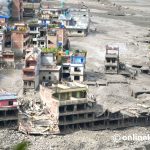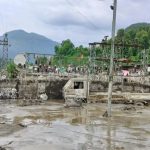


The Trishuli valley has been a trade and pilgrimage route for centuries, linking Nepal with China. On August 26, it became the path of one of the most devastating mountain disasters in recent years.
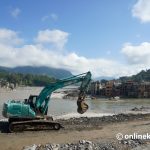
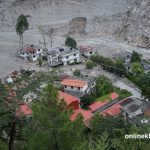
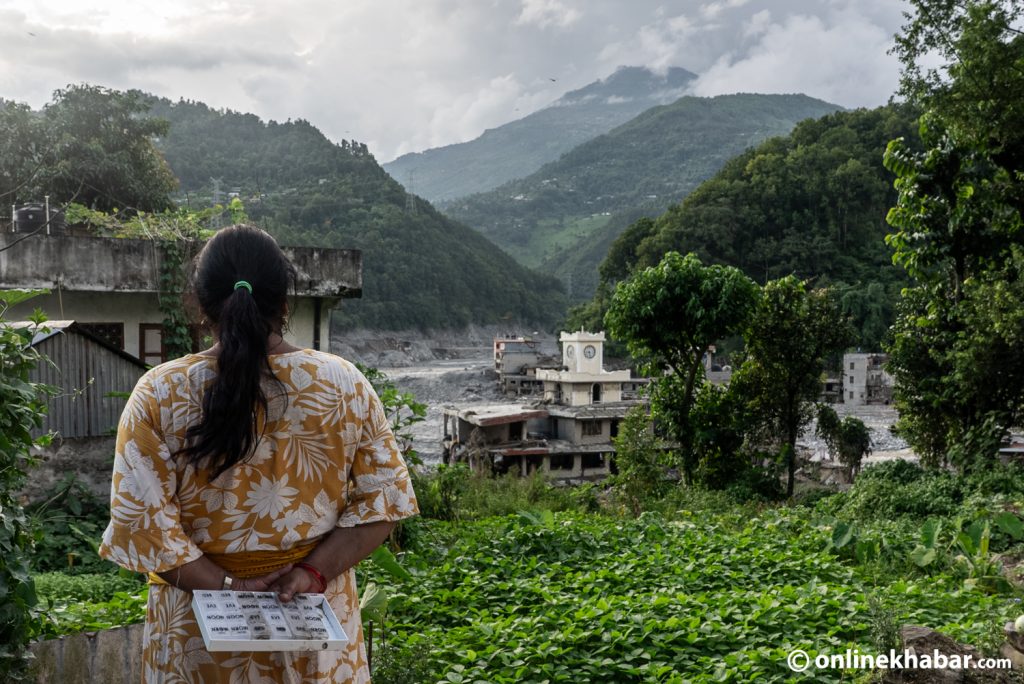
A rapid slope failure involving a glacier near the Nepal-China border triggered an ice-rock avalanche, sending water, ice and debris down the Lhende Khola and into the Bhote Koshi and Trishuli river systems. The resulting flood travelled nearly 100 kilometres, damaging communities and critical infrastructure, including roads and hydropower facilities.
Nepal then received little respite. In late September, persistent heavy rain triggered floods and landslides across the country, killing at least 12 people between September 24 and 27, with more people missing and thousands affected.
The pattern is difficult to ignore. A country that has contributed little to historical global greenhouse gas emissions is confronting hazards that are becoming more complex, interconnected and difficult to manage.
This is where science meets politics. The immediate disaster may be geological and hydrological, but the ability to prepare for the next one depends heavily on cooperation among governments.
A warning from the mountains
Scientists are still examining exactly how the August disaster unfolded. USGS describes it as a catastrophic debris flow and flood likely triggered by rapid slope failure involving a glacier. ICIMOD has referred to it as an ice-rock avalanche originating on Langtang Lirung. The event was powerful enough to generate seismic energy equivalent to a magnitude 5.2 earthquake.
The precise contribution of climate change to this individual event requires careful scientific attribution. A single disaster rarely has a single cause.
But the broader context is clear. The Hindu Kush Himalaya is warming, glaciers are changing and permafrost and mountain slopes are becoming increasingly unstable. The August disaster is therefore part of a wider risk landscape that Nepal and other Himalayan countries must prepare for.
The lesson is straightforward: preparing for one predictable hazard at a time is no longer enough. High-mountain disasters can be compound, cascading and transboundary.
A glacier does not recognise a political boundary. When ice, rock and water move across a frontier, neither should disaster preparedness.
Climate security is also diplomacy
The international environment in which Nepal must seek assistance is increasingly complicated. Wars, trade disputes, sanctions, energy insecurity and geopolitical rivalry compete for governments’ attention. Development and climate priorities can easily be pushed down the agenda when security concerns dominate.
The consequences are practical.
Mountain early-warning systems require satellite imagery, glacier monitoring, seismic information, weather forecasting and rapid communication across borders. Suspicion or a lack of institutional cooperation can prevent or delay the sharing of information. In the mountains, hours can matter.
Climate finance faces a similar challenge. Vulnerable countries need resources for adaptation and loss and damage, but competing global priorities can make those resources harder to secure.
This is why climate diplomacy cannot be treated as separate from security diplomacy. Climate-related disasters can destroy infrastructure, disrupt energy systems, displace communities and place additional pressure on already fragile institutions.
What Nepal and the Himalaya should do
First, build a Himalayan hazard compact.
Nepal and China already cooperate on trade, transit and hydropower. Disaster-risk reduction should become another area of practical cooperation. This could include real-time data exchange, glacier and slope monitoring, joint early-warning protocols and coordinated search and rescue.
India, Bhutan, Pakistan and other countries across the Hindu Kush Himalaya should be part of a wider regional effort. Institutions such as ICIMOD can provide scientific expertise and a platform for cooperation.
Disaster management is one of the few areas where countries with difficult political relationships can find common ground. It can also build the trust needed for wider cooperation.
Second, treat early-warning systems as essential infrastructure.
The August disaster demonstrated the importance of understanding what is happening high in the mountains before hazards reach populated valleys. Closing the gap between observation and action requires sensors, satellite analysis, trained local observers, community alert systems and clear evacuation protocols.
Villages need drills, not just dashboards.
The cost of an effective early-warning network is small compared with the economic and human cost of a destroyed valley.
Third, rebuild for the hazards of the future.
The August disaster damaged roads, bridges, hydropower facilities and telecommunications infrastructure. Nepal and other Himalayan countries depend heavily on hydropower and mountain connectivity for development, yet these systems are highly exposed to floods, landslides and other cascading hazards.
Future projects should incorporate hazard mapping into site selection, strengthen design standards and account for changing climatic and geological risks. Reconstruction financing should prioritise resilience rather than simply replacing what was destroyed.
Fourth, turn climate justice into a concrete diplomatic agenda.
Nepal has a strong case for greater international support because its contribution to global emissions is small while its exposure to climate and mountain hazards is high.
But the argument must be backed by evidence, financing proposals and alliances.
The International Court of Justice’s 2025 advisory opinion on climate change confirmed that states have obligations under international law relating to climate harm, environmental protection and international cooperation.
Nepal should work with other mountain and least-developed countries to push for stronger support for mountain adaptation, glacier monitoring and early-warning systems.
COP31, scheduled for November 9–20 in Antalya, Türkiye, provides another opportunity to put these concerns on the international agenda. Nepal should arrive with evidence of losses and damages, specific funding requests and a coordinated position with other Himalayan countries.
Fifth, keep climate cooperation alive despite geopolitical tensions.
Nepal and other climate-vulnerable countries cannot afford to wait for global political tensions to disappear.
Regional data-sharing arrangements, bilateral resilience funds, technology partnerships and other smaller-scale agreements can move forward even when larger international negotiations are slow. Such initiatives should complement, rather than replace, the multilateral climate system.
Nepal must also put its own house in order
Diplomacy will only be credible if Nepal strengthens its domestic disaster-management capacity.
Disaster agencies need stable funding, technical expertise and clear authority across federal, provincial and local levels. Nepal needs a well-equipped national institution with strong scientific capacity, adequate personnel and resources for both disaster response and research.
Land-use regulations must also be enforced along river corridors where settlements and infrastructure have expanded into high-risk areas. Local governments need personnel capable of interpreting hazard maps and using them in planning decisions.
Transparency matters too. How relief and reconstruction funds are managed will influence public trust as well as the confidence of international partners.
A government that demonstrates credible stewardship at home strengthens its case abroad.
The mountains will not wait
There is a temptation, at a time of war, economic uncertainty and geopolitical rivalry, to treat climate adaptation as a problem that can be addressed when international conditions improve.
Nepal’s experience should make that approach difficult to sustain.
The glacier did not wait for a peace settlement. The heavy rains did not check the diplomatic calendar. Floods and landslides do not wait for governments to resolve their differences.
The real test of international cooperation will not be the number of speeches delivered at the next climate summit. It will be whether Himalayan valleys have functioning early-warning systems before the next monsoon; whether critical data can cross borders without political delay; whether reconstruction finance reaches affected communities; and whether the countries of the Himalaya are working together to manage risks they cannot manage alone.
Nepal has told the world what it is losing. The mountains have made their argument in the clearest language possible.
What remains is for governments to listen—and to act before the next mountain moves.