
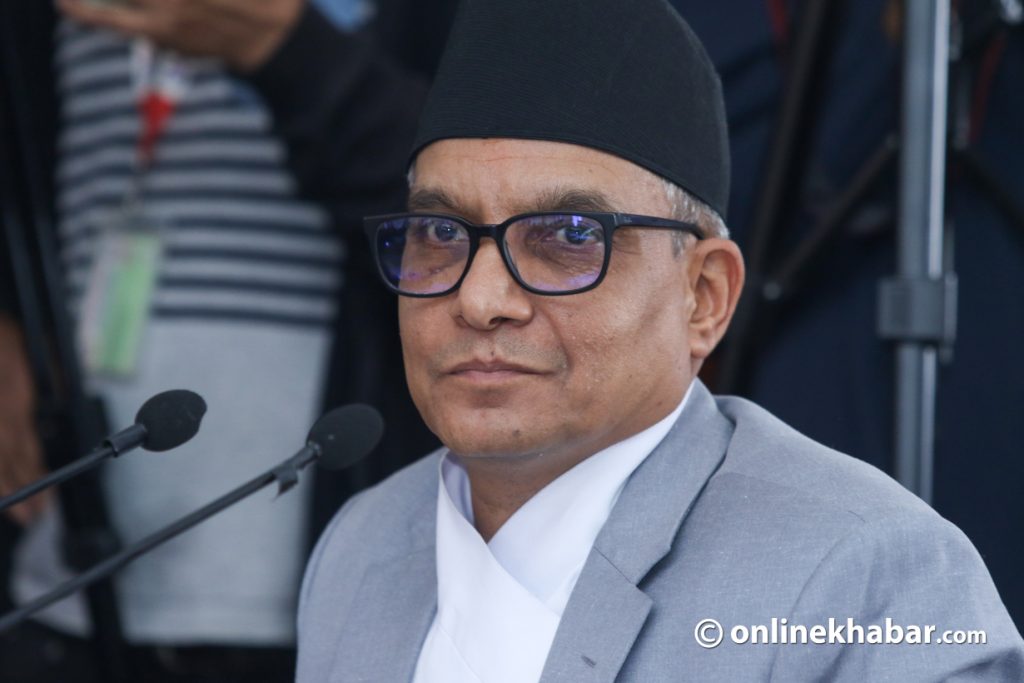
Kathmandu, September 29
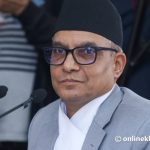
At an emergency meeting of Nepal’s Supreme Court on Monday, nearly all of the country’s senior judges turned their criticism on Chief Justice Manoj Sharma, raising questions about the direction of the judiciary and its declining credibility.
The meeting was called to discuss the arrest of former Chief Justice Cholendra Shumsher Rana. But the discussion quickly widened into a broader examination of the leadership of the Supreme Court and developments in the judiciary in recent months.
Three of the five judges who spoke to Onlinekhabar compared some courts to a supermarket, where, they suggested, anything could be obtained for the right price.
“Some courts have become like superstores during this period. Pay money and you can buy anything,” one judge said, according to a source familiar with the meeting. “How did our courts reach this situation within just three months of your arrival?”
Almost all of the judges, except for Justice Sharanga Subedi and Chief Justice Sharma, questioned what they described as the capacity and working style of the judicial leadership.
Justice Binod Sharma, considered close to the chief justice, was not present. He was visiting courts in Nepal’s far-western region.
The judges who spoke with Onlinekhabar did not want their individual comments identified. They said, however, that the meeting addressed several contentious issues, including Rana’s arrest, the composition of the Constitutional Bench, the relationship between Rana and Chief Justice Sharma, problems at the Special Court and the increasingly open activity of intermediaries around the judiciary.
The chief justice’s secretariat said it could not comment on the substance of the meeting. Amit Upreti, head of the secretariat, said they did not know what had been discussed.
Supreme Court spokesman Arjun Koirala also declined to elaborate, saying the matters the full court had decided to make public were already included in its statement.
The arrest of a former chief justice
The immediate trigger for the meeting was the arrest of Rana, a former chief justice.
According to judges who spoke to Onlinekhabar, seven justices had urged Chief Justice Sharma to convene a full court after he remained silent following Rana’s arrest.
The judges questioned why the court had not met “even in such a situation,” according to one account. Chief Justice Sharma subsequently called the emergency meeting.
One judge said the judges raised the view that the government had been wrong to arrest Rana.
Those who agreed with that view said three aspects of the arrest were particularly problematic: that Rana had been taken into custody without an arrest warrant, that he was released the following day without an adequate explanation, and that police had brought a former chief justice to a police office citing public security and peace.
The judges agreed that the full court should take a position on the matter, the judge said. That position was reflected in the statement issued after the meeting.
According to the judge, Chief Justice Sharma appeared enthusiastic during the discussion over Rana’s arrest.
But the judges also wanted the court’s statement to address what they described as Rana’s recent activity and attempts to influence the judiciary, rather than simply opposing his arrest.
The final paragraph of the statement said that actions taken or to be taken in the administration of justice should not be portrayed or communicated by linking them to any former officeholder.
It also said the full court wanted to assure the public that no internal or external influence would be given any space in the administration of justice.
Questions about intermediaries
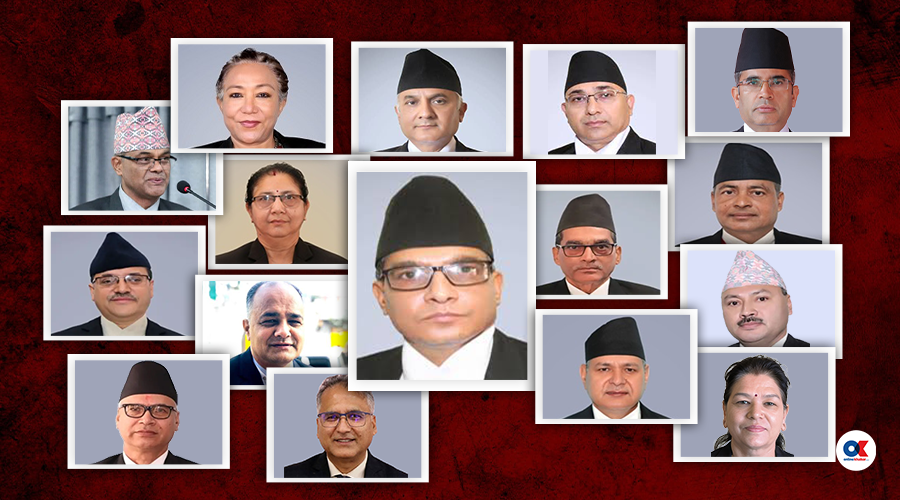
The judges also questioned why intermediaries — people who act between litigants and the courts — appeared to have become active again.
According to the judges, after Rana left office, there had been few complaints about interference or the activities of intermediaries in the judiciary.
After Rana, Deepak Kumar Karki served as acting chief justice, followed by Harikrishna Karki, Bishwambhar Prasad Shrestha and Prakash Man Singh Raut.
“Why did intermediaries become active and influential as soon as you came, when the judiciary had been functioning normally during their terms?” one judge asked Chief Justice Sharma, according to a source.
The judges also questioned why Rana, who they said had remained silent during the terms of the previous chief justices, had suddenly become active.
During the same period, a writ petition against Rana was dismissed, opening the way for him to receive a pension certificate.
The judges said intermediaries outside the courts had become increasingly active, that people had begun openly discussing cases and that individuals who had been inactive for a long period had returned.
“What are we supposed to do if we do not hear cases simply because we have heard rumours?” one judge was quoted as saying. “But if we hear the cases, someone else outside has already finished the work using our names. How can we work in such a situation?”
‘Special Court or superstore?’
The Special Court was another source of concern. Some judges raised what they described as serious irregularities and problems at the court, according to a source familiar with the meeting.
The comparison to a superstore resurfaced in discussions about the Special Court, with judges questioning whether it had begun to be seen as a place where outcomes could be obtained according to one’s financial means.
Three Special Court judges had previously met Chief Justice Sharma and told him they were having difficulty working.
Four other judges, excluding chairman Basudev Acharya and member Hemant Rawal, later met Sharma and some senior-most Supreme Court justices. They said either those involved in the alleged irregularities should be removed or they themselves should be transferred elsewhere.
Some judges subsequently asked Sharma why, if he had known controversy could arise, he had not appointed a capable chairperson to the Special Court.
According to the source, Sharma replied, “Sometimes things turn out this way even when we try to avoid them.”
The judges called for the problems at the Special Court to be taken seriously. They said that if there were problems, its leadership should be changed; if the leadership was considered appropriate, those complaining about it should be transferred elsewhere.
Sharma responded that he would make some changes after returning from China, according to the source.
Judges also raised concerns about people allegedly approaching court users with assurances that they could arrange outcomes in cases.
They questioned how even police officers assigned to court duty had gained the confidence to go around trying to “fix” cases.
The judges said the chief justice had failed to demonstrate leadership at the Special Court and some other courts.
Dispute over the Constitutional Bench
The judges also questioned Chief Justice Sharma over the way the Constitutional Bench was being formed.
They called for the four other members of the bench to be selected according to seniority, as had been the previous practice.
The judges alleged that judges were being selected according to the chief justice’s preference and that politically sensitive or interest-related cases were being brought before the Constitutional Bench.
They also called for the concerns repeatedly raised by the Nepal Bar Association to be addressed.
The Bar Association has been demanding that the four other members of the Constitutional Bench be selected either according to seniority or through a lottery process.
Under Nepal’s constitutional arrangement, the chief justice leads the Constitutional Bench and selects its other four members.
According to the report, except during the terms of Chief Justices Cholendra Shumsher Rana and Prakash Man Singh Raut, the practice of selecting the other members according to seniority had not been set aside.
Since becoming chief justice, Dr. Manoj Sharma has selected judges in a way that departs from that seniority-based practice, according to the judges.