
Kathmandu, September 10
For 12 days, a roughly 100-metre stretch of one of Nepal’s most important highways has been missing.
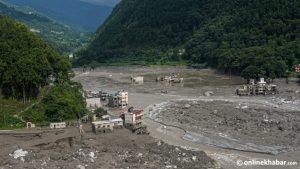
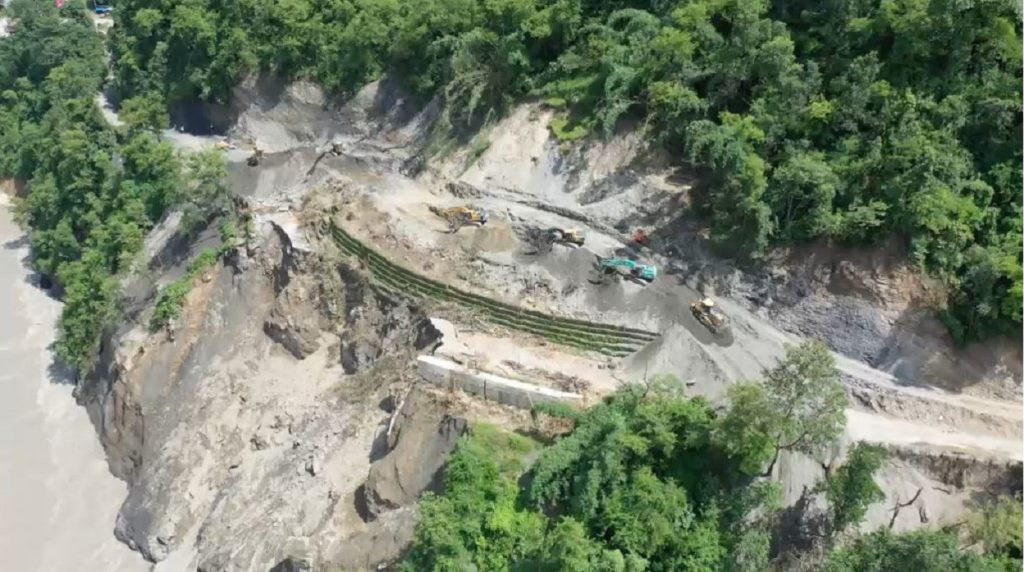
At Krishnabhir, the Prithvi Highway has slipped into the Trishuli River, severing a crucial road connection between Kathmandu and much of the country. The collapse has stranded a highway that carries passengers, food, fuel and other essential goods into the capital.
The break in the road is small compared with the scale of the network it supports. But its consequences have spread far beyond the landslide site.
Kathmandu, a city of millions, has begun feeling the effects in its markets. The disruption has contributed to shortages of cooking gas, sugar and other essential goods, while prices and reports of black-market trading have risen. The crisis became severe enough that Gauri Kumari Yadav, the minister for industry, commerce and supplies, resigned.
The road closure has also disrupted travel between Kathmandu and Pokhara, Nepal’s tourism capital, severing one of the country’s most heavily used routes.
For infrastructure experts, however, the episode is less a story about one landslide than a warning about the fragility of Nepal’s road system.
The country has alternative highways, but many cannot accommodate the heavy vehicles that normally use the Prithvi Highway. When the main route failed, the alternatives were suddenly expected to perform a role for which they were never adequately built.
“This is not a problem that can be solved by an alternative route,” said Keshav Kumar Sharma, an infrastructure expert and former government secretary. The immediate effort to reopen the highway, he said, is essentially the only practical option available.
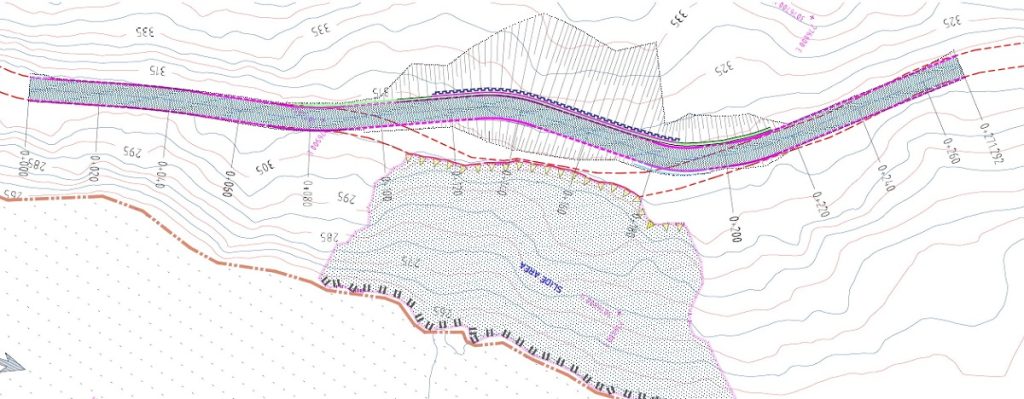
That effort involves cutting a temporary track through the same hillside where the highway disappeared.
A highway with few substitutes
The Prithvi Highway is one of the principal arteries connecting Kathmandu with the rest of Nepal. Its failure has demonstrated how much the capital depends on a single road corridor.
The government has designated the Kanti Lokpath, Tribhuvan Rajpath and BP Highway as alternative routes in previous emergencies. But none is a straightforward substitute for the Prithvi Highway.
Large freight vehicles cannot easily use them. That became particularly apparent when LPG tankers carrying cooking gas were unable to reach Kathmandu.
Instead, gas had to be filled into cylinders in the Tarai and transported to the capital, adding another layer of logistical difficulty to an already disrupted supply chain.
“The work being done now to reopen Krishnabhir has no real alternative,” Mr. Sharma said. “But it is also true that the problem has exposed the state’s excessive dependence on a single highway.”
The weakness of the alternatives is not new.
The Tribhuvan Rajpath, whose construction began around 1950, has become an important route for heavy vehicles when the main highways are blocked, but its infrastructure is in poor condition.
The BP Highway, which connects Kathmandu with eastern Nepal, has been damaged by repeated floods in recent years.
The Kanti Lokpath, another route between Kathmandu and Hetauda, is burdened by deteriorating infrastructure and congestion. At present, authorities have been directing freight vehicles from Hetauda toward Kathmandu through the Tribhuvan Rajpath and sending them back through the Kanti Lokpath.
Neither route, however, is designed to absorb the traffic of the Prithvi Highway for an extended period.
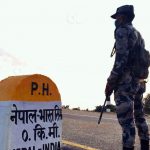
The Kathmandu-Tarai/Madhesh Fast Track was supposed to provide another major connection to the capital. The 70.97-kilometre road, being constructed by the Nepal Army, was inaugurated in 2017 and was expected under a revised schedule to be completed this year.
But its progress remains below 50 percent, and a dispute over its starting point on the Kathmandu side remains unresolved.
For years, Nepal has known that its major highways are vulnerable to landslides and floods. Yet the response has often been the same: an alternative route is sought after the main road has already failed.
The Krishnabhir landslide has exposed the consequences of that approach.
The road may reopen. The danger will remain.
The government is working to open a temporary track at the site, but reopening the road will not necessarily make the route safe.
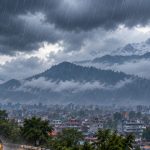
Cracks have appeared higher up the slope above the new track, raising concerns that another landslide could occur during heavy rain. Even the dry season may not eliminate the danger.
Krishnabhir has been an active landslide area in the past.
A temporary track, therefore, may restore movement without resolving the underlying geological problem.
Mr. Sharma said the government would eventually have to consider a more permanent solution. One possibility would be to build two bridges and take the road along the opposite bank of the Trishuli River. Another would involve constructing a road along the river, supported by retaining walls. A third option would be a tunnel.
Each would take considerably longer than cutting a temporary track — somewhere between six months and two years, he estimated.
The government decided to open the temporary track three days after the highway collapsed. Mr. Sharma said a faster decision could have brought an earlier reopening.
Racing to restore the connection
The government now says it hopes to restore traffic within Bhadra, the current Nepali month, although it has not given a fixed date.
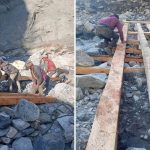
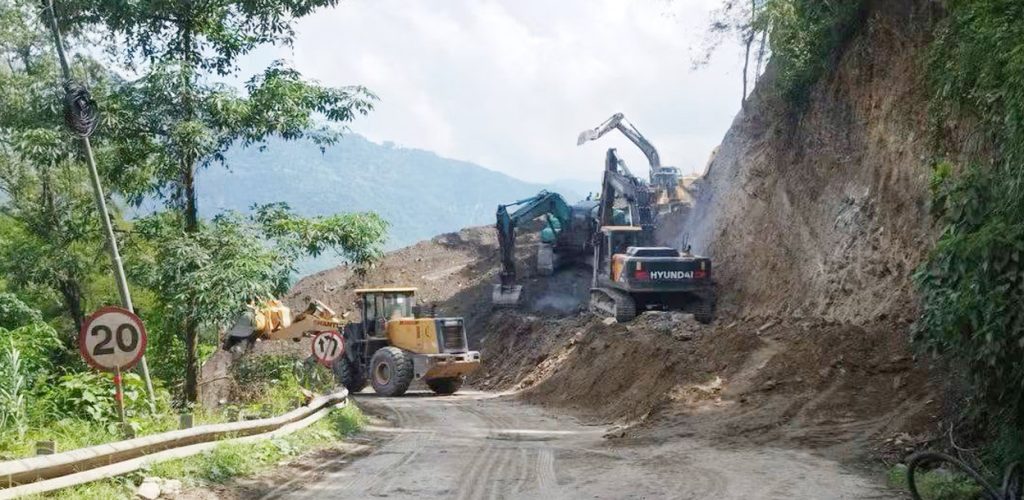
The Prime Minister’s Office said Thursday that workers have cut a track about 200 metres long through the hillside at Krishnabhir. Ten machines and 30 workers have been deployed.
The Armed Police Force has installed floodlights, allowing work to continue through the night.
Crews are also working to stabilise the slope above and below the new track. At five other locations, workers are clearing landslides and trying to restore two-way traffic.
Prime Minister Balendra Shah and Infrastructure Minister Sunil Lamsal have discussed the immediate repair of the highway. Technicians from the Department of Roads and the Nepal Geotechnical Society spent four days studying the site before recommending that the temporary track be built.
For Kathmandu’s residents, however, the technical work at Krishnabhir has become inseparable from a more immediate question: how long can the capital function when one road carrying so much of its supplies is cut?
A recurring warning
Nepal has seen versions of this crisis repeatedly.
When landslides close the Muglin-Narayangadh road, authorities routinely divert traffic through Hetauda and the roads connecting Hetauda with Kathmandu. Last year, a dry landslide near Tui Khola blocked the Muglin-Narayangadh section around the Dashain festival, forcing vehicles from eastern and western Nepal to take the Hetauda route.
There are several roads between Hetauda and Kathmandu.
The Tribhuvan Rajpath passes through Palung and Naubise. The Kanti Lokpath connects Hetauda with Thingan and Satdobato. Another road runs through Kulekhani and Pharping.
But two of those routes are largely suited to motorcycles and smaller vehicles, rather than the heavy trucks that keep Kathmandu supplied.
The same roads are called upon when the BP Highway is disrupted.
Each time, the country is reminded that having an alternative route on a map is not the same as having a functioning alternative highway.
That distinction has become painfully clear at Krishnabhir.
A 100-metre section of road disappeared into a river. Twelve days later, the effects are being felt hundreds of kilometres away — in Kathmandu’s markets, in the movement of fuel and food, and in the journeys of thousands of people.
The immediate priority is to put the road back.
But the larger question is harder: why does the failure of such a small section of highway have the power to disrupt so much of the country?
For Nepal, the answer may lie not in the landslide itself, but in the roads that were never built, strengthened or maintained well enough to take its place.