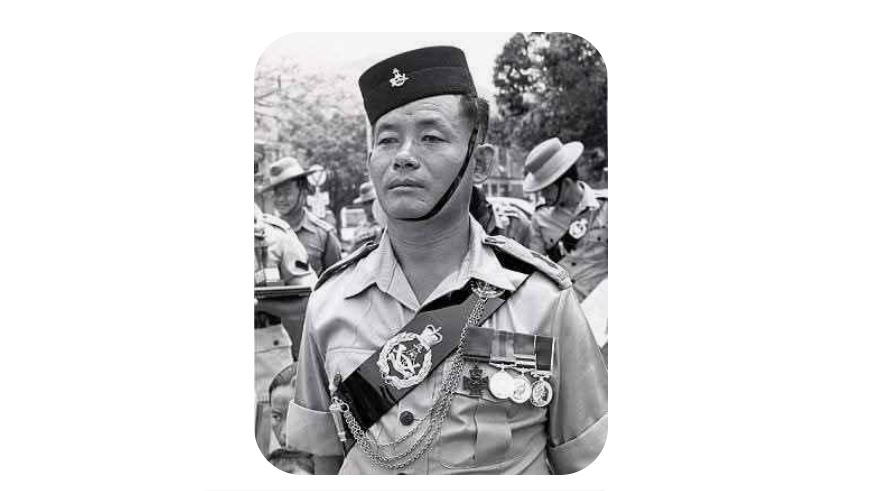
Following the Treaty of Sugauli, a new phase of Gurkha recruitment into the British military began in 1816. Impressed by the fighting capabilities of Gurkha soldiers during the Anglo-Nepal War, the British began recruiting them into their own military forces. In the early phase, recruitment was largely drawn from communities such as the Gurungs, Magars, and Khas-Chhetris of western Nepal, and recruitment depots were developed in areas such as Gorakhpur. Later, with the expansion of British rule, recruitment also expanded towards eastern Nepal, including the Rai and Limbu communities, through the Ghum area of Darjeeling.
Alongside this recruitment process, the British increasingly classified certain communities as “Martial Races”—communities considered particularly suitable for military service. Gurungs, Magars, Rais, Limbus and others were consequently given a distinctive military identity within British recruitment policy. Yet while their martial qualities were recognised and institutionalised, their own traditions, cultural values and social identities do not appear to have been given equal recognition within the regimental structure.
Here, one important distinction needs to be made. Rai, Limbu, Gurung and Magar are not religious groups. They are Indigenous communities with their own histories, languages, rituals, social institutions, customary laws, worldviews and traditional knowledge systems. Their traditional religious and ritual institutions and specialists also differ from one community to another.
Among the Limbu, Phedangma, Samba, and Yeba/Yema have traditionally played important ritual and religious roles. Among the Rai, the Nakchho has an important religious role. Among the Gurung, Lamas and Ghyabring have traditionally performed important religious and ritual functions. Among different Magar communities, Jhankris and other traditional religious specialists have played significant roles.
Eden Vansittart’s Gurkhas (1915) provides an important historical observation regarding the traditional religious practices of the Gurung community. On pages 47–48, Vansittart describes the Gurungs in their homeland as being associated with Buddhist traditions and notes the role of Lamas and Giabrings as religious and ritual specialists within their communities. However, he also states that when serving in British Gurkha regiments, they accepted Brahmins/Pandits for priestly functions.
This raises a serious historical question: If Gurkha soldiers were recruited based on their martial qualities and community identities, why was their own traditional cultural and religious institutional structure not given equal recognition within the regiments?
This cannot simply be understood as an ordinary change in traditional and religious practice. It also raises important questions about the relationship between the state structure of the time, Hindu social hierarchy and colonial military administration.
Family, regiments and cultural transmission
In the early period, Gurkha soldiers were not regularly permitted to live with their families within their regimental establishments. Soldiers generally returned to Nepal during long periods of leave and, in many cases, spent extended periods with their families and communities.
After the Second World War, particularly as British Gurkhas were increasingly stationed for long periods in Malaya, Hong Kong and Brunei, the relationship between Gurkha families and military life gradually changed. Between 1948 and 1971, the movement and settlement of Gurkha families in Southeast Asia became increasingly visible.
However, even during the 1950s through the 1980s, not all soldiers had equal rights or opportunities to keep their families with them. Various restrictions existed concerning length of service, authorisation, and accommodation.
In Britain, formal “married accompanied service” was introduced in 1997.
Today, the presence of former Gurkha soldiers and their families in Britain continues to grow. Gurkha soldiers have also raised longstanding issues concerning unequal pay, pensions, benefits and other rights for their military service.
Yet beyond economic and administrative discrimination lies an even deeper question: the continuity of traditional cultural rights and identity.
Military success, but a crisis of cultural transmission
The children and descendants of Gurkha soldiers are now studying at universities in Britain. Some have reached prestigious institutions such as Oxford and Cambridge and have established themselves as teachers, professors, doctors, businesspeople and professionals in various fields. This achievement is undoubtedly admirable. But another question arises: How easily are they able to transmit the languages, rituals, religious traditions, indigenous knowledge and community lifestyles of their ancestors to the next generation?
Military service created new opportunities for economic and social mobility. At the same time, however, it could also create circumstances in which younger generations gradually became detached from the languages, religions, traditions and traditional knowledge of their ancestral communities. Particularly when families began living for long periods within military establishments or overseas, the social and cultural environment of younger generations increasingly differed from that of their ancestral communities. Seen from this perspective, the history of Gurkha recruitment is not merely a history of military mobility. It is also a history of cultural transformation and identity.
The question of religious equality within the regiments
In this context, the question of traditional, cultural and religious representation within the regiments becomes particularly important.
For Gurung and Magar communities, lamas or other religious figures are, in some circumstances, present for traditional and religious practices. But an important question remains: Have the Nakchho of the Rai community and traditional ritual specialists such as the Phedangma, Samba and Yeba/Yema of the Limbu community been given equal institutional recognition?
If soldiers from different Indigenous communities were recruited into the same Gurkha military structure, their cultural and religious rights should also be addressed on an equal basis.
For Gurungs, this could include recognition of Lamas/Ghyabring; for Magars, Jhankris and other relevant traditional religious specialists; for Rais, the Nakchho; and for Limbus, Phedangma, Samba and Yeba/Yema. Recognising and respecting these traditional religious and ritual institutions according to the needs of each community is not merely a religious matter. It is a matter of cultural rights and equality.
Hinduisation and the question of cultural inequality
The history of Gurkha recruitment cannot be understood solely as a history of military recruitment. The relationship between Nepal’s Hindu state structure, its social hierarchy and cultural influence, and the administrative structure of the British Indian Army may also have influenced the religious practices of Gurkha soldiers.
Despite the existence of distinct traditional cultural systems among communities such as the Rai, Limbu, Gurung and Magar, historical evidence indicates that Hindu religious rituals and Brahmin priests were given an important place within regimental life.
This therefore opens another possible way of looking at the issue: “Hinduisation within the military institution” or “the institutional influence of Hindu cultural dominance.”
However, an important distinction must be maintained. The British colonial administration and the Hindu state structure of Nepal at the time were not the same institution and did not necessarily pursue identical objectives. Therefore, it would be too simplistic to place the entire responsibility for cultural transformation or cultural encroachment directly on the British.
Rather, it is necessary to look at the interaction between the existing social and religious structures of Nepal and the administrative practices of the British military system.
Yet this interaction raises another fundamental question: If the British military structure protected and institutionalised the martial identity of Gurkha soldiers, why was their indigenous cultural identity not protected and institutionalised to the same extent?
From Brian Houghton Hodgson to Dr Campbell, Eden Vansittart, and H H Risley, British officials wrote extensively about the ethnic communities, histories, languages, religions, and cultural practices of the Rai, Limbu, Gurung, and Magar peoples. Much of the data used in these works came from Rai, Limbu, Gurung, and Magar men serving in the very regiments of the British Army.
Hodgson himself was one of the key advisers involved in organising and systematising the Gurkha regiments. Vansittart was an officer serving with the regiments, while Risley was an officer in the civil service. They were also aware that the religious traditions of the Rai, Limbu, Gurung, and Magar peoples were not simply Hindu.
Yet the British did not complain to the Gorkhali rulers about the traditions and cultural practices of the Magar, Gurung, Rai, and Limbu communities. Instead, they continued to document, study, and publish their observations. They did not tell these communities that their traditions were right or wrong, or that they should follow one practice rather than another.
So, does this suggest that British studies of different ethnic communities were primarily intended to develop political strategies and perhaps enhance the status, authority, or careers of the officials who conducted these studies?
The question today
Britain presents itself as a country committed to democracy, human rights, multiculturalism and religious freedom. Therefore, the protection of the cultural and religious identities of the communities that have served in the British Gurkha military tradition should also be understood as part of the principle of equality.
Gurkha soldiers should not be viewed only as fighters or military personnel. They should also be recognised as members of communities with their own histories, languages, religions, rituals, knowledge systems and collective identities.
Honouring their military contribution alone is not enough. Creating an environment in which their cultural heritage can survive and be transmitted to future generations is equally important.
The present need is therefore not only to secure economic or administrative rights for former Gurkha soldiers. Their cultural rights should also be established as an important dimension of the rights associated with their military service.
This requires serious discussion about: equal representation of traditional religious and ritual specialists from different Gurkha communities; the right to conduct community-specific religious and cultural rituals; language and cultural education; institutional support for preserving Indigenous knowledge and traditions; and creating opportunities for younger generations to remain connected with the heritage of their ancestors.
In this sense, the next chapter of Gurkha history should not be limited to “Gurkhas as Soldiers.” It should also become a history of “Gurkhas as Communities, Cultures and Peoples.”
Because Gurkha identity is not limited to the soldier carrying a rifle. It is also connected to language, land, memory, rituals, religion, ancestors and community.