
Kathmandu, September 2
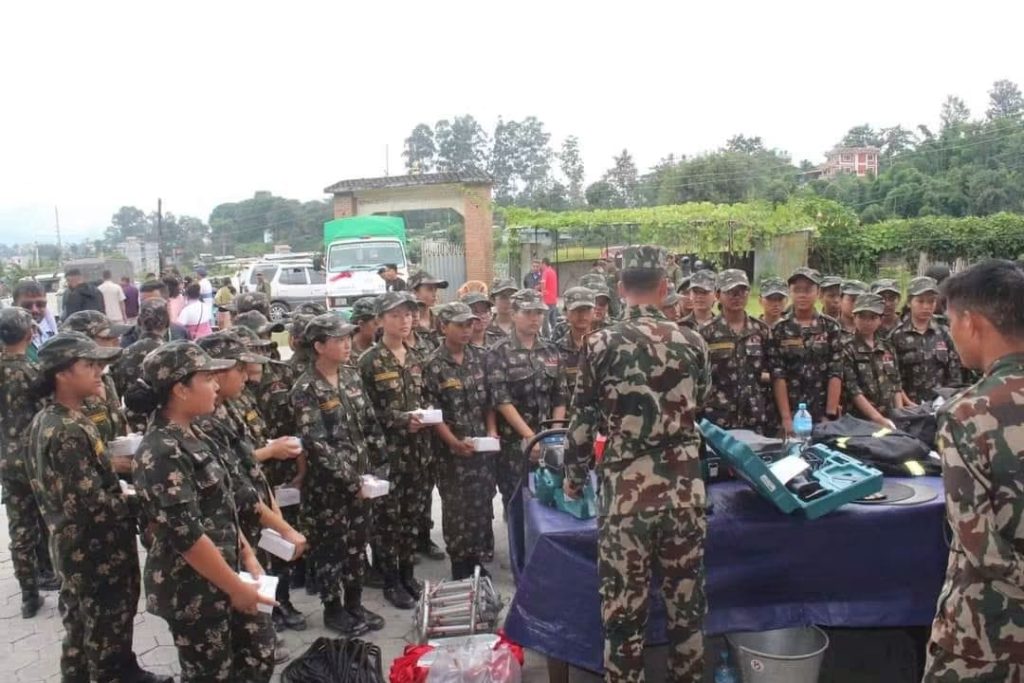
Videos and photos of the Green Army, a group wearing green uniforms that resemble those of the Nepali Army, have recently gone viral on social media.
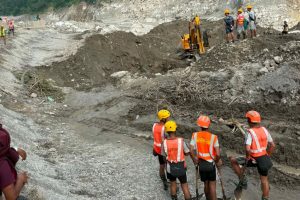
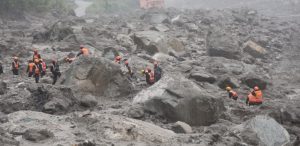
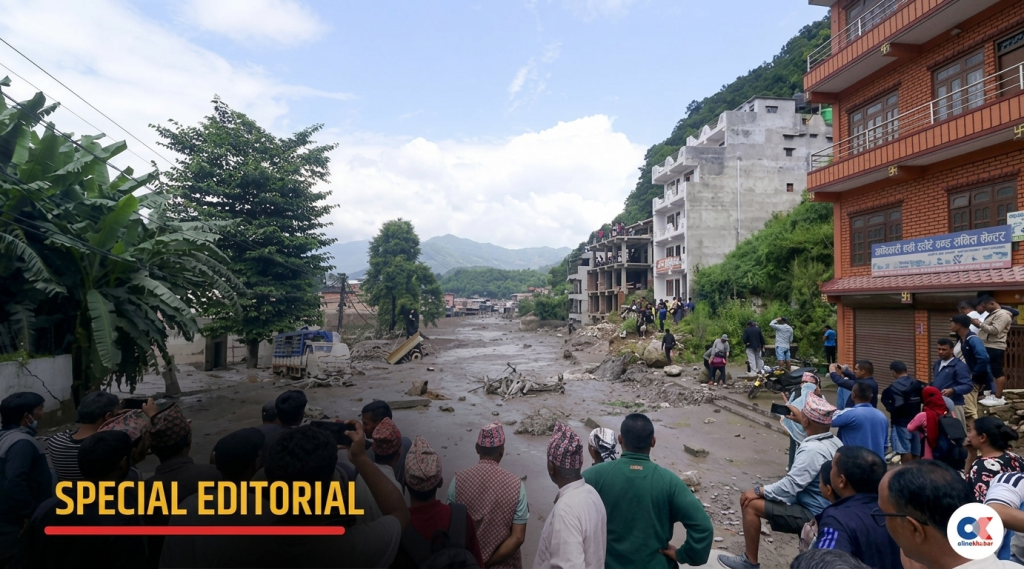
The group was seen assisting in the Trishuli area following the recent flood, prompting questions and speculation among the public about who the group is and under whose authority it was operating.
Some social media users even linked the group to Prime Minister Balen Shah, calling it “Balen’s private army.” Others questioned the legality of the Green Army’s name, uniform and activities.
But the Green Army is not a force deployed by a political party or local government. The organisation describes itself as a youth campaign formed to engage students in environmental conservation, disaster preparedness and humanitarian assistance.
According to its chief marshal Sabin Sharma, the organisation grew out of the experience of disasters and the need to bring young people together during emergencies.
“We know the pain caused by disasters. The purpose behind this campaign was to come together again when emergencies strike,” Sharma said.
Green Army was formed after the 2015 earthquake
The Green Army says its roots go back to the devastating earthquake of 2015.
Sharma said some young people who were involved in relief and rescue work during the earthquake realised that young people needed to be organised not only to respond to disasters but also to work on disaster prevention and humanitarian assistance.
After losing family members in Kathmandu’s Sankhu area during the earthquake, they initially began working with school students on activities such as sanitation, toilet construction and relief distribution, according to Sharma.
The initiative was later institutionalised. On August 27, 2020, the Green Army was registered with the Office of the Company Registrar as a “company not distributing profits.” It was later affiliated with the Social Welfare Council.
Why is it called the Green Army?
The organisation initially worked with students from grades 6 to 9, encouraging them to participate in environmental conservation activities.
Sharma said the initiative initially used the term “Green Warrior” to motivate students and encourage them to take an active role in protecting the environment.
However, as students found the term “Green Warriors” less easy to grasp, the organisation adopted the name Green Army, which it says represents a force dedicated to protecting greenery.
The Green Army name, however, is not the only feature that has drawn attention. Its green uniform, which carries a tree-leaf emblem, also has a military-style appearance.
This has led to questions about whether the organisation had permission to use the name and uniform.
Sharma says the organisation obtained formal approval before using both.
“We sought clear opinions from the Home Ministry and Defence Ministry, as well as the Nepal Army headquarters, and obtained formal permission through the Kathmandu District Administration Office,” he said.
According to the Green Army, the Nepali Army’s Directorate of Management Policy and Planning concluded that its uniform did not resemble the uniforms of the Nepali Army or other security agencies and that it was appropriate for an organisation involved in environmental conservation.
Based on that opinion, the Green Army received formal approval through the Kathmandu District Administration Office on August 13, 2021.
The organisation says the Defence Ministry, Home Ministry and Kathmandu District Administration Office approved its activities and use of the uniform.
Green Army trains students in disaster response

The Green Army says it has reached around 400 to 500 schools across Nepal to provide training to students.
The training includes assembly management, discipline, basic first aid, and making compost and organic soap from waste.
Students and volunteers associated with the organisation have also received three-day basic disaster-response training from security agencies, including the Nepali Army and Armed Police Force.
Sharma said around 40 people are involved as Green Army trainers. Of them, 15 are full-time trainers who receive salaries, while the others work as part-time trainers.
Students who complete the training graduate as Green Warriors.
Sharma said around 30,000 students have so far received training through the organisation.
Students are not required to remain affiliated with the Green Army after completing the programme. However, Sharma said the organisation contacts those who are willing to volunteer during emergencies and mobilises them when necessary.
The Green Army also claims that it has not received any major external funding or donations so far. According to Sharma, schools provide between Rs 5,000 and Rs 15,000 per month to cover basic trainer expenses.
Former Nepal Police Inspector General Sarbendra Khanal and other retired security officials currently serve as advisers to the Green Army.
How did the Green Army reach the Trishuli flood zone?
The Green Army says it was not deployed to the Trishuli flood zone at the direction of Prime Minister Balen Shah or any political party, despite speculation circulating on social media.
Instead, the organisation’s team travelled to the flood-affected area voluntarily after its chief adviser, former IGP Sarbendra Khanal, considered whether the group could provide assistance to flood victims.
An 11-member team led by Khanal went to the area after informing the control room in Nuwakot.
The team helped rescue animals, including chickens and dogs, from some local homes.
The team reached the Trishuli area on the third day after the flood. The organisation says no formal Green Army rescue team is currently operating in Trishuli or elsewhere.
Students who had received Green Army training at school level have also returned home.
Khanal said the Green Army team had sought his advice before travelling to the flood-affected area. He then contacted the chief district officer and superintendent of police and suggested that the team could go there.
Khanal said he has been associated with the Green Army as an adviser for more than two years.
“People from outside come here and do various things. When young people from Nepal ask for advice, why shouldn’t I give it?” he said.
He said he also attends Green Army leadership development training sessions at schools when invited.
Green Army rejects political links
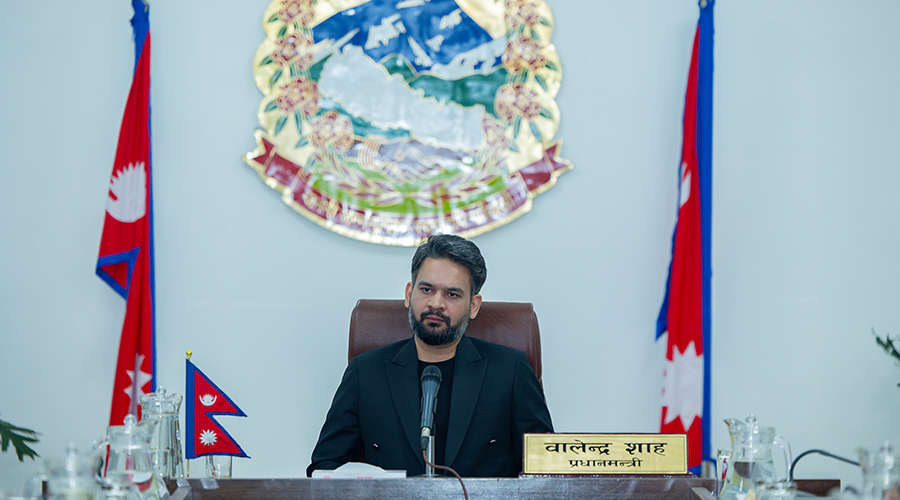
Sharma has rejected claims circulating on social media linking the Green Army to Prime Minister Balen Shah or any political party.
He said the organisation is a legally registered non-governmental youth campaign that emerged from the suffering caused by the 2015 earthquake and aims to raise awareness among schoolchildren about environmental protection and disaster management.
“It hurts us when we are tagged with others because we started this campaign after seeing the suffering in our own homes and villages. We also wear the uniform only after obtaining permission. So, we request people not to misunderstand us,” Sharma told Onlinekhabar.