The government has decided to overhaul 55 federal-level bodies that have been identified as burdensome, unproductive, or duplicative in their functions.
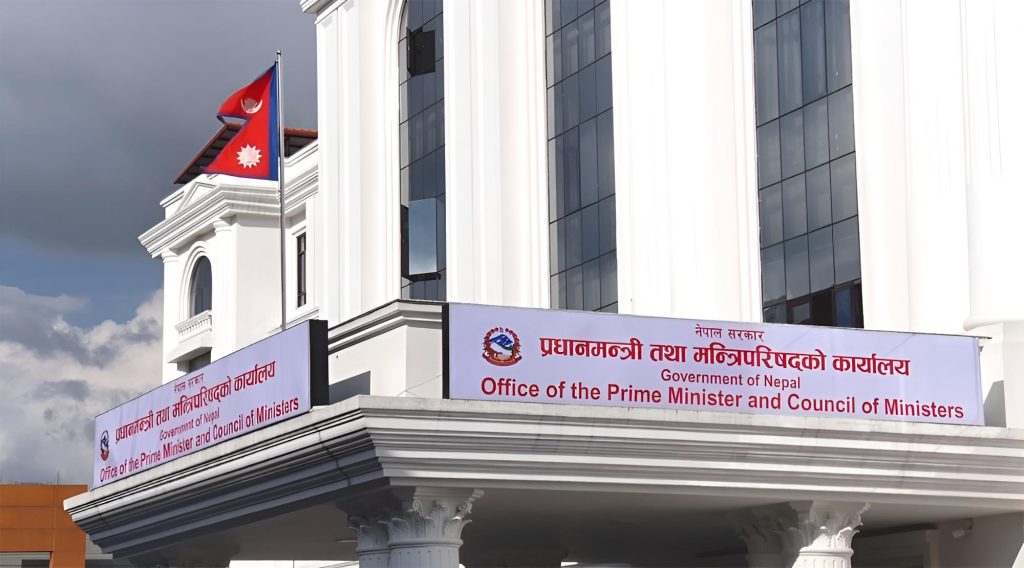
According to a report prepared by a government task force, 25 agencies will be abolished, six will be merged, six will be transferred to provincial governments, and 18 will undergo restructuring. The report was submitted to the Office of the Prime Minister and the Council of Ministers.
The move follows a commitment made in the government’s 100-point action plan to review boards, committees, projects, and institutions that create unnecessary financial burdens or have overlapping mandates. Based on the classification of structures deemed unnecessary at the federal level, the government has prepared plans for abolition, merger, transfer, and restructuring.
A task force led by Kiran Sharma, Secretary at the Office of the Prime Minister and Council of Ministers, was formed to study the necessity and relevance of various government institutions. Some recommendations have already been implemented, while others are in the process of execution.
Addressing a joint session of the Federal Parliament recently, Finance Minister Dr Swarnim Wagle referred to the task force report, stating that the government’s existing cumbersome organisational structure would become more streamlined.
According to him, 31 agencies will be abolished, six will be merged, and another six will be transferred to provincial and local governments. He claimed that the reforms could save approximately Rs 20 billion.
Hemraj Aryal, spokesperson for the Office of the Prime Minister and Council of Ministers, said the Cabinet has already approved implementation of the report. Relevant ministries will be responsible for carrying out the recommendations related to agencies under their jurisdiction.
Agencies to be abolished
Among the institutions slated for abolition are the Cotton Development Committee, Livestock Development Farm Operational Fund, and National Farmers Commission.
The government also plans to abolish the Minimum Wage Fixation Committee, a permanent body established to periodically determine journalists’ remuneration. This will require amendments to the Working Journalists Act.
The Central Project Implementation Unit, established to oversee educational infrastructure development, is also on the abolition list. Although the government extended its tenure in May, the institution is now set to be discontinued.
Other projects and bodies to be abolished include:
- Bardibas Medical College Infrastructure Development Project
- Butwal Medical College Infrastructure Construction Project Committee
- Surkhet Medical College Infrastructure Construction Project Committee
- Infrastructure Development Unit
- Kaligandaki-Tinau Diversion Multipurpose Project
- Landslide Risk Management Project
- Animal and Integrated Crop Water Management Programme
- Water Resources Conservation Project
- Local Development Training Academy
- Badi Community Upliftment Development Committee
- Neglected, Oppressed and Dalit Community Upliftment Development Committee
- Backwards Community Upliftment Development Committee
- Chure Uplift Programme implementation units
- Central Law Library Development Committee
- Waterway Project
- Land Development Revolving Fund
- Municipal Development Committees
- Social Welfare Council
- National Child Rights Council
- Fapla International Cricket Ground and Sports Village Infrastructure Construction Committee
According to Aryal, the respective ministries will manage the assets, liabilities, and personnel of the abolished agencies, while also overseeing the merger and reorganisation processes.
Agencies to be merged
The government plans to merge nearly a dozen institutions.
The Nepal Mountain Academy and the Nepal Academy of Tourism and Hotel Management will be combined, a decision already approved.
Other planned mergers include:
- Nepal Intermodal Transport Development Committee and Nepal Transit and Warehousing Company Limited
- Agencies under the Kathmandu Valley Development Authority
- Women Entrepreneurship Fund and several similar funds
The government also plans to consolidate Kathmandu Valley’s water management institutions, including:
- Kathmandu Valley Water Supply Management Board
- Kathmandu Upatyaka Khanepani Limited
- Central structure of the Nepal Water Supply Corporation
- Water Tariff Fixation Commission
The task force has proposed establishing a single Kathmandu Valley Water Authority to manage the valley’s overall drinking water system.
The Youth and Small Entrepreneur Self-Employment Fund and the Industrial Enterprise Development Institute will also be merged.
Structures to be transferred
The government plans to transfer the Terai-Madhesh Prosperity Programme to the Madhesh provincial government.
Three zonal hospitals are also set to be transferred:
- Koshi Zonal Hospital Development Committee
- Sagarmatha Zonal Hospital Development Committee
- Narayani Zonal Hospital Development Committee
Several road projects identified as provincial in nature will likewise be handed over to provincial governments, including:
- Butwal Link Road
- Lele–Chandanpur–Thuladurlung Road
- Damak–Gauradaha–Gauriganj Link Road
- Dadeldhura Link Road
Various drinking water and sewerage project management offices, including around half a dozen water supply projects, will also be transferred to provincial authorities.
Eighteen agencies to be restructured
The government plans to restructure around 18 agencies, including:
- Kalimati Fruits and Vegetable Market Development Board
- National Tea and Coffee Development Board
- National Dairy Development Board
- Prime Minister Agriculture Modernization Project
- Greater Janakpur Area Development Council
- Buddhist Philosophy Promotion and Monastery Development Committee
Various projects, programmes, and offices under the Ministry of Energy will also undergo restructuring.
Under the Ministry of Forests and Environment, the National Zoological Garden in Suryabinayak and the Bhanubhakta Zoological Garden in Tanahun will be reorganised. Projects under the Forest Products Development Board are also recommended for restructuring.
The government has further proposed restructuring six medical education institutions:
- National Academy of Medical Sciences
- B.P. Koirala Institute of Health Sciences
- Patan Academy of Health Sciences
- Karnali Academy of Health Sciences
- Pokhara Academy of Health Sciences
- Rapti Academy of Health Sciences
Other institutions slated for restructuring include:
- Vector-Borne Disease Research and Training Centre Development Committee
- Trade and Export Promotion Centre
- Foreign Employment Board
- Law Book Management Committee
- Railway Board
- National Foundation for the Development of Indigenous Nationalities
The government had announced in its 100-point action plan two months ago that it would conduct a comprehensive review of boards, committees, projects, and institutional structures, and pursue abolition, merger, or restructuring where necessary.
The task force led by Secretary Sharma included representatives from the ministries of Finance, Industry, Commerce, and Federal Affairs.
Aryal said implementation may require legal amendments and decisions regarding staff and asset management by the concerned ministries. In some cases, issues that cannot be resolved at the ministry level may be referred back to the Cabinet for further decisions.