
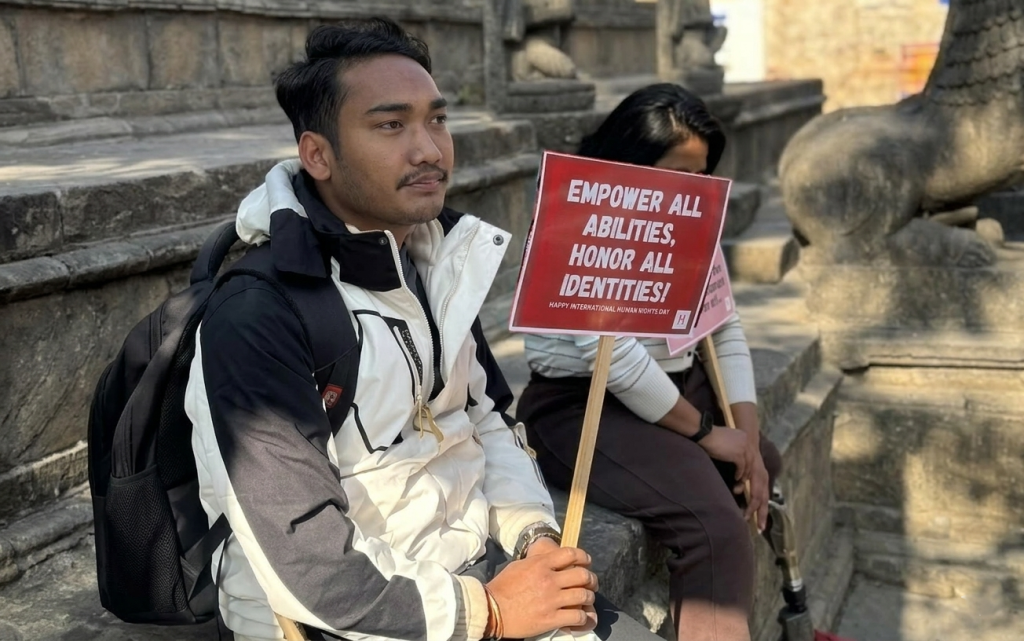
Born in the rural village of Laljhadi in Kanchanpur, 27-year-old Khagendra Rana has been battling life’s harshest realities since childhood. He suffers from congenital muscular dystrophy, a genetic disorder that progressively weakens the muscles, causes the nerves in his legs to wither, and severely restricts his mobility.
While a typical child begins walking by 9 or 10 months, Rana could not take his first steps even at a year and a half old. It was only then that his family took him to a hospital, where his genetic condition was diagnosed. The disease is incurable, requiring lifelong medication and regular physiotherapy. His medical expenses average around NPR 1,500 to 2,000 per month. The moment he misses his medication, his muscles stiffen up, making even sitting or standing nearly impossible.
Born into an impoverished family, Rana is the youngest of five brothers. He lost his father when he was 15. Since then, his family never truly accepted him as an equal member. His opinions were routinely ignored in household decisions. The discrimination only worsened after his older brothers married and brought their wives home. Because of his disability, his family stopped sending him to school after grade six, assuming that an education would be useless for someone like him.
When his mother could no longer support him alone, Rana was sent to a religious ashram in Dhangadhi. The ashram provided him with food, shelter, and a chance to resume his education. However, life there was far from smooth. On top of his physical limitations, his feminine demeanour invited relentless insults and abuse from others. He was frequently targeted with derogatory slurs, leaving emotional scars on him.
The most traumatic and unforgettable incident occurred during his adolescence at the ashram. Seizing an opportunity when no one else was around, a senior resident sexually assaulted him. At the time, Khagendra Rana was neither aware of his own gender identity nor did he have the courage to speak up.
The ashram lacked private rooms; everyone slept in a shared hall. The trauma haunted him for years. Seeing his abuser every single day only compounded his agony. Yet, enduring physical, mental, and sexual violence, he stayed at the ashram and completed his high school education. He simply had no other choice.
New Chapter and finding identity
During the COVID-19 pandemic, a second-hand mobile phone gifted by his sister opened a new door for him. Scrolling through Facebook, he connected with members of the LGBTIQA+ community for the first time. With their guidance, he reached an organisation in Dhangadhi working for queer rights. It was there that he finally understood his identity.
“It was only after the orientation provided by the staff there that I realised I am gay,” Rana recalls. “This is my sexual orientation, and it is neither a mistake nor a disease.”
He later spent a year at another ashram in Chitwan, but the cycle of humiliation and abuse followed him there too. Ultimately, he returned to Dhangadhi.
Through Facebook, he also got involved in disability rights advocacy and completed a three-month vocational training program in agriculture. During this time, he met Aditya Rai, the founder of ‘Rainbow Disability Nepal’, an organisation dedicated to intersectional advocacy for individuals who are both disabled and queer.
In 2023, with just NPR 3,000, Khagendra Rana moved to Kathmandu. Initially, he slept on the floor of the organisation’s office. When he began searching for a room, landlords turned him away because of his physical disability and feminine voice.
“How will you pay rent? You sound like a girl, you can’t live here,” they would tell him. When he finally managed to find a place, he was evicted within two months under the pretext that he “used too much water” and “talked like a woman.”
An incident shortly after he arrived in Kathmandu still brings tears to his eyes. He had been regularly chatting with a gay man he met on Facebook, and they eventually decided to meet in person. Khagendra Rana had not yet mentioned his disability; he simply hadn’t found the right moment. On the day of their meeting, the man was waiting near Rana’s rented room. As Rana approached slowly, leaning on his walking stick, the man watched him from a distance and said with utter contempt, “Damn, he turns out to be autistic!” The slur shattered his heart.
Fighting for self-reliance
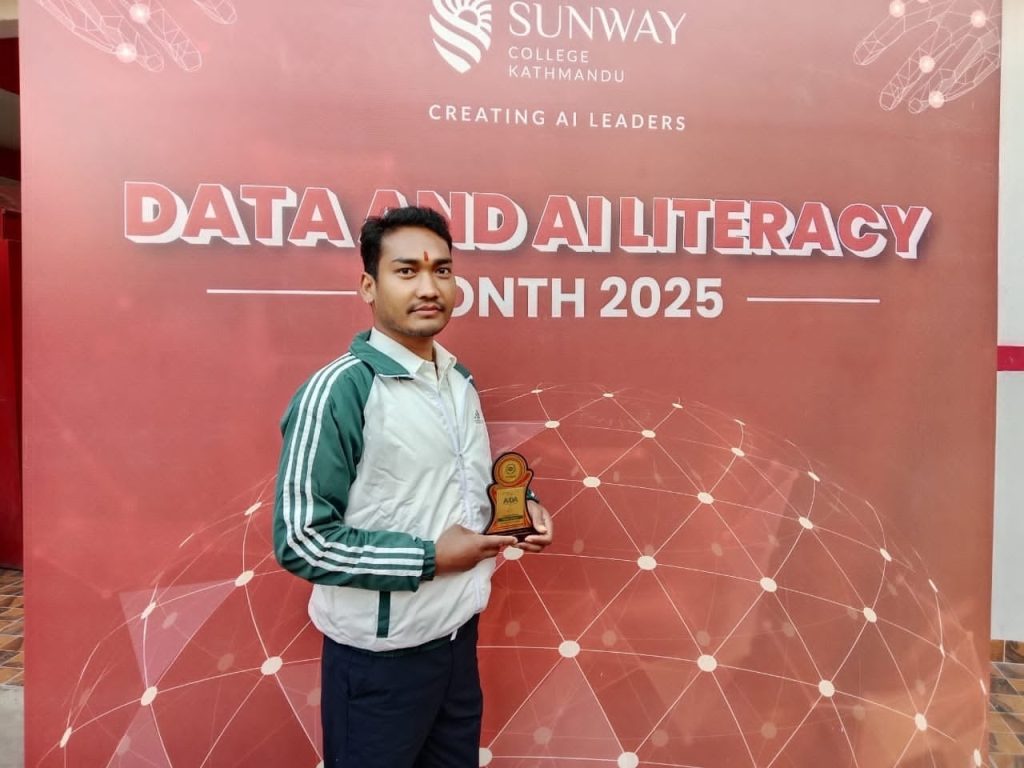
Thanks to personal and institutional support from Aditya Rai, Khagendra Rana has been able to manage his regular physiotherapy and medication. He was also able to take English and computer classes. Today, he works as a peer educator at Rainbow Disability Nepal, providing counselling to individuals who hold both disabled and queer identities. He works tirelessly to ensure they do not feel as isolated as he once did.
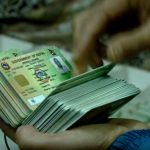
However, the project is nearing its end, and the fear of impending unemployment weighs heavily on him. The 6,000 rupees he receives every three months through his disability card is spent entirely on medicine.
His family still has not accepted his existence. Aside from his mother, none of his brothers or sisters-in-law speaks to him. His sisters-in-law reportedly use derogatory words against him. Friends from college have also drifted away. Whether searching for a room, a job, attending college, or living at the ashram, everywhere he goes, he faces the double burden of disability and his identity as a gay man.
“The hardest thing for me has been the way society looks at you and asks, ‘How do you live? ” How do you earn?” he says to Onlinekhabar. “I am a person just like everyone else. I want love, respect, and opportunity.”
Today, Khagendra works to support other queer youth with disabilities who face the same double and triple discrimination. He strives to build their confidence and stand alongside them in the fight for their rights. His dream is to continue his studies, learn new skills, and stand on his own feet.
“No matter how much violence, exclusion, and humiliation one must endure, self-respect and perseverance never let a person be defeated,” he says.