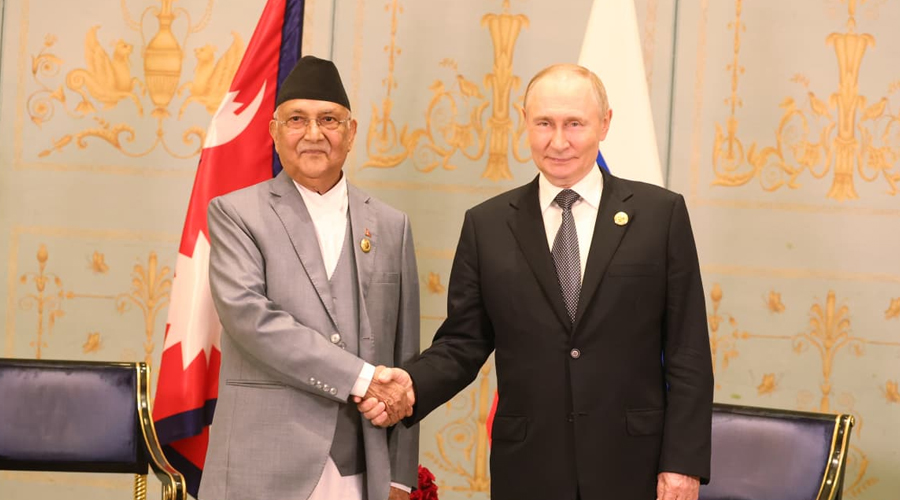

In 2023, then-National Assembly Chairman Ganesh Prasad Timilsina held talks with his Russian counterpart, Valentina Matviyenko. Immediately after the meeting, Russia requested detailed proposals for various development projects.
The package of proposed projects included 13 different initiatives that Russia offered to help build and operate, among them a railway line, road construction, and other infrastructure. At the time, the Russian Embassy in Nepal wrote a letter to Chairman Timilsina on May 4, urging the government to move forward with the project proposals.
Timilsina, who made an official visit to Russia from April 19 to 23, held discussions about those projects with Federation Council Chairwoman Valentina Matviyenko, State Duma Speaker Vyacheslav Volodin, and Russian Deputy Prime Minister Dmitry Chernyshenko.
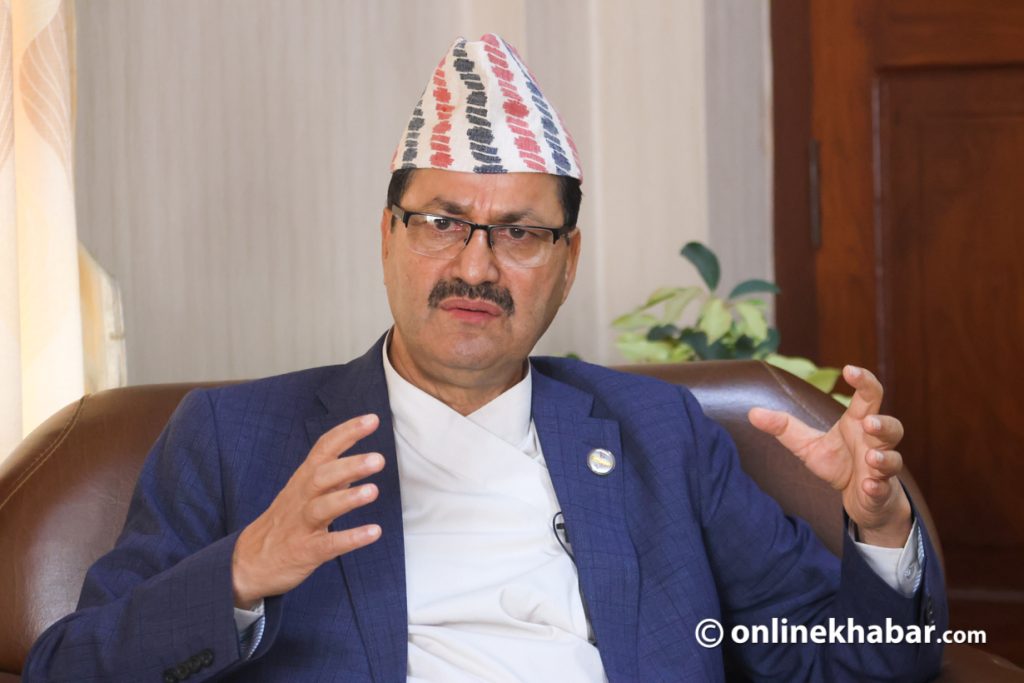
According to the former National Assembly Chairman, after his talks with Matviyenko, he thoroughly briefed the then-government about the development projects proposed by Russia and also discussed the proposals with relevant ministers.
Timilsina says the then-Prime Minister and relevant ministries appeared positive about moving forward. Recalling the situation, he said: “The Prime Minister himself was enthusiastic. He spoke about advancing it. The ministries had even prepared the necessary correspondence.”
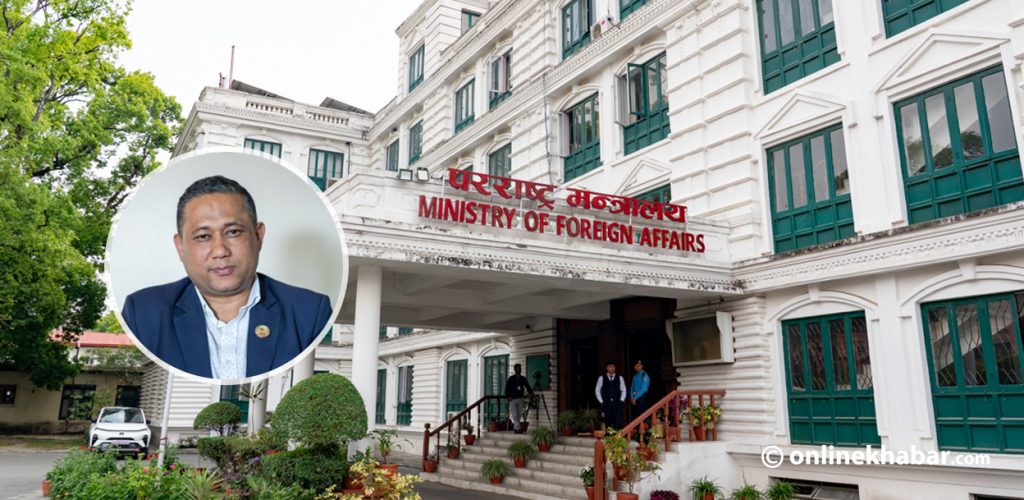
But then everything came to a standstill. Even as the process moved forward, Nepal never sent a formal response to Russia’s proposals. Letters that should have reached Russia through diplomatic channels got stuck at the Ministry of Foreign Affairs. Although there is an established process by which letters from relevant ministries are sent abroad via the Foreign Ministry, the files related to the Russian projects could not move forward due to “bottlenecks” at the Foreign Ministry. Nepal’s recurring cycle of government changes further pushed the matter into obscurity.
Timilsina says he made considerable personal and institutional efforts to implement the projects.
“I communicated with various ministries and did everything I could to bring them to implementation. We all worked toward presenting ourselves better to Russia on these projects and taking advantage of them. But the government itself seemed reluctant to accept the assistance,” he says to Onlinekhabar.
In December 2025, in an interview, Russian Embassy Chargé d’Affaires Andrei Kiselenko had commented on the Nepali government’s inaction.
“It is somewhat difficult to understand why the Nepali side continues to delay responding to several important draft agreements and memoranda of understanding that have long been under discussion,” he says.
He noted that Russia was fully ready to strengthen bilateral cooperation and expressed confidence that Nepali officials would give these proposals proper attention in the near future.
Kiselenko also said that Nepal’s cumbersome bureaucratic “red tape” had confined the Russian proposals to files.
“Most efforts failed due to administrative hurdles on the Nepali side, bureaucratic obstacles, and the absence of clear legal procedures to facilitate Russian investment,” he says.
Historical context
Formal diplomatic relations between Nepal and the Soviet Union were established on July 20, 1956. Soviet assistance played a major role in laying the foundation of Nepal’s industrial infrastructure and technical workforce. Soviet-era projects remain proud symbols of development in Nepal, including the Panauti Hydropower Project, Kanti Children’s Hospital in Kathmandu, a 110-km section of the East-West Highway from Pathlaiya to Dhalkebar, the Janakpur Cigarette Factory, the Birgunj Sugar Factory, and the Agricultural Tools Factory.
After the political changes of 1990 and the dissolution of the Soviet Union, Nepal’s diplomatic priorities shifted. Western foreign aid and donor influence grew, directly affecting the continuity of Russian cooperation. As Nepal focused its diplomatic attention on India and Western countries, the relationship with Russia shrank to mere “historical memory.”
Former Ambassador to Russia Milan Tuladhar says Russia extended a hand of cooperation to fill the void that appeared after the end of the Soviet era.
“After the Soviet Union’s dissolution, Nepal-Russia relations and cooperation had thinned out. Russia brought these projects to strengthen that relationship,” he says.
He recalled repeatedly pushing for follow-up on the opportunities, but the Nepali government remained indifferent.
Projects proposed by Russia
According to Timilsina’s secretariat, Russia proposed building an East-West electric railway and a railway in Kathmandu similar to the Moscow metro. Russia also requested a project proposal for the Pokhara-Ridi road to connect Pokhara with nearby tourist destinations.
“The estimated cost of the Pokhara-Ridi road from Parbat through Pokhara to Gulmi is approximately NPR 4 billion. As per Chairman Timilsina’s proposal, Russia wants to construct this road with its own investment,” the statement noted.
Additionally, Russia proposed building two children’s cancer hospitals, one in Kathmandu and one in Pokhara, with Russian doctors to be made available in the initial phase and operations later handed over to Nepali doctors. Russia also offered 150–200 scholarship slots annually for medical and engineering students.
Fear of Western pressure
Acting Ambassador Kiselenko noted that Nepal’s private sector partners hesitated to deepen cooperation with Russian companies due to political pressure from Western, European, and American counterparts, fearing “secondary sanctions” or losing access to the Western financial system.
Former Minister Deepak Gyawali echoes this, saying Nepal is paralysed by fear of the West. He uses the term “MCC prostrationism,” a reference to how Nepal passed the MCC compact through parliament while letting Russian proposals that pose no harm to Nepal languish in files.
“What harm would have come from giving scholarships to our students, building hospitals, or increasing air connectivity?” he asked.
Former National Assembly Chairman Timilsina concluded that for a developing nation like Nepal to ignore such offers of foreign assistance is both strategically and economically wrong.
“This was not for any military strategy; Nepal could have benefited from it. History has examples of Russia openly helping us,” he says.