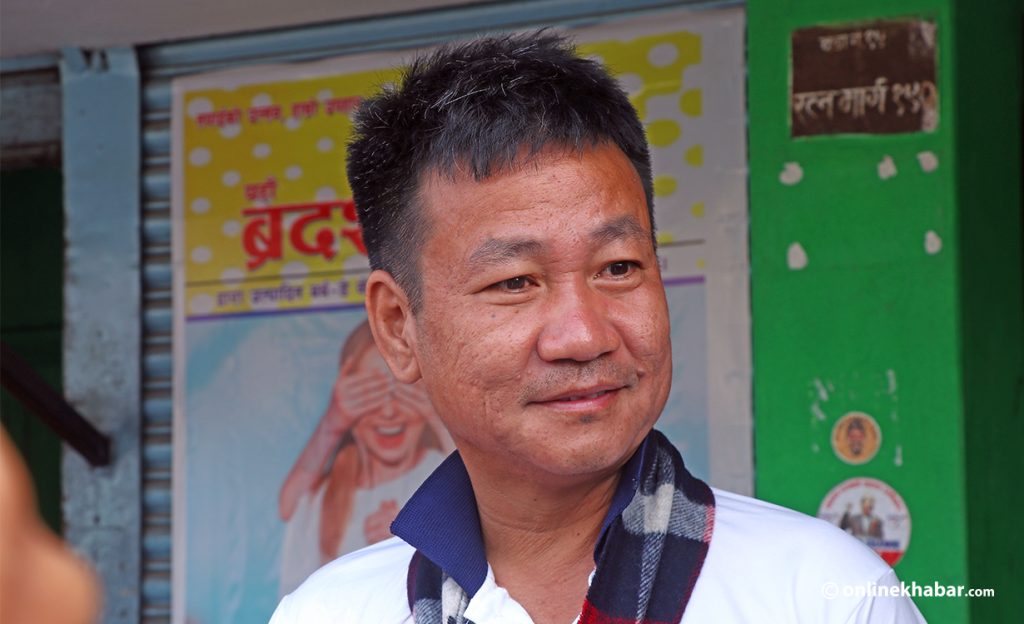

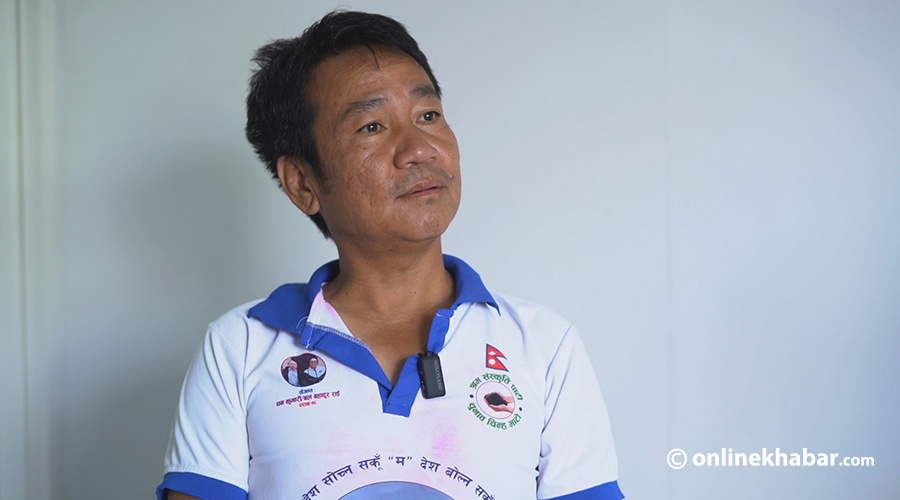
Harka Raj Rai, more commonly known as Harka Sampang, became eminent by positioning himself as an outsider, willing to address the long-standing nagging issues of Dharan with practical action. He was elected as an independent mayor of Dharan Sub-Metropolitan City in 2022, promoting shramdan, voluntary labour donation to serve local infrastructure and civic enhancement.
This became known as Harkabad (or Harkaism), the philosophical orientation of the Shram Sanskriti Party, which he had founded. The model focuses on compulsory and voluntary labour, self-reliance and balanced development of nature, culture, and technology as solutions to poverty, inequality, and failures in governance.
Although Sampang won the House of Representatives elections in Sunsari-1 in the 2026 elections, his time as mayor and the push in general towards Harkabad have attracted close attention on the part of auditors, newspaper reporters and local officials. Achievement in visibility and localised efforts, in addition to issues of transparency, compliance with procedures and long-term effectiveness, are noted.
As his party seeks to have a national influence, the debate has been whether this labour-focused model will bring solutions to structural issues that Nepal is facing or whether it will end up consuming all the attention that would otherwise be directed towards much-needed systemic reforms in Nepal.
The concept and its implementation in Dharan
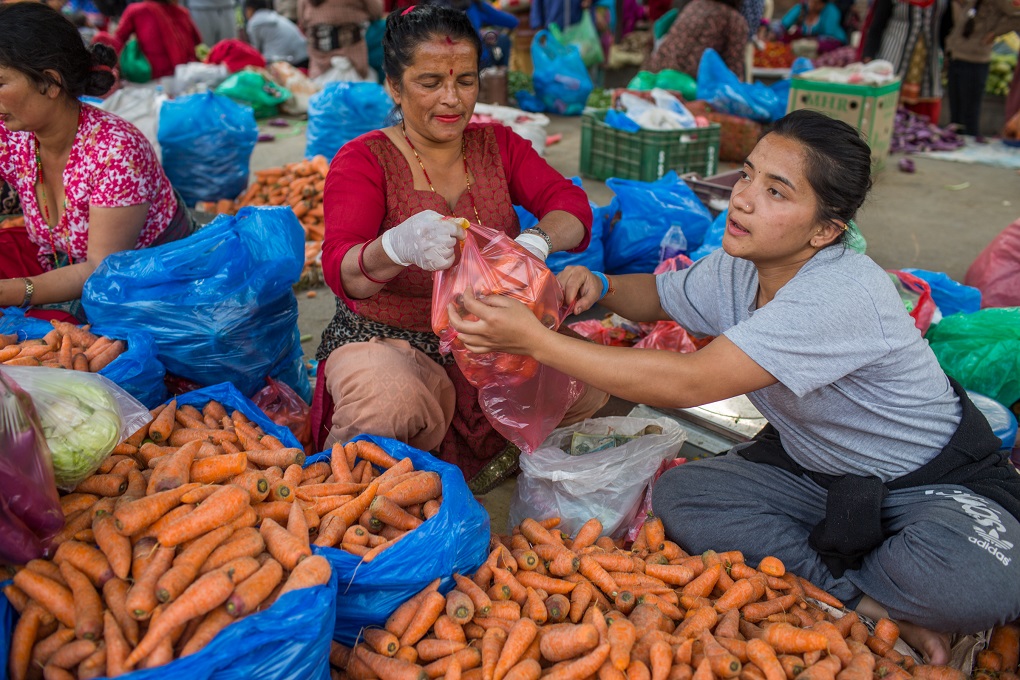
Shramdan is the voluntary provision of physical labour for the benefit of society. It is a practice emerging from South Asian culture and influenced by Gandhian philosophy. Sampang made it a signature element of his administration, promoting projects such as the Shram Sanskriti Park and various water schemes. These were often presented as primarily volunteer-driven initiatives that fostered civic responsibility.
The Shram Sanskriti Party manifesto outlines Harkabad as a political philosophy that treats labour as the highest social value. It advocates the application of the principles of mandatory labour and volunteer service to social, educational, economic and political spheres to eradicate corruption, discrimination, poverty and dependency. The proposed changes of governance include a direct election executive president with a limit of two five-year terms, a two-chambered federal system, and acceptance of aboriginal languages as national languages without compromising on secularism.
At Dharan, projects integrated volunteer work with their donations and contributions from the community. Supporters point to improved local awareness and incremental gains in water access. However, official audits and news investigations have raised specific issues.
Documented concerns over execution and oversight
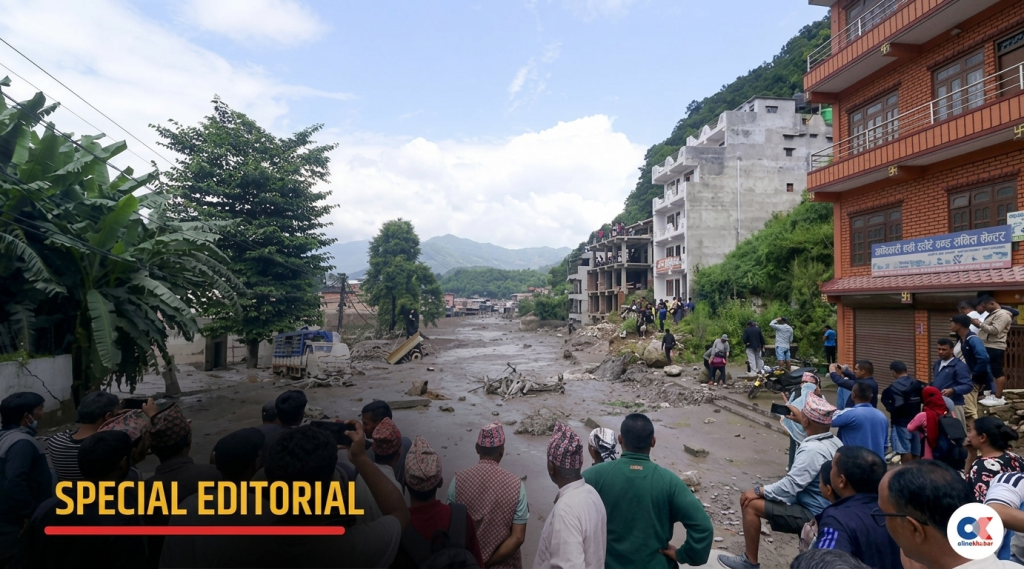
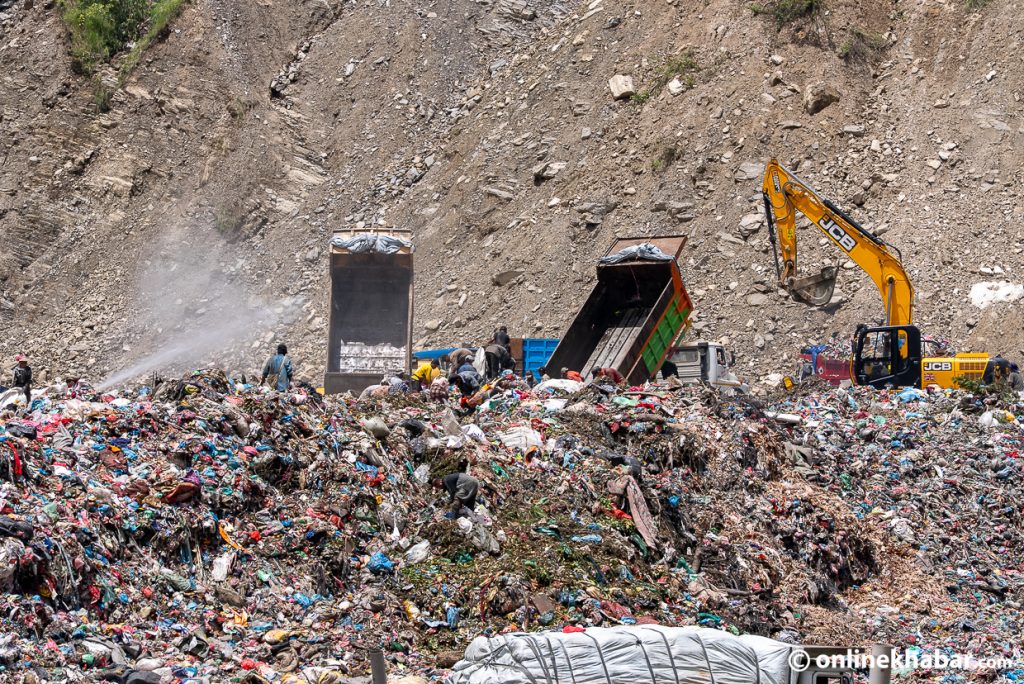
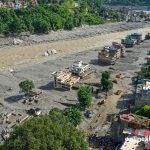
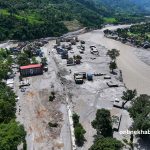
The Auditor General’s office flagged approximately Rs 11 million in expenditures on Shram Sanskriti Park projects that lacked discussion in executive meetings and proper declaration. The project was promoted as volunteer-built but occurred on protected forest land in the Sardu River basin, an area restricted by Supreme Court orders due to its importance for Dharan’s water supply. Reports indicate illegal gravel extraction from a river, and parts of the site suffered flood damage.
Similar patterns appeared in water initiatives. Donations for schemes such as the Kokah stream reportedly reached tens of millions of rupees. Accounting shared by supporters listed collections and spending on items including snacks, wages described as volunteer support, pipes, and surveys. Funds frequently operated outside municipal accounts, and proposals to route them formally were reportedly declined. Nepal’s Public Procurement Act mandates competitive bidding and oversight, steps that audits suggest were not fully observed. Comprehensive post-completion audits and donor reconciliations were limited.
In mid-2025, a dispute arose when Sampang allegedly pursued retroactive municipal payments for a gabion wall completed through a labour campaign. A consumer committee from a different ward handled billing. Deputy Mayor Aindra Bikram Begha termed the process irregular. The episode reportedly heightened internal tensions.
Commercial activities under the “Maya Dharane” brand, including turmeric and soap production, also attracted attention. Municipal funds allocated for cottage industries were used without documented competitive processes or full approvals. Mayoral powers do not include unilateral establishment of such ventures with public resources.
These matters align with investigative coverage by outlets including Online Khabar and the Centre for Investigative Journalism Nepal. Pre-mayoral actions, such as vandalism at an Asian Development Bank-linked water site, led to legal consequences. Governance decisions, including assuming water board leadership without standard procedures, added questions about institutional adherence.
Journalists covering these topics have reported pressure. Nepal’s human rights documentation noted threats against investigators in Dharan.
Harkabad as vague populism and performative nostalgia
Harkabad is more of a personal brand based on activism than a fully developed ideology with detailed policy mechanisms, economic modelling, or implementation road maps. Its appeal is that of moral force and imagery of action, which are visible but lack the depth of technical or institutional work. The focus on manual labour reminds me of models of pre-industrial community structures, instead of focusing on what is needed to get engineering knowledge, capital investment, and maintenance systems.
This strategy makes governance more personal, which depends greatly on the charisma and web of networks of the leader. Even though it is effective in short-speed mobilisation, it is at risk of causing sustainability challenges in situations where the central figure moves on or becomes limited. Critics argue that this performative dimension of public labour participation, paired with private fundraising and selective rule application, generates enthusiasm but struggles with scalability, accountability, and adaptation to modern economic realities. In Nepal’s federal context, such centralisation around one style raises questions about consistency across diverse provinces and municipalities.
Comparisons with other development philosophies
Harkabad is influenced by the Gandhian sarvodaya and shramdan, which emphasised the village self-reliance, moral uplift, and Labour dignity. The approach used by Gandhi inspired social cohesion in the independence movement in India, but after the year 1947, India switched to state-directed industrialisation and planning under Nehru because voluntary labour was not proven to be sufficient in accelerating the infrastructure and the economy. Nepal’s own community development efforts since the 1950s have encountered similar constraints of dependency and limited scale.
Marxist and socialist traditions have historically mobilised mass labour for public works, as in China’s communes or Soviet voluntary work days. These delivered certain infrastructure gains but frequently at the cost of efficiency, quality, coercion, and economic distortion. The Maoist regime and earlier organised labour-seeking initiatives (such as the 1970s National Development Service) in Nepal had shown that in the short term, forced or strongly promoted labour does create substitution capacity, but that it proves to be problematic in the long run in both productivity (when enforced) and political (when heavily promoted) neutrality.
Market-oriented models in East Asia (South Korea, Singapore), other developing contexts prioritised education, technology adoption, privately owned capital, institutions and infrastructure financed by savings and foreign capital. These methods realised long-term growth through the improvement of productivity instead of using mainly the free or forced physical work. Nepal’s development reports consistently identify low capital expenditure execution, skills gaps, and governance bottlenecks as core constraint areas where labour donation offers partial relief but not comprehensive solutions.
Evidence-based development practices, informed by randomised evaluations, stress targeted incentives, professional execution, and rigorous monitoring. Nepal’s Female Community Health Volunteer program has achieved health outcomes through dedicated service, yet participants face workload and compensation issues that underscore volunteer models’ boundaries.
Harkabad’s cultural and nature-focused elements echo some indigenous and environmental philosophies but require integration with technical standards to avoid the environmental compliance shortfalls observed in certain Dharan projects.
Structural development context of Nepal
Nepal needs very high investment in infrastructure; it is estimated that between 8 and 12 per cent of GDP is spent each year on infrastructure investment, to close the gaps in transport, energy, irrigation, and water. The rate of capital spending implementation has been low due to delays in planning, land acquisition, issues in procurement and capacity constraints. This out-migration has led to rural labour shortages, and remittances contributed to consumption more than to production.
Small-scale and social capital volunteer labour cannot be used to replace machinery and materials, professional engineering, or the process of maintaining complex projects. The climate, topography, and federal coordination are additional layers of challenges.
Implications and case to scrutinise
The successful result of the election of Sampang can be regarded as a legitimate discontent of the population with traditional parties. His model has rallied power around civic responsibility. Concurrently, the documented audit report by Dharan of observed irregularities, over-environmental bypasses, and governance frictions is subject to a rigorous, independent analysis. Financial flows, adherence to the procurement law and environmental law, and project results should be analysed to establish facts and lessons by relevant bodies.
On the national level, any philosophy sold as being transformative must be publicly and expertly debated in terms of being feasible and cost-effective, in terms of being legal and compatible with the law, and in terms of showing any results. Enforced elements of labour are especially to be legislated and constitutional caveats against conflict with developments in rights protection.
Shramdan holds cultural and motivational value for community initiatives. As the foundation of a national development strategy, however, it demands evaluation against Nepal’s documented needs for capital, skills, technology, and accountable institutions. Engaging in mechanisms that are transparent, sustainable and based on quantifiable gains and not on symbolism by itself is in the interest of citizens and other bodies of oversight and political activities.
The approaching parliamentary term will determine whether Harkabad is able to evolve into a wider, flexible framework or continue to associate with localised efforts as well as those based on personality. Challenges to development, weak institutions, gaps in infrastructure, and the economic transition of Nepal demand pragmatic, evidence-based solutions. Analysis of previous implementations is a need-based approach to make informed decisions in future.