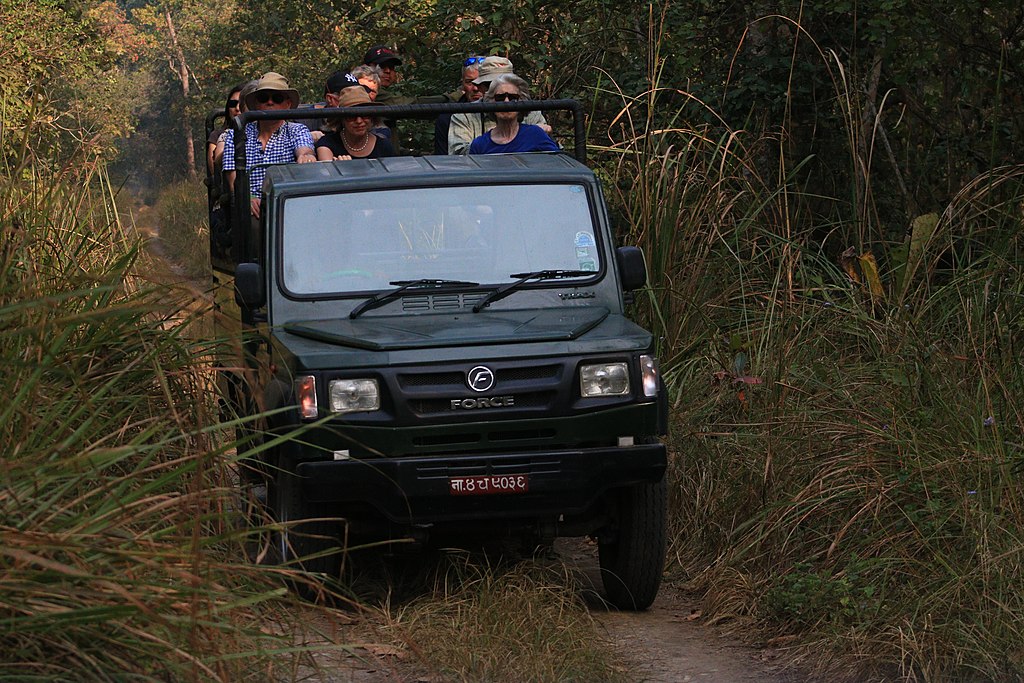

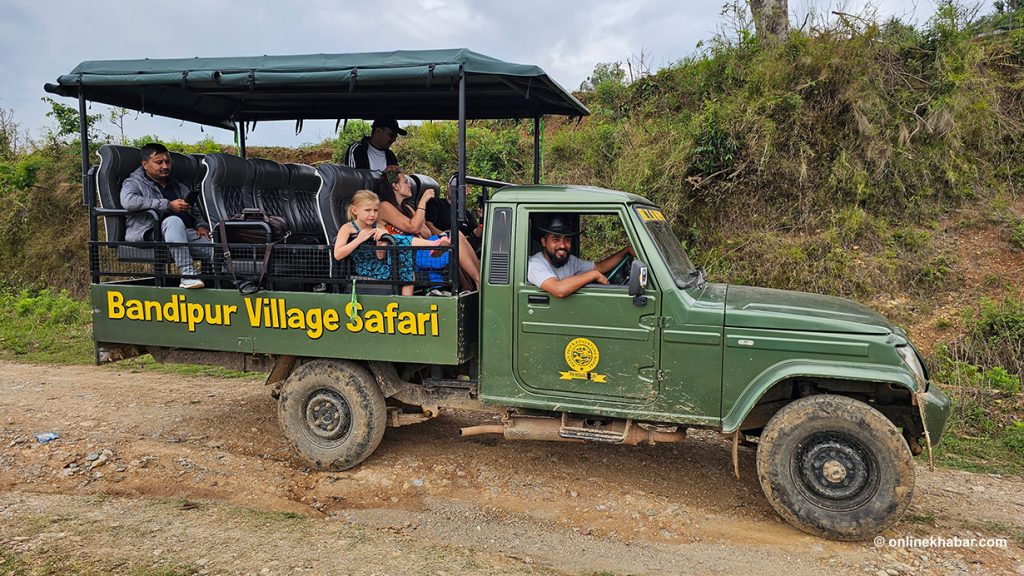
A small group of tourists gathered around a jeep at Bandipur’s Tundikhel as the light morning mist began to lift. Some held cameras, others were busy snapping photos on their phones. But they weren’t heading out on a jungle safari, nor to see tigers or rhinos. They were setting off to see a village.
The ‘Village Safari’ has become a new attraction at Bandipur, the tourist hub of Tanahun district. Riding a jeep through the village, understanding local ways of life, eating fresh, organic food, staying at homestays, and experiencing rural culture have added a whole new dimension to Bandipur’s tourism.
Operator Basanta Paudel, who launched this Village Safari on February 14, 2026, claims it is the first of its kind in Nepal. A former secretary of the Bandipur Tourism Development Committee, he is now widely known as “Dulante Dai”.
“I myself roam around while taking tourists through the villages,” he says to Onlinekhabar. “That’s why many people call me Dulante Dai.”
New approach to see the countryside
In Nepal, “jeep safari” typically brings to mind national parks or community forests. But Bandipur has changed that meaning entirely. Here, the jeep safari heads not into the jungle, but into the villages.
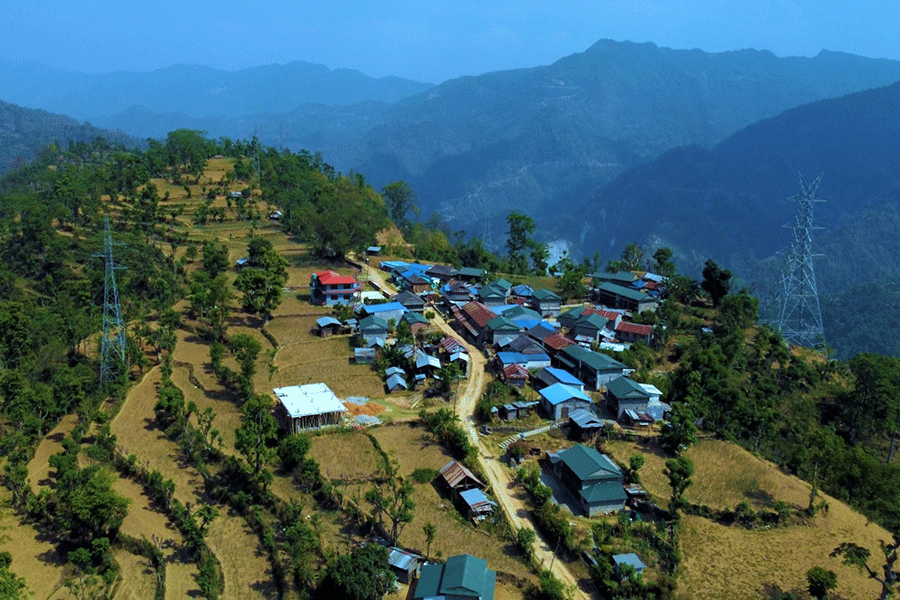
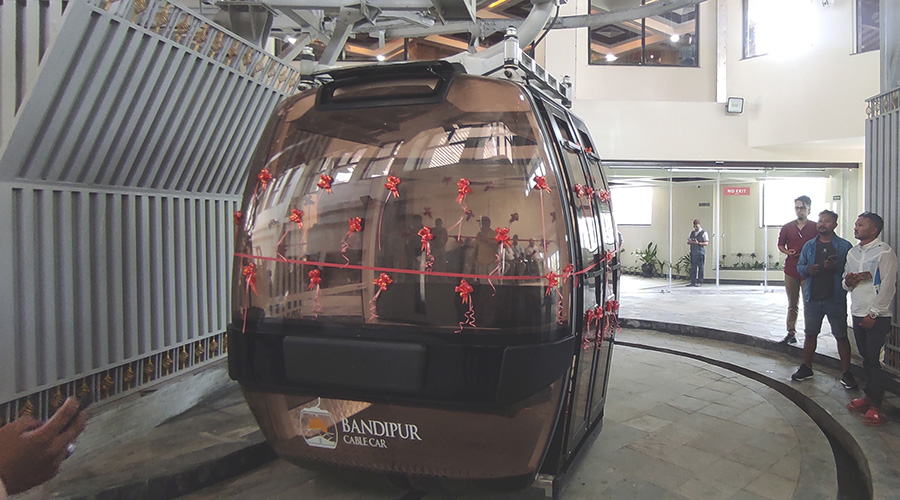
The jeep departing from Bandipur bazaar passes through Ramkot, Rumsi, Dharmapani, Hilekhar, Korikha, and Chhimkeshwari on its way to Chabdi Barahi. Along the route, visitors are shown the Mini Great Wall, Tindhar, a monastery, a martyrs’ memorial, and the cable car area.
During the journey, one might spot farmers working their fields or locals chatting at a rest platform (chautaro).
Paudel started with just one jeep but has since added a second as tourist interest has grown. Each jeep can accommodate up to 12 people. A two-hour safari costs a minimum of 500 rupees per person. For a tour covering Bandipur bazaar and Ramkot, the fare is 1,000 rupees per person. A package including a homestay visit, a meal with local chicken, a cultural program, an overnight stay, and morning breakfast is available for 3,200 rupees.
Tourists are staying longer
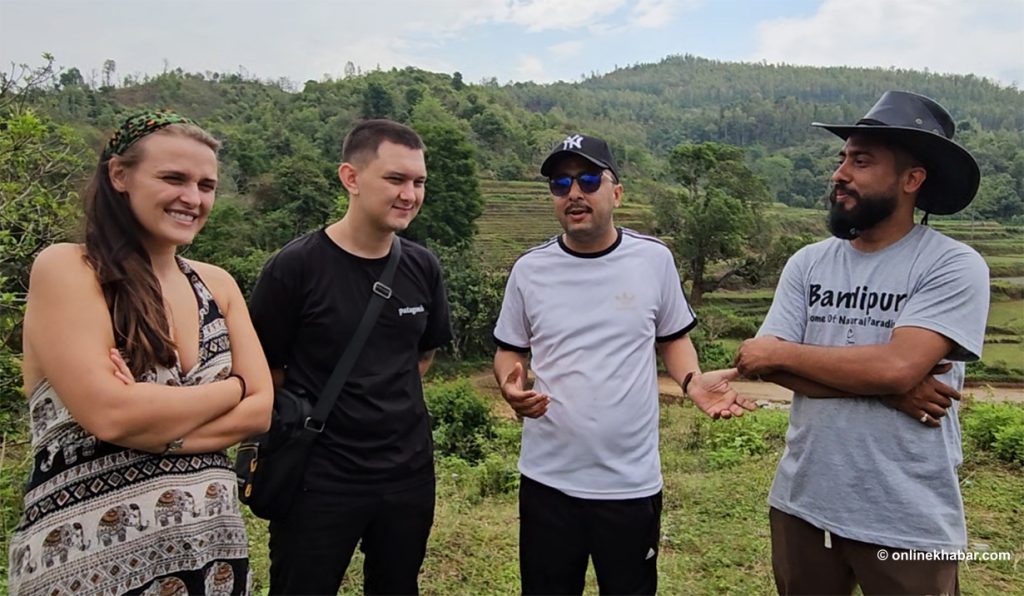
There was a time when most visitors to Bandipur would simply walk around the bazaar, take some photos, spend one night, and leave. According to businessman Paudel, many tourists had no idea about the villages surrounding Bandipur and their potential.
But now, tourists are beginning to stay longer.
“Now that the jeep takes them all the way to the villages, they get the chance to closely experience local culture, dress, food, and lifestyle,” Paudel says. “The length of tourists’ stays has also increased.”
The Village Safari has connected not just rural tourism but also local produce to the market. Organic vegetables from the villages, local chicken, home-cooked dishes, and handicrafts are now making their way to Bandipur bazaar much more easily.
Bandipur Rural Municipality Chair Surendrabahadur Thapa says, “Before, tourists were confined to Bandipur’s main bazaar. Since the Village Safari began, tourists have been reaching village after village, tasting village produce and experiencing rural life.”
Seeing the growing interest of Village Safari tourists, the municipality has made road repair and infrastructure improvement a priority.
“The municipality will focus on repairing, upgrading, and paving the deteriorated roads so that villages can be visited freely and easily throughout the year,” Chair Thapa says.
Former Bandipur Tourism Development Committee chair and hotelier Baish Gurung says the Village Safari has become a new “tourism product” for Bandipur. “Before, Bandipur meant just the old bazaar. Now the Village Safari has become a means of actually taking tourists deep into rural areas,” Gurung says.
Homestays come alive
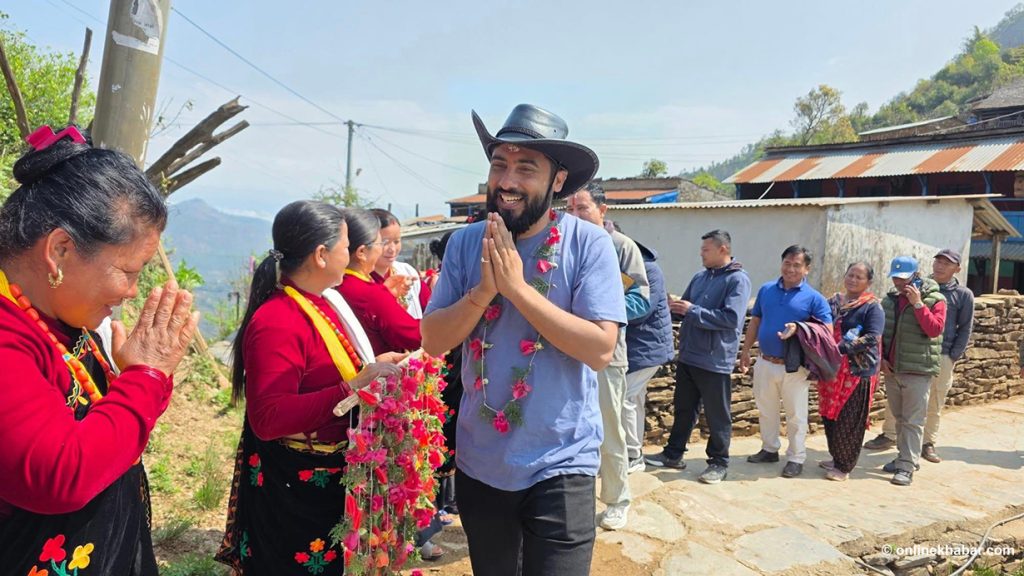
The direct impact of the Village Safari is becoming visible in rural homestays. Tourist activity has increased in Ramkot, about 7 kilometres from Bandipur. Fifteen homes in Ramkot, a village with a dense Magar community, are operating as homestays. Evening cultural programs, dhindo (porridge) with local chicken, and the village’s warm hospitality continue to draw tourists.
Ramkot Community Homestay Chair Nirkaji Ale says, “Foreign tourists used to come on foot before. Now, domestic tourists are also arriving by jeep safari. Our village has gotten the chance to be known and understood by many more people.”
The Ramkot homestay can accommodate around 30 tourists per night. The per-person rate, including dinner, overnight stay, and morning breakfast, is 1,200 rupees.
Tourists are also reaching Rumsi Community Homestay, located in Byas Municipality Ward 14, about 15 kilometres from Bandipur, via jeep safari from Bandipur. According to Rumsi Homestay Management Committee Chair Santosh Thapa, 80 homes in Rumsi operate as homestays, and the Village Safari originating from Bandipur has played an important role in increasing tourist numbers there.
A tourist named Rama, who had come to visit Bandipur from Britain with his wife, said he was deeply impressed by the village life and the locals’ hospitality. He described the road to Ramkot, the peaceful village atmosphere, and the warm local welcome as a memorable experience. Having encountered him early in the morning at Ramkot, he mentioned he would return to the village that evening to watch the cultural program and enjoy local organic food.
Businessman Biggyan Paudel from Bharatpur-10 in Chitwan, visiting Ramkot for the first time via the Village Safari, said he felt great joy.
“I’ve been to Bandipur many times, but I was never able to go beyond it. This time, deciding not to stay in Bandipur bazaar but to go straight to Ramkot, coming here on a safari, felt like a completely different experience,” he says.
He added: “It’s very important to show the new generation, born and raised in cities, what rural life, lifestyles, dress, and opportunities look like.”
Bandipur’s Village Safari has not only deepened the bond between rural and urban life, but it has also opened doors to new experiences for tourists and new opportunities for the villages.