

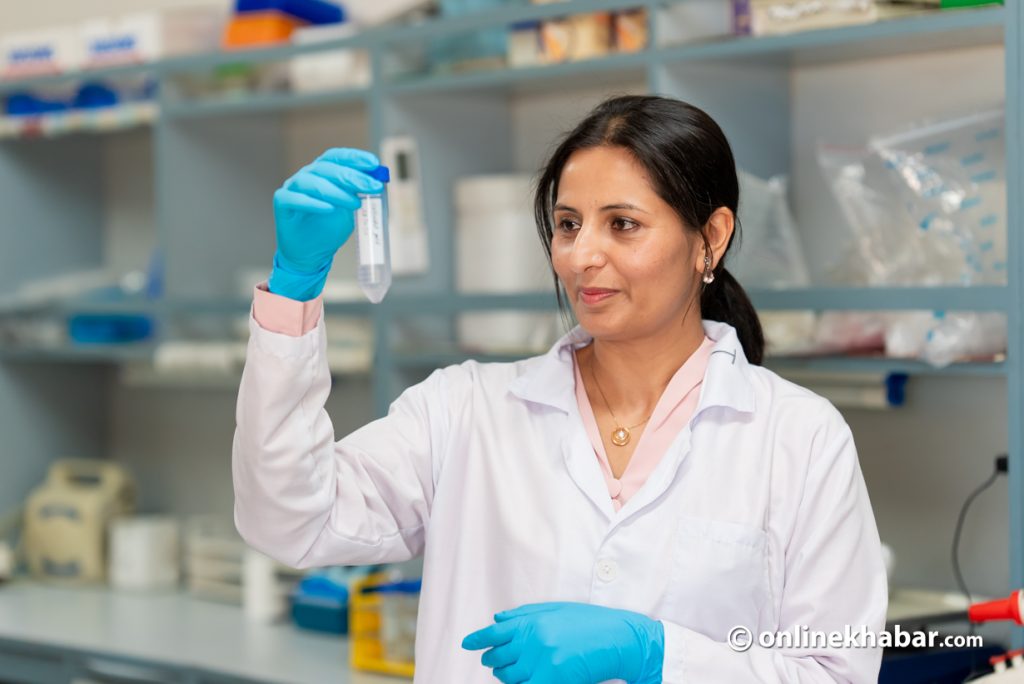
Dr Sunita Ghimire Gautam, a molecular biologist raised in rural Nepal, spent more than a decade at Japan’s top research institutions before returning home to tackle one of the country’s most urgent health challenges: building a self-reliant biotech sector.
She currently serves as the Research and Development Manager at Shikhar Biotech Pvt. Ltd and is the founder of Novala Biotech, Nepal’s first company to produce diagnostic kits, as well as the developer of the nation’s first locally made anti-venom—turning global expertise into homegrown innovation despite bureaucratic hurdles and a lack of supportive policy. She is also the principal Investigator at Research Institute for Bioscience and Biotechnology (RIBB), where she leads the anti-venom research project in collaboration with Shikhar Biotech
Born in Assam, India, and raised in Ward No. 9 of Galkot Municipality, Baglung, Nepal, Gautam grew up in a family where no one had received formal education. Her father served in the Indian Army, and her early life was marked by the constraints of rural life. Yet, she distinguished herself academically, completing her School Leaving Certificate (SLC) in 2057 BS from Jana Jagriti Higher Secondary School as the district topper.
“Becoming a district topper in the SLC became a turning point in my life because it further motivated me to continue my studies and pursue an education in science,” Gautam recalls.
After SLC, she wanted to pursue nursing or agriculture, but her village lacked educational opportunities in those fields. She moved to Chitwan and received a scholarship to study in the science stream at Chitwan Science College. Later, she earned a Bachelor’s degree in Microbiology from Tri-Chandra College, emerging as one of the highest scorers despite the challenge of being the first in her family to navigate higher education.
Immediately after graduation, she married Er Jhabindra Prasad Ghimire, who received a scholarship from the Japanese government to pursue a PhD. Gautam accompanied him to Japan, where she seized the opportunity to continue her own studies, completing a Master’s degree in Genetic Engineering from Saitama University.
11 years in Japan’s most advanced lab
Her research career took off at RIKEN, Japan’s largest comprehensive research institution, where she worked for 11 years. For her PhD thesis, she studied amyloid beta (Aβ), the main protein associated with Alzheimer’s disease. During her postdoctoral research, she developed a mouse model to study anxiety using gene-editing technology—the same technology that won a Nobel Prize in 2020.
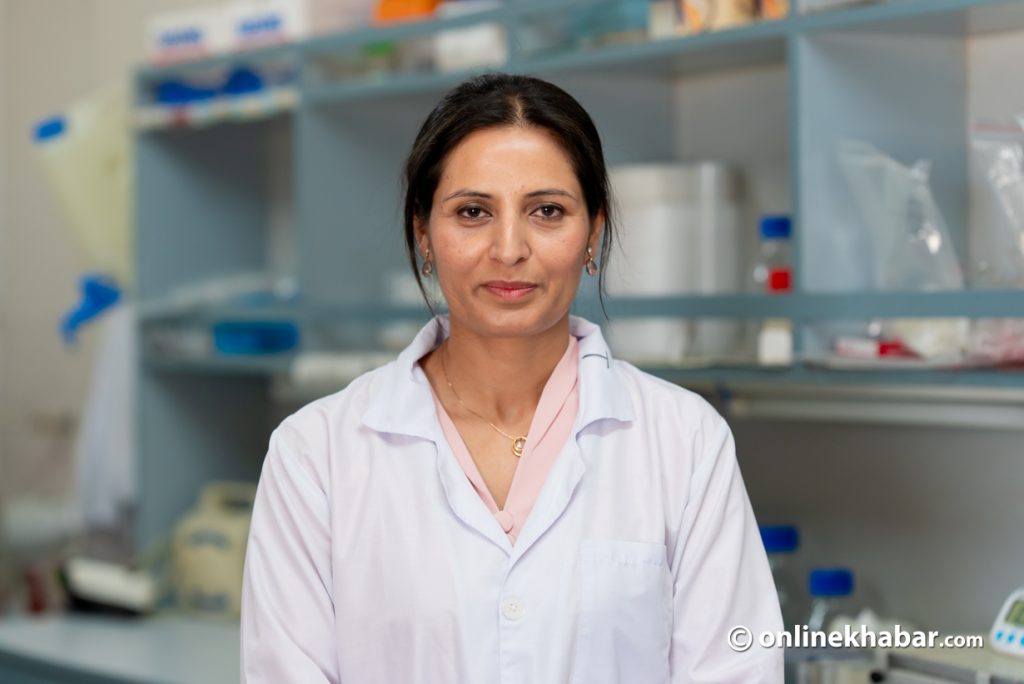
Gautam’s research spans molecular neuroscience, genetic engineering, and protein biochemistry. Her work has examined how brain cells regulate synaptic strength, contributed to the development of highly sensitive DNA-based mutation assays, and explored strategies to inhibit beta-amyloid aggregation, a hallmark of Alzheimer’s disease. She has also studied enzyme activity modulation and advanced fluorescent protein tools for cellular imaging.
Despite a comfortable life abroad, Gautam and her husband decided to return to Nepal in 2018, a move that is rare in Nepali society. “We both had always wanted to contribute to the country, and that was our major motivation to return to Nepal,” she says.
Upon returning, she secured a position as a researcher at Kathmandu University through the IBRO Fellowship, a return-home grant provided under the International Grant Research Fellowship. During this period, she also worked part-time at Shikhar Biotech, later becoming a full-time employee and serving as Research and Development Manager.
Shikhar Biotech is the only company in Nepal that develops antibodies for export, supplying several universities and research institutes. While working there, Gautam became interested in anti-venom research. Snakebite is one of Nepal’s deadliest yet most neglected health challenges. The country depends entirely on imported anti-venom from India, which is not always effective against native snake species.
“For instance, the anti-venom produced in India does not work well against pit viper bites,” Gautam explains.
Motivated to address this gap, she developed the nation’s first locally produced anti-venom. She received US$50,000 in funding for the project through the 2024 UNESCO-OWSD Early Career Fellowship, emphasising Nepal’s reliance on imports and her determination to change the situation.
“The anti-venom has already been developed, and we are currently conducting final-stage dose-efficiency testing,” she says. Her team is the first in Nepal to undertake such a project.
During the COVID-19 pandemic, when testing kits were in short supply, Gautam and a group of like-minded scientists founded Novala Biotech. The company manufactures diagnostic kits for pregnancy, ovulation, syphilis, HIV, AIDS, dengue, hepatitis, and COVID-19. Recognising the critical shortage during the pandemic, it took them about a year to develop and launch their kits, by which time the wave had largely subsided.
“Nepal depends entirely on imported diagnostic kits,” Gautam says. “Developing them locally not only reduces that dependency but also creates opportunities in the health sector.”
Such initiatives can inspire others to return home and contribute to the country, she adds.
Policy void challenges
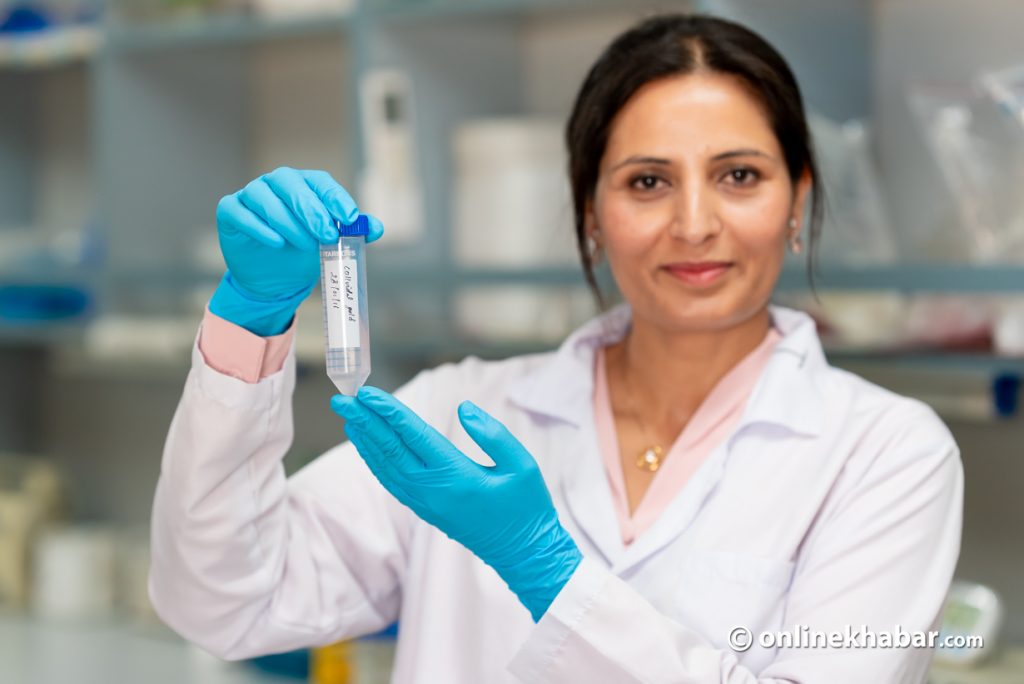
Despite the promise of her work, Gautam has faced bureaucratic hurdles. For years, her company and products lacked approval from the Department of Drug Administration (DDA), limiting operations.
“There is no clear policy to regulate and monitor diagnostic kits, which poses a major challenge for us,” she says.
Thanks to ethical approval from the Nepal Health Research Council (NHRC), her team has been able to continue research, but this alone does not allow them to compete fully in the market.
Gautam describes repeated attempts to secure official DDA approval: “They have verbally allowed us to bring our product to the market, but the lack of proper policy has caused us a lot of trouble. Every time we ask why our products are not approved, the response is always the same: ‘We do not have a policy, we are working on it, and we do not have sufficient human resources.’”
She says that although every government talks about promoting “Made in Nepal” products, these promises rarely translate into action. She calls for policies that support research and innovation, including tax subsidies for raw materials.
“The kind of policy we need is timely and inspires individuals to stay in their homeland and make a meaningful contribution,” she says.
She believes that if such policies are implemented, Nepal’s biotech sector could see unprecedented growth.
“With proper support, we can have more companies manufacturing vaccines, world-class institutes conducting cancer research, and much more,” she adds.
Dr Sunita Gautam’s journey, from a rural district in Baglung to Japan’s premier research labs and back to Nepal’s emerging biotech sector, illustrates the potential of combining global expertise with local innovation. In a country often dependent on imports and struggling with policy gaps, her work is helping lay the foundation for a self-reliant, research-driven health ecosystem.