
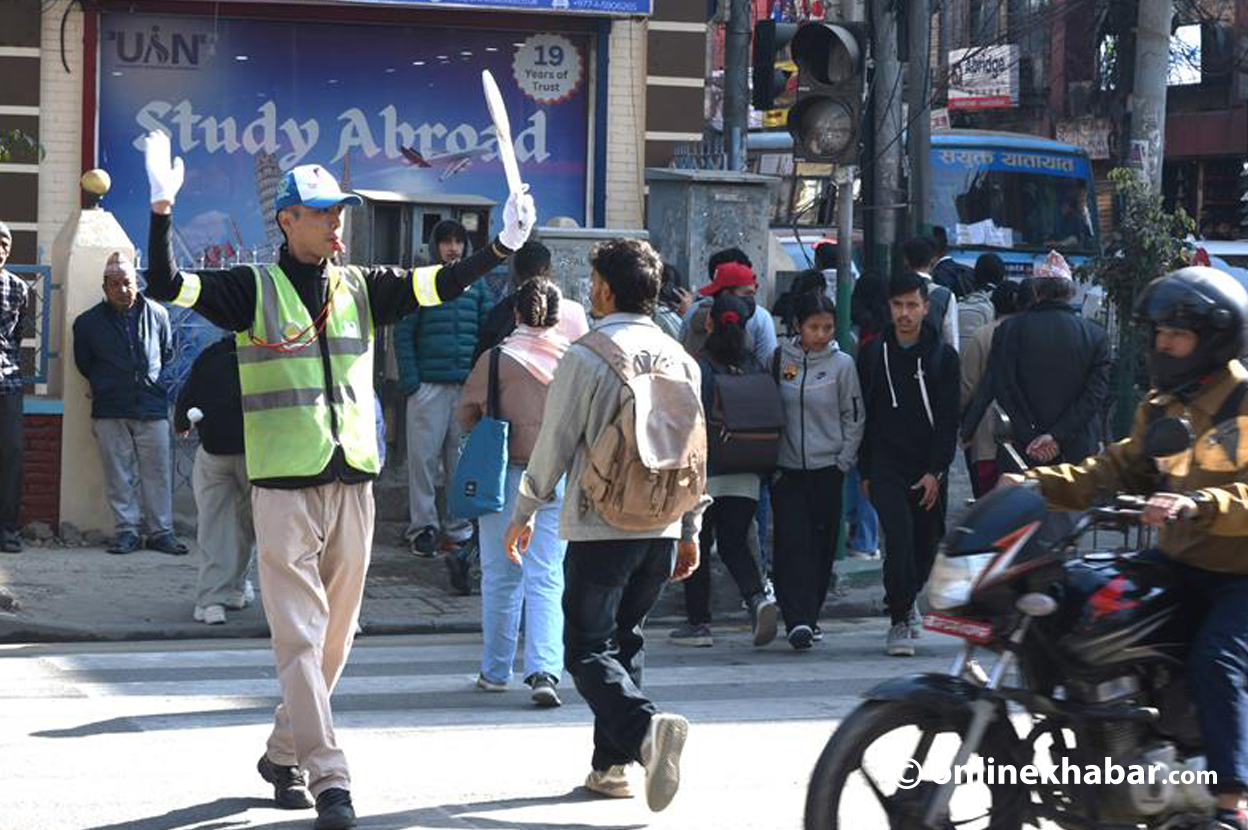
Kathmandu’s Putalisadak is occupied with heavy traffic. The traffic police stand in the road, trying to keep vehicles moving.
Beside them stands another figure, dressed not in uniform but no less engaged, guiding drivers and passengers, explaining traffic rules. He is not a traffic officer, yet he works as one.
He is Yuki Terashima, a Japanese national and a volunteer. Every day from 10 am to 2:30 pm, he works alongside Nepal’s traffic police, teaching road discipline on some of the capital’s busiest streets.
Terashima has been in Nepal for a year and four months, focused on raising public awareness about traffic rules.
“I try to teach people to follow traffic regulations,” he says. “Many do not fully comply. Even the traffic lights do not work well.”
He believes that proper adherence to traffic rules can significantly reduce accidents. Drawing on Japan’s culture of road discipline, he is trying to instil similar habits on Nepal’s streets.
“Everyone needs to learn and understand traffic rules,” he says.
He places particular emphasis on children.
“Children must be taught how to cross roads safely,” he says. “They should not use phones while crossing, and parents must teach their children traffic rules.”
From Tokyo to Baglung’s classroom
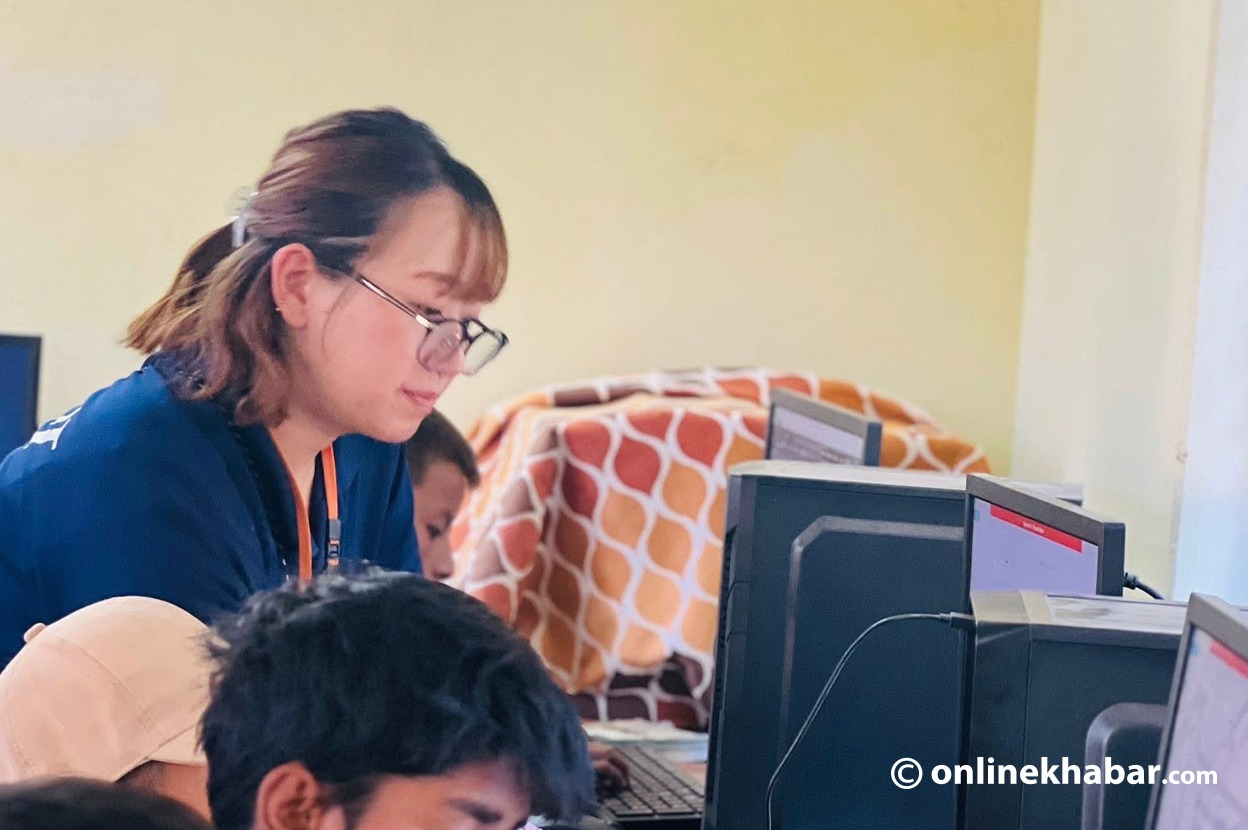
In Baglung, Honoka Tanimoto works as a computer teacher. Tanimoto is also Japanese. Since arriving in Nepal, she has also taken on a new identity, she is now known as Maya Gurung.
“It’s a name Nepalis gave me with love,” she says, speaking in Nepali. “They say I’m like a Gurung.”
Within just four months of arriving in Nepal, Tanimoto became comfortable speaking Nepali, which has made teaching easier. She currently teaches computer classes at Ramrekha Basic School in Baglung.
“I teach basic computer skills, and the students are eager to learn,” she says. But resources are limited. The school has only 12 computers, some of which are broken. “I have to put four students on one computer,” she says. “And the internet doesn’t work.”
She has been in Nepal for two years, determined to help improve computer education despite the constraints.
Teaching English and math
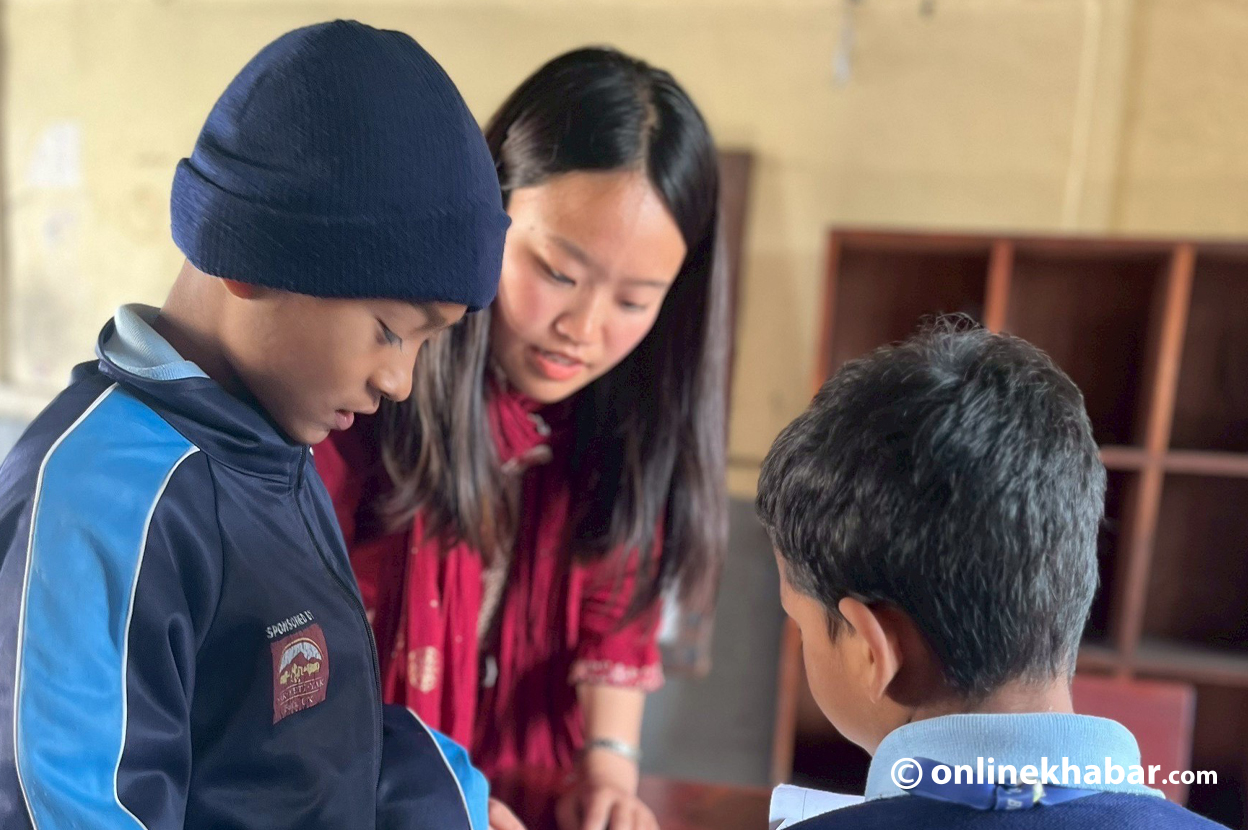
In the Kaski district, Anna Chushima teaches English and mathematics at Shree Sahara Bal Basic School. She teaches students from grade level.
“Most of the children here come from labouring families living below the poverty line,” she says to Onlinekhabar. “Their parents are at work from morning until evening.”
She considers herself fortunate to be able to teach children from disadvantaged backgrounds in Nepal.
“With the support of organisations, these children have been able to study,” she says. Additionally, she also leads extracurricular activities.
Preparing communities for disaster
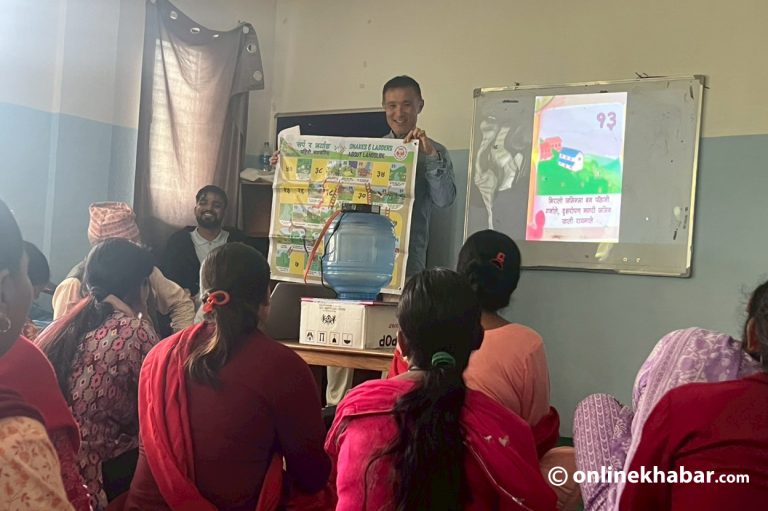
Jun Emasita, 51, is another Japanese volunteer who says he has fallen in love with Nepal. He has been in the country for a year and four months, working in disaster management in Chautara Municipality in Sindhupalchok district.
He conducts training on flood, landslide, earthquake, and wildfire mitigation and prevention. He also visits schools to teach students how to protect themselves during disasters.
“I am providing disaster management training,” he says. “It has helped reduce risk.”
Sindhupalchok is highly vulnerable to earthquakes and landslides, and Emasita serves there as a senior volunteer.
Working with farmers
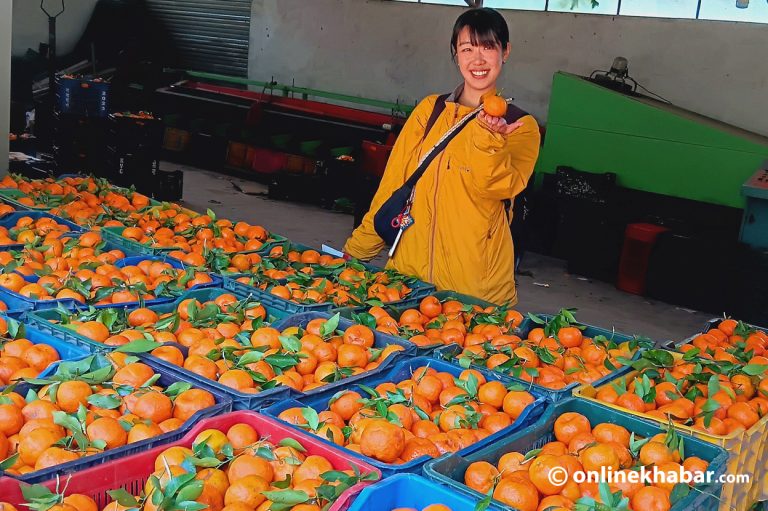
Kawajiri Nagisa has been in Nepal for a year and four months to learn about and teach agriculture. In the early days, she was surprised by the warmth she received.
“Nepalis show so much affection,” she says. “Even neighbours treat you with love. It felt strange at first, but now I’m used to it.”
In Syangja, she works with farmers, raising awareness about orange cultivation, storage, testing, collection methods, and harvesting. She sees herself as both a learner and a teacher.
“When I return to Japan, I plan to promote pesticide-free farming techniques,” she says.
Improving fish hatchery practices
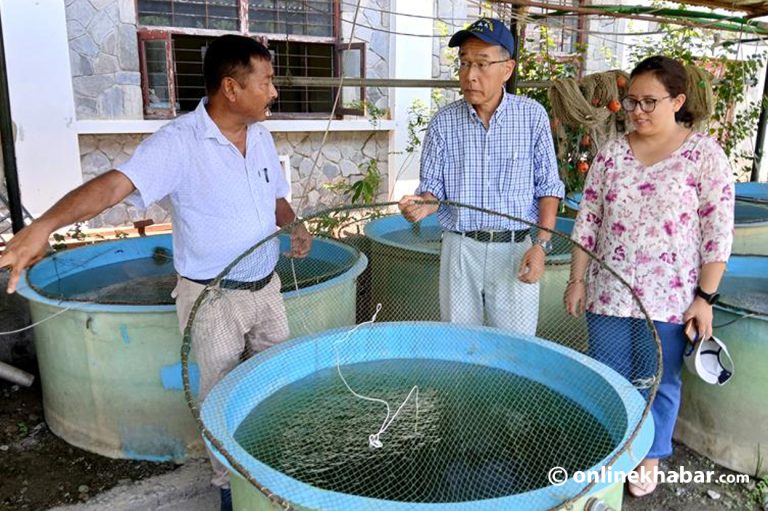
Yoichi Ohashi, 65, a senior volunteer, has been in Nepal for two years. With decades of experience in fisheries, he is an expert in fingerling production. Using new techniques, he has helped improve Nepal’s fingerling output.
He works at the Fisheries Research Centre in Pokhara, whose physical infrastructure was built with Japanese support. From this centre, Ohashi has trained more than 150 Nepali researchers through online classes.
“I want to transfer knowledge,” he says. Nepal’s art and culture drew him to the country. “I like Nepal’s culture. The idea is to bring Japan’s good practices here and take Nepal’s good values back to Japan.”
Over 1,000 volunteers
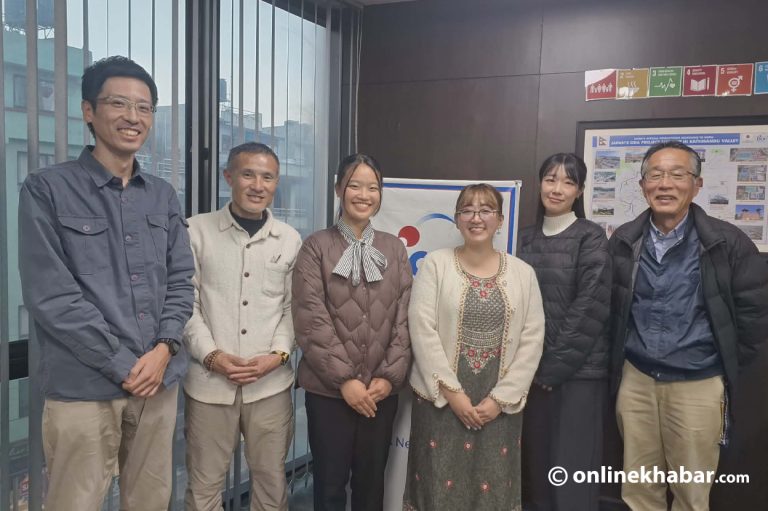
So far, 1,457 Japanese volunteers have come to Nepal. They work in education, health, socio-economic development, and infrastructure.
The program includes two groups, young volunteers aged 19 to 39 and senior volunteers aged 40 to 69. They come under a government-to-government agreement between Nepal and Japan, implemented through the Japan International Cooperation Agency (JICA).
Volunteers say both countries have much to learn from each other. They admire Nepal’s festivals such as Dashain and Tihar, its cultural diversity, towering Himalayan peaks, and the tradition of greeting with namaste.
“Japan has money; Nepal has happiness,” many of them say. “Japan has wealth, but not families like Nepal’s.”
At the same time, they believe Nepal could progress rapidly if it adopted Japan’s approach to time management and work discipline.
“People in Nepal seem to have a lot of free time,” one volunteer says. “Nepal needs to learn punctuality and time management from Japan, and Japan, on the other hand, needs to learn from Nepal how to be happy.”