

New York, September 22
The Second World War killed an estimated 70 million to 85 million people, with civilians accounting for a large share of the dead. Hundreds of cities across Europe and Asia were reduced to ruins.
After two devastating world wars, humanity sought to ensure that such destruction would never be repeated. Representatives of 50 countries gathered in San Francisco in 1945 to draft the United Nations Charter. The Charter was signed on June 26, 1945, and came into force on October 24 that year, marking the formal birth of the United Nations.
Bringing large and small states, victors and vanquished, under one roof at a time of fear and distrust was itself an extraordinary act of international confidence. The idea was simple but ambitious — disputes should be settled through dialogue and diplomacy rather than force.
The General Assembly was built around the principle of one country, one vote. The Security Council was established as the principal body responsible for maintaining international peace and security. UN agencies and programmes, including the World Health Organization, UNICEF and the Food and Agriculture Organization, began working on issues ranging from public health and hunger to development and reconstruction.
For smaller, weaker and newly independent countries, the UN offered something the balance of military and economic power could not — a forum where sovereignty was recognised and their voices could be heard.
In its early decades, the organisation built considerable moral and political legitimacy from the ruins of war.
But this is not 1945.
And the confidence once placed in the United Nations is under strain.
Khalilur Rahman, Bangladesh’s Foreign Minister and president of the 81st session of the UN General Assembly, has placed the issue at the centre of this year’s session. The official theme is “Restoring Trust, Managing Transformation: A United Nations That Delivers for All.”
Rahman has argued that trust cannot simply be demanded. It has to be earned continuously.
UN Secretary-General António Guterres has similarly identified rebuilding confidence in multilateralism as one of the major challenges facing the international system.
World leaders gathering at UN headquarters in New York this week are therefore speaking at a time when the organisation is confronting a basic question — can the institution created after the Second World War still deliver on the expectations placed upon it?
Why has trust in the United Nations declined?
The crisis of confidence did not emerge overnight.
For decades, the UN has struggled to prevent wars and conflicts in different parts of the world. Its ability to uphold a rules-based international order has also come under increasing pressure.
That has consequences for countries such as Nepal, which lack the military, economic and political weight of major powers.
The problem is also visible in the slow progress towards the Sustainable Development Goals. The world remains behind schedule on many of the targets set for 2030, while displacement has reached record levels and development assistance is under pressure.
The organisation itself is also facing serious financial constraints.
The UN General Assembly approved a regular budget of $3.45 billion for 2026, about 7 percent lower than the approved 2025 budget. The UN has also confirmed that 2,900 positions were abolished as part of the organisation’s restructuring and budget pressures.
Peacekeeping has been affected as well. UN Peacekeeping has warned that financial shortfalls are forcing missions to reduce operations by around 25 percent, affecting their ability to protect civilians and support peace efforts.
For Nepal, this is particularly significant.
Why Nepal has a stake in UN peacekeeping
Nepal has been one of the major contributors to UN peacekeeping for decades.
UN records show that Nepal had more than 6,000 uniformed personnel serving in UN peacekeeping operations in July 2025, making it one of the organisation’s largest contributors.
Any reduction in peacekeeping operations therefore has direct implications for Nepal.
It is also an issue Bangladesh has a particular interest in raising. Bangladesh has long been among the largest contributors of troops and police to UN peacekeeping operations.
For countries such as Nepal and Bangladesh, peacekeeping is not simply an international responsibility. It is also one of the clearest areas where smaller developing countries make a tangible contribution to global security.
Nepal therefore has a strong interest in ensuring that the financial crisis facing the UN does not undermine its peacekeeping capacity.
Rules-based multilateralism is a lifeline for smaller states
For countries such as Nepal, the international system works most predictably when it is based on rules rather than raw power.
The United Nations remains one of the few global institutions where a small country formally has the same vote as a major power in the General Assembly.
That does not mean all countries have equal influence in practice. The structure of the Security Council, particularly the veto power held by its five permanent members, gives major powers considerable influence.
But the principle remains important for smaller states.
When multilateral institutions weaken, countries with less military, economic and political power can find themselves more exposed to the decisions of larger states.
The World Trade Organization offers another example of the broader strain on multilateralism. As trade becomes increasingly shaped by protectionism and bilateral bargaining, smaller economies can find it harder to compete on equal terms.
A 2026 Munich Security Report has also warned about the risks of a more transactional international order, in which powerful states can use economic and political leverage to secure advantages.
At the same time, the threats facing the world — conflict, nuclear proliferation, poverty, inequality and climate change — are increasingly international in nature.
Guterres has repeatedly argued that this makes multilateral cooperation more important, not less.
The challenge is rebuilding faith in institutions that many countries increasingly believe are failing to deliver.
The climate crisis exposes another gap
For Nepal, the credibility of the international system is also closely tied to climate change.
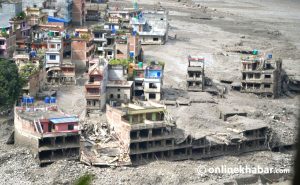
The country is highly vulnerable to climate-related disasters despite contributing very little to global greenhouse gas emissions.
The gap between climate commitments and delivery has therefore become a central concern for developing countries.
Developed countries had pledged in 2009 to mobilise $100 billion a year in climate finance for developing countries. According to the OECD, that target was exceeded for the third consecutive year in 2024, with $136.7 billion in climate finance provided and mobilised.
But the figures remain contested.
Oxfam has argued that the headline figures significantly overstate the actual value of climate finance received by developing countries. Its 2026 analysis estimated the “true value” of the finance provided in 2024 at between $33 billion and $45 billion, noting that a large proportion was delivered through loans rather than grants.
That disagreement illustrates the wider problem.
Climate justice is frequently discussed at UN-led negotiations, but developing countries continue to question whether the financial support promised to them is actually reaching them at the scale and terms required.
For countries facing increasingly severe climate impacts, the distinction between a promise and its implementation is not merely technical.
It can determine whether communities receive the resources needed to recover from a disaster.
Can the UN restore trust?
Rahman has placed conflict prevention and peacebuilding, civilian protection, development and stronger engagement with civil society among the priorities of his presidency.
His programme for the 81st General Assembly is built around six pillars, including peace and security, development, climate action, rights and protection, innovation and greater engagement with people and civil society.
The question is whether these ambitions can translate into meaningful institutional change.
Reforming the Security Council has been discussed for decades, but the permanent members have shown little willingness to give up their existing privileges.
That makes fundamental reform difficult.
The financial crisis presents another obstacle. The UN approved a smaller regular budget for 2026 and abolished thousands of positions as part of its restructuring process.
Peacekeeping missions are also operating under financial pressure, while geopolitical divisions continue to make consensus on major conflicts difficult.
The climate crisis presents a similar contradiction. The UN has helped establish a global framework for climate action, but the delivery of finance and support remains disputed.
The debate over restoring trust in the United Nations is therefore important in itself.
After 80 years, the organisation is confronting questions that go to the heart of its original purpose — whether it can prevent conflict, protect vulnerable populations, support development and ensure that international rules apply beyond the interests of the most powerful states.
For least developed countries such as Nepal, the stakes are particularly high.
A world governed primarily by power and transactions leaves smaller countries with fewer safeguards. A functioning multilateral system, even with all its shortcomings, gives them a forum in which their voices can be heard.
As Rahman has put it, trust cannot simply be requested.
It has to be earned, day after day.
The 81st General Assembly now faces the harder part — demonstrating that the United Nations can still earn it.