

Kathmandu, October 28
Finance Minister Swarnim Wagle’s remarks on Nepal-India relations at the NDTV World Summit in India last Friday have triggered a political and diplomatic debate in Nepal, drawing criticism from opposition leaders, lawmakers and even film actor Rajesh Hamal.
Speaking at the summit organised by Indian television channel NDTV, Wagle said, “There was a time when nationalism in Nepal was associated with anti-India sentiment. But that era is now over.”
Wagle also described Nepal and India as deeply connected neighbours, acknowledging that problems occasionally arise between the two countries. He said the priorities of the new generation should be economic prosperity, good governance, employment and constructive relations with neighbouring countries.
However, his characterisation of anti-India nationalism as a bygone era has drawn criticism from those who argue that it risks equating legitimate concerns about Nepal’s sovereignty and national interests with hostility towards India.
Critics have questioned why the finance minister made the remarks on Indian soil, arguing that they could undermine the historical basis of Nepali nationalism by portraying it as primarily anti-India.
The controversy has added to tensions between the government and opposition forces. A few months ago, Prime Minister Balendra Shah had stirred debate after telling Parliament that Nepal had also encroached on Indian territory. Wagle’s remarks have now provided further ammunition for critics of the government.
Former foreign ministers Pradeep Gyawali and Kamal Thapa have been among the most vocal critics, particularly within left-wing political circles.
Former foreign ministers question Wagle’s remarks
Gyawali, a senior leader of the CPN-UML, described Wagle’s statement as undiplomatic, irrelevant and potentially damaging to Nepal’s dignity and interests.
“Foreign soil is not a place for government officials to discuss internal political differences in their own country,” Gyawali said.
He argued that Nepal had never experienced an era in which nationalism was inherently anti-India.
“Nepal has always sought friendly relations based on sovereign equality, mutual interests and respect, and continues to do so today. The views of a particular individual or group do not constitute an entire ‘era’, nor do they necessarily represent the nation as a whole,” he said.
Kamal Thapa, a leader of the Rastriya Prajatantra Party who was foreign minister when India imposed a blockade on Nepal in 2015, also criticised Wagle’s remarks.
“Finance Minister Dr Swarnim Wagle’s recent statement in Delhi regarding Nepal-India relations is not only objectionable but also a direct devaluation of Nepali nationalism,” Thapa said. “Nepal’s nationalism has never been sustained by opposition to any particular country.”
Thapa argued that describing anti-India nationalism as a thing of the past at an international forum could weaken the country’s position on issues of national concern.
Rastriya Swatantra Party (RSP) lawmaker Shriram Neupane also weighed in on the debate, emphasising the importance of protecting national interests through diplomacy.
“Diplomacy is not about belittling someone or flattering someone else to make oneself appear taller. It is about safeguarding the dignity of one’s nation while protecting its national interests,” Neupane said.
He argued that popularity should be earned through results, balanced statements and conduct that upholds national dignity, rather than through sarcasm, mockery or displays of dependence.
“History remembers not who said what to whom, but who did what for the country and its people,” he said.
Actor Rajesh Hamal also criticised Wagle’s remarks on Monday, prompting a lively debate on the actor’s social media page. Hamal suggested that the finance minister had gone beyond the appropriate limits of his office.
“Nepal-India relations are historically extremely important and strategically sensitive. They cannot be reduced to displays of personal flattery or statements that invite public ridicule,” Hamal said.
Those criticising Wagle argue that nationalism is fundamentally about protecting a country’s independence, sovereignty, territorial integrity, right to self-determination and national interests.
They maintain that having a dispute with a neighbouring country is not the same as opposing that country. Raising border disputes, seeking revisions to unequal agreements, reducing dependence on trade and transit arrangements, or objecting to interference in national territory are legitimate concerns for a sovereign state, they argue.
From this perspective, raising such issues does not make someone anti-India. Critics contend that Wagle’s remarks risk portraying those who raise them as politically outdated or hostile to India.
At the same time, political parties across Nepal have repeatedly called for cordial relations with India, a major trading partner with which Nepal shares an open border, family and cultural ties, employment opportunities, tourism, energy cooperation and transit links.
The controversy, therefore, centres partly on whether Wagle adequately distinguished between hostility towards India and the assertion of Nepal’s legitimate national interests.
Was the forum appropriate for the statement?
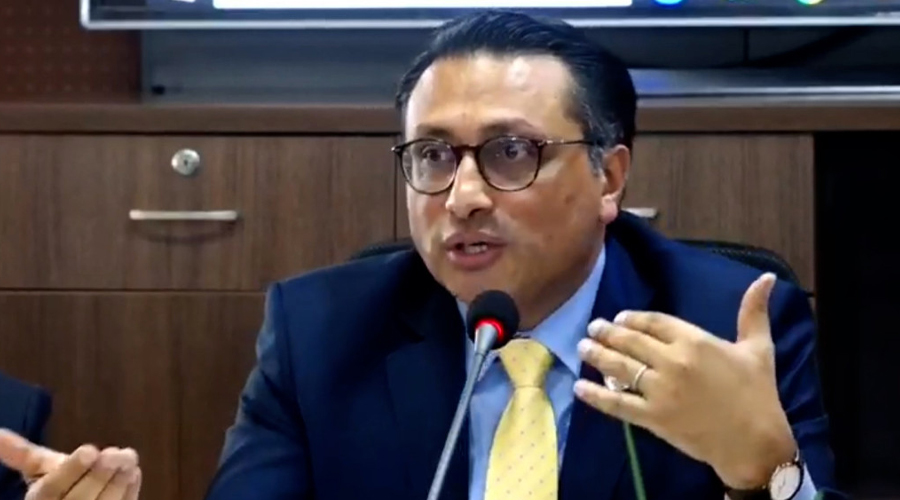
Former Nepali ambassador to India Deep Kumar Upadhyay said Wagle’s position as a senior cabinet minister made the choice of words and platform particularly important.
“He is the second-ranking minister in the government. Foreign affairs and the conduct of foreign policy are matters that should be handled by the prime minister and the Foreign Ministry. Therefore, the way he made that statement was not appropriate,” Upadhyay told Onlinekhabar.
However, he cautioned against exaggerating the implications of the remarks.
“It is also not right to create an uproar as if the entire country has been overturned by interpreting every statement in the worst possible way,” he said.
Upadhyay said Wagle should have expressed his views more carefully. While he disagreed with critics who had accused Wagle of excessive deference to India and invoked the Monroe Doctrine in their criticism, he felt the platform chosen for the statement was unsuitable.
“He should have known how to put his point across. Many have criticised him by saying he is subservient and have even brought in the Monroe Doctrine. I do not support that line of criticism. But the platform on which he made the statement was not quite appropriate,” Upadhyay said.
The debate raises a broader question about how government representatives should communicate changes in their country’s foreign policy or political outlook while speaking abroad.
Addressing a country’s evolving priorities at an international summit is not inherently unusual. But the wording, context and potential interpretation of such statements can carry diplomatic consequences, particularly when they touch on sensitive historical questions.
Political scientist and former ambassador to India Lok Raj Baral offered a different interpretation of Wagle’s remarks. Baral said the minister could have avoided making the statement, but argued that it reflected aspects of Nepal’s political history.
“If we look at Nepal’s history since 1951, nationalism here has largely been centred on India. India also creates circumstances that produce such reactions. Nationalism then emerges in response,” Baral said.
He describes this pattern as “reactive nationalism”, arguing that Nepali political leaders have repeatedly used nationalist rhetoric in response to developments involving India.
Baral cited historical examples ranging from allegations that India supported particular political groups to statements by former prime minister KP Sharma Oli, including his references to “Singhameva Jayate” instead of “Satyameva Jayate” and claims concerning Ayodhya’s location.
According to Baral, such statements have sometimes given India opportunities to respond, further reinforcing the cycle of reaction and counter-reaction.
He also linked Wagle’s remarks to the RSP’s political positioning. The party has sought to distinguish itself from the political narratives of established parties, including what it regards as an outdated approach to nationalism.
“Sometimes the truth can be bitter. He may have been trying to redefine the past by saying that an old era has ended,” Baral said.
He added that Wagle’s statement was not entirely new in the context of the party’s position.
“The Rastriya Swatantra Party and Rabi Lamichhane have already stated in their election manifesto that they do not intend to carry the old baggage of anti-India sentiment and that they will pursue development-oriented diplomacy. So this is not an entirely new position,” Baral said.
Economic cooperation and unresolved disputes
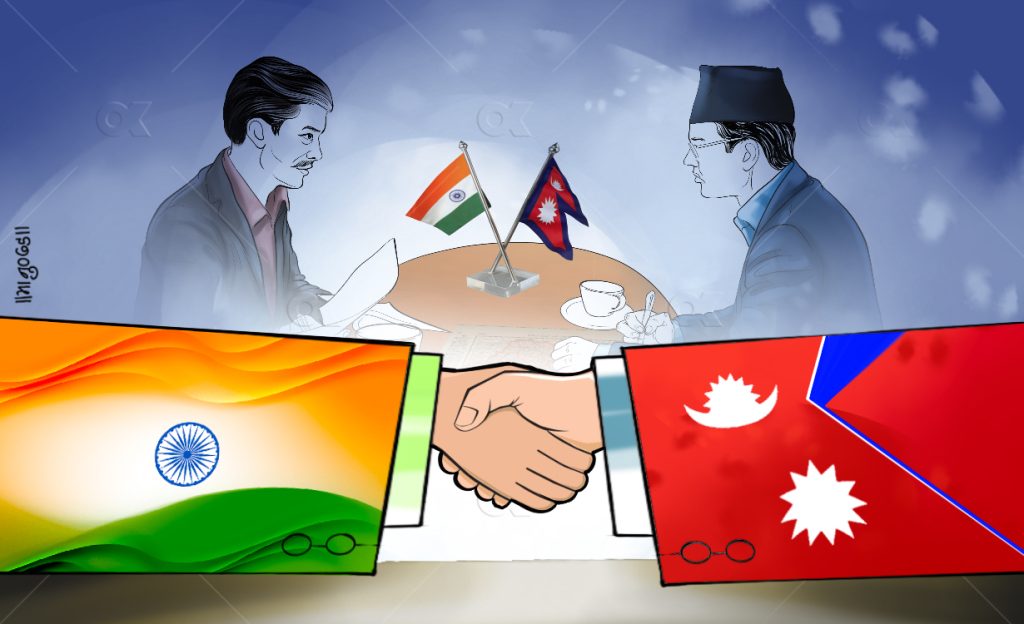
Upadhyay said Nepal should seek to benefit from India’s economic development while expanding trade and cooperation in areas such as energy exports, tourism, road and rail connectivity, investment and industry.
He argued that Nepal’s immediate priorities should include reducing its trade deficit, making the economy more dynamic, attracting investment and handling bilateral disputes with skill and maturity.
“The important questions now are how to reduce the trade deficit, how to energise Nepal’s economy, how to attract investment and how to address problems with India in a prudent, serious and mature manner while protecting national interests. Spending time on unnecessary controversy instead of focusing on these issues is pointless,” Upadhyay said.
Wagle’s latest remarks have also revived scrutiny of his earlier statements on India’s regional influence.
During the previous Parliament, he had reportedly described South Asia as India’s sphere of influence, suggesting that India’s preferences carried considerable weight in the region. Critics have also revisited comments he made about the Monroe Doctrine around three years ago.
The Monroe Doctrine was articulated by US President James Monroe in a message to Congress on December 2, 1823. Its original purpose was to oppose further European colonisation in the Americas and discourage European interference in the affairs of independent countries in the region. In return, the United States indicated that it would stay out of European wars and political disputes.
Over time, however, the doctrine was also used to justify claims of special US influence over the Western Hemisphere. Critics have pointed to the contradiction between opposing external intervention and asserting a dominant regional role.
Wagle had drawn a parallel between this concept and India’s influence in South Asia. The comparison is now being cited by critics questioning his approach to Nepal’s national interests.
Baral, however, said such statements should be understood in the context of regional power dynamics rather than treated as proof that Nepal had surrendered its interests.
“Under the 1950 treaty, India considers itself to have a special relationship with Nepal. Whether we accept it or not, India regards this region as its sphere of influence. It is therefore uncomfortable when Chinese or American activities increase here,” Baral said.
He added that public debate in Nepal often becomes driven by speculation and noise rather than a close examination of the underlying realities.
India is South Asia’s largest country by population and has substantial economic, military and geographical influence. Its market and proximity make the relationship particularly important for Nepal.
But critics argue that India’s size and strategic interests do not automatically mean smaller South Asian countries must treat those interests as the limits of their own national priorities.
Sovereignty and unresolved bilateral issues
Gyawali has pointed to several longstanding issues in Nepal-India relations, including border disputes, provisions of the 1950 Treaty of Peace and Friendship, trade barriers affecting Nepali products, the growing trade deficit, flooding in Nepali territory linked to dams and embankments near the border, and delays in securing alternative air-entry routes for Nepal.
He argued that these matters should be discussed openly between close neighbours.
“Relations cannot be strengthened by hiding problems under the carpet. Raising these issues is not opposition to any particular country. It is a question of Nepal’s national interests, and every government has a responsibility to protect those interests,” Gyawali said.
The 1950 Treaty of Peace and Friendship remains a significant foundation of Nepal-India relations. Its first article recognises the sovereignty, territorial integrity and independence of both countries.
However, several provisions of the treaty and its historical context have been debated in Nepal for decades, with calls for a review or revision to reflect contemporary circumstances.
To examine the relationship, Nepal and India established an Eminent Persons Group (EPG), which prepared a joint report. India has yet to receive the report, according to the account of the process in the source material.
Border disputes involving Kalapani, Lipulekh and Limpiyadhura remain another point of tension. Other issues include cross-border flooding, the management of dams and embankments, access for Nepali goods to the Indian market, the trade deficit and alternative transit arrangements.
Those critical of Wagle’s remarks argue that raising these concerns is not synonymous with anti-India sentiment. Instead, they say, such issues form part of the normal responsibilities of a sovereign government.
The debate over the finance minister’s statement thus reflects two competing emphases in Nepal’s approach to India: a push for more pragmatic, development-focused engagement, and a demand that closer cooperation must not come at the expense of openly asserting Nepal’s sovereignty and national interests.