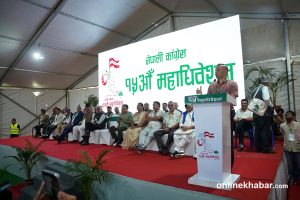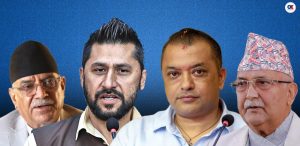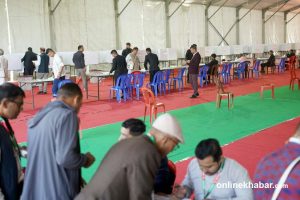


Today, on Shrawan 6, Nepal marks the forty-fourth anniversary of the death of Bishweshwar Prasad Koirala. It comes at an unusually painful moment for the party he founded: a Nepali Congress reduced to thirty-eight seats in the House of Representatives; its president defeated in his own constituency; a widening divide between its old guard and a younger generation pressing for change, each drawing sharply different lessons from the same electoral debacle; and the word split uttered within its ranks with a seriousness it has not carried in years. Moments like these naturally invite political parties to seek refuge in the memory of their founders. Institutions in decline often invoke those who established them, less as standards by which to judge themselves than as sources of borrowed legitimacy. The temptation is understandable. But it is also misleading. B.P. Koirala deserves better than to be quoted. He deserves to be read.
To read Koirala is to discover something more demanding than the familiar outline of his life—an outline so familiar it has almost become political furniture: the revolutionary who helped end a century of Rana oligarchy; Nepal’s first democratically elected prime minister; the leader whose government King Mahendra overthrew in 1960; the prisoner who spent nearly eight years in detention rather than recant; the exile who, through those years, continued to write political essays, prison memoirs, and novels of remarkable literary quality, revealing a mind as interested in the complexities of human character as in the exercise of political power. Yet the outline conceals what made him exceptional. Koirala did not confuse steadfastness with rigidity. The same leader who refused to bend during years of imprisonment later undertook the one political act many of his own followers found harder to understand than his resistance itself: he sought reconciliation with the very monarchy that had overthrown his elected government and imprisoned him. That decision revealed the defining quality of his statesmanship—not reconciliation as a virtue in itself, but the political judgment from which it arose.
Act that should be harder to invoke
By the mid-1970s, Koirala had reached a sobering conclusion. Released from prison and living first in exile and then back in Nepal, he no longer believed that continued frontal confrontation with the Panchayat state was moving the country towards democracy. It had settled into a stalemate that exhausted the democratic movement without bringing democratic restoration any closer. His answer was the policy of ‘National Unity and Reconciliation.’ The formulation itself was his own. At its heart lay the idea of engaging the very monarchy that had overthrown his elected government and imprisoned him, in pursuit of a negotiated path back to multiparty democracy that confrontation alone had failed to secure.
It is tempting, with the benefit of hindsight, to mistake this policy for moderation—or to imagine that reconciliation itself was its objective. It was neither. What Koirala demanded was considerably harder: that a democratic leader subordinate the desire for vindication to the larger imperative of restoring democratic politics itself. He was not asking that the past be forgotten, only that it not become a prison from which the country’s democratic future could no longer escape.
The proposal carried an immense personal and political cost. Many within his own party regarded it as capitulation—a repudiation of everything his years of imprisonment were thought to have proved about his commitment. Even Ganesh Man Singh, his lifelong comrade-in-arms, who returned from exile with him despite the personal risks involved, harboured serious doubts about its wisdom. Koirala persisted nonetheless. He believed the historical moment demanded something different from what political emotion demanded, and he was prepared to disappoint even his closest allies if that was the price of giving Nepal’s democratic movement a chance that confrontation alone could not provide. It is a rare leader who is willing to pay that price—not for personal vindication, but for the future of the cause he serves. Koirala was one of them.
History’s verdict
History ultimately rendered a more generous verdict than many of Koirala’s contemporaries were prepared to give, and two developments proved especially revealing. The first followed with surprising speed. Koirala’s return to Nepal and his policy of national unity and reconciliation fundamentally reshaped the political environment. Within little more than two years, under mounting pressure from a nationwide student movement and within the altered political climate Koirala had helped create, the monarchy announced the 1979 national referendum. For the first time since the royal coup of 1960, the Nepali people were offered a choice between a reformed Panchayat system and the restoration of multiparty democracy. The referendum did not restore democracy. It did something more fundamental: it irrevocably changed the terms on which the struggle would thereafter be conducted. The Panchayat system could no longer plausibly present itself as the nation’s uncontested political settlement.
The second development came after Koirala’s death. Within seven years, Ganesh Man Singh—the very colleague who had once questioned the wisdom of reconciliation—led the nationwide people’s movement that peacefully restored multiparty democracy in 1990. In recognition of his leadership, he came to be revered as the nation’s Supreme Leader.
History, in other words, vindicated not merely a political strategy but a political judgment. What many contemporaries had dismissed as accommodation gradually revealed itself to have been an act of strategic foresight, expanding rather than narrowing the democratic possibilities available to Nepal. It was this quality—perhaps less celebrated during Koirala’s own lifetime than his courage or sacrifice—that ultimately secured his place among Nepal’s foremost statesmen. He consistently placed the nation’s democratic future above personal ambition, partisan advantage, and even his own political standing. That is the part of his legacy most likely to endure, because it rests not upon the circumstances of one historical moment but upon a standard of political leadership that transcends it.
Question before the Nepali Congress today
Forty-four years after Koirala’s death, Nepal confronts a democratic question very different from the one he faced. The central challenge today is no longer the restoration of democracy but the restoration of public confidence in democratic politics itself. For that reason, it would be mistaken to search Koirala’s life for ready-made answers. His policy of national unity and reconciliation belonged to a particular historical moment; the habit of judgment that produced it does not. That distinction matters. Koirala’s authority never rested on fidelity to inherited positions. It rested on his willingness to re-examine inherited assumptions whenever he believed Nepal’s democratic future required it. No serious political tradition survives by mechanically repeating the answers of another age. The more searching question is whether it still possesses the habits of judgment that enabled those answers to be discovered in the first place.
That question cannot be avoided by diminishing the scale of the Nepali Congress’s present predicament. A party reduced to the largest—but still marginal—opposition in the House of Representatives has suffered more than an electoral defeat. It has suffered a crisis of confidence that cannot be explained away as a temporary fluctuation or overcome simply by waiting for political fortune to turn. Nor has the election resolved the question of leadership. If anything, it has sharpened it. The party’s old guard and the younger generation pressing for change have drawn strikingly different conclusions from the same defeat. One locates the problem principally in organisational erosion and declining discipline; the other in the failure to renew leadership, methods, and the party’s relationship with a changing electorate. Neither diagnosis is implausible. Neither is sufficient. Yet each increasingly treats the other not as an indispensable interlocutor but as the principal obstacle to recovery.
It is precisely here that Koirala’s example ceases to be an object of commemoration and becomes a measure of leadership. His deepest insight was never simply that reconciliation with a monarchy was possible. It was that even legitimate grievances become politically disabling once the desire to be proved right outlives its usefulness. The divisions within today’s Congress are not divisions of irreconcilable principle. They are divisions of generation, authority, and competing interpretations of a shared failure—the kinds of divisions that exist within every living democratic party. They become dangerous only when the desire to prevail over one another begins to outweigh the responsibility to preserve the institution itself. History offers no guarantees, only standards. No historical analogy is exact. Yet every political generation must eventually answer some version of the same question: what, given its own circumstances, is worth sacrificing to preserve something larger than itself?
Judgment over vindication
Whenever a political party enters a period of uncertainty, there is a natural temptation to seek refuge in the memory of its founder. The instinct is understandable. Founders represent moments when a party appeared united in purpose, confident in direction, and certain of its place in history. Yet memory can become a substitute for reflection. Institutions often honour their founders most lavishly when they are least willing to confront the standards those founders established. The Nepali Congress has never ceased to commemorate Bishweshwar Prasad Koirala. But commemoration, however sincere, is not the same thing as fidelity. The truest tribute the party can pay its founder is not to invoke his words more frequently, but to recover the habits of judgment that gave those words their authority. Koirala understood that politics was never simply a contest in which moral seriousness consisted in defeating one’s adversaries or proving oneself right. At decisive moments, he believed, the higher obligation of leadership was to preserve the conditions under which democratic politics itself could endure.
That conviction led him to advocate national unity and reconciliation with the very monarchy that had overthrown his elected government and persecuted him. It was not an act of forgetfulness, still less of surrender. It was an act of political judgment. The reconciliation Koirala sought belongs to history. The reconciliation the Nepali Congress still owes him does not. It lies in recovering the standards of judgment, restraint, and magnanimity that his example embodied—the willingness to place the long-term interests of nation and democracy above the immediate satisfactions of personal vindication and partisan triumph. That remains the most demanding part of his legacy because it asks something difficult of every generation that claims him: whether it can distinguish between winning an argument and serving the larger democratic purpose the argument was meant to advance.
Those questions do not confront only the Nepali Congress. They confront every democratic party that hopes to outlive the circumstances of its own founding. But they confront the Congress with particular force, because no other party can claim Koirala as its founder while exempting itself from the discipline of his example. History rarely remembers political leaders for the positions they defended alone. More often, it remembers them for the quality of judgment they brought to moments when no position was without cost. Koirala’s greatest legacy was not that he showed Nepal how to reconcile with an adversary. It was that he showed democratic leaders when reconciliation becomes a higher duty than vindication. That, ultimately, is why B.P. Koirala still deserves better than to be quoted. He deserves to be read.