
Kathmandu, August 27
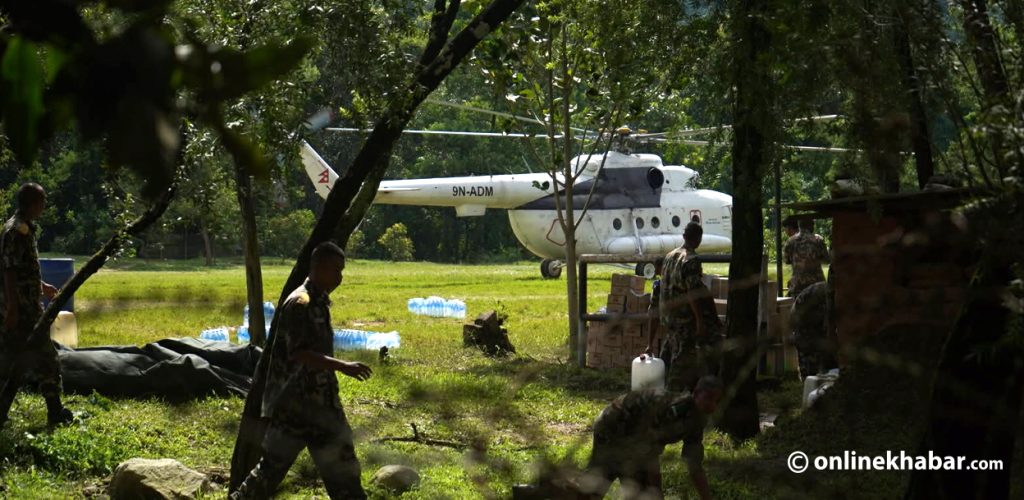
The sound of helicopters echoed over Rasuwagadhi’s skies throughout the day on Wednesday. Some helicopters were arriving carrying the injured, while others were flying displaced people to safer locations.
As the pressure of rescue operations mounted following the destruction caused by the flood and landslides, health workers at Rasuwa Hospital remained fully occupied treating the injured.
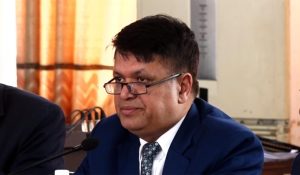
According to hospital medical superintendent Dr Amit Prajapati, managing the sudden, large influx of injured patients on Wednesday was extremely difficult. Many of those brought in after being rescued from the flood were in serious condition.
“Suddenly, a huge number of injured people came in yesterday,” Dr Prajapati says. “There were patients who had been buried under landslides. Many had broken arms and legs, head and facial injuries, and severe injuries in various other parts of the body.”
He said the hospital treated 53 patients on Wednesday and 10 on Thursday. Among them, patients in serious condition were referred to Kathmandu, while some with minor injuries were treated and discharged. As of Thursday evening, four injured patients remained admitted at the hospital.
Most of the injured were “polytrauma” cases, patients with severe injuries to multiple parts of the body at once. He said patients with serious head injuries, in particular, were given primary treatment before being referred elsewhere for further care.
But managing the injured wasn’t the hospital’s only challenge.
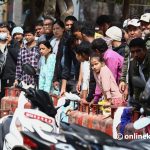
There’s no electricity. No network. The hospital has been running on a generator, and the fuel needed to keep that generator running is now nearly exhausted.
“We’re running the generator right now, but the fuel is almost gone,” Dr Prajapati says. “We don’t know how many more days it will take for the power to come back. If fuel isn’t arranged, treatment services themselves could be affected.”
Mobile network service only began working from Thursday afternoon, and even then intermittently, about 10 minutes of connectivity before it cuts out again, he said.
With no electricity, battery backup can’t hold out for long either.
“The backup only lasts three to four hours,” he says. “Once the battery runs out, we need electricity again to recharge it. That’s why fuel has become the hospital’s biggest concern right now.”
On Wednesday, with the overwhelming number of injured, health workers barely had time to catch their breath.
“Nothing is easy in a disaster,” Dr Prajapati says.
“There’s no power, no network. It was hard to manage the injured coming in under these conditions, but everyone worked together and we managed.”
He said medicine, equipment, and staffing levels are currently adequate for immediate needs. Supplies have arrived from the Ministry of Health, along with support from the World Health Organisation (WHO), and a team from Bir Hospital has also reached the site.
“For now, we’re okay in terms of manpower, medicine, and equipment,” he said. “Our own staff and the teams that came from outside are working together.”
Still, the continuous workload has left health workers exhausted.
“We’re a bit tired from working nonstop since yesterday,” Dr Prajapati says, “But when the injured keep coming in, there’s no room to think about fatigue.”
Search operations for missing people were still ongoing on Thursday. He said more displaced people than injured people have been rescued so far.
“The exact number of rescues would be known to the army and rescue teams,” he says. “We just see the patients who come to the hospital. The search is still ongoing.”
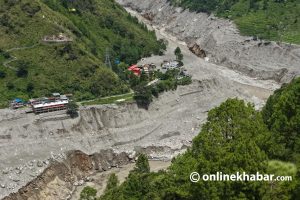
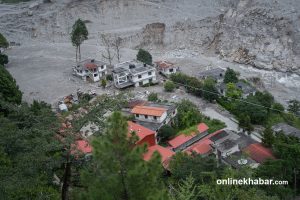
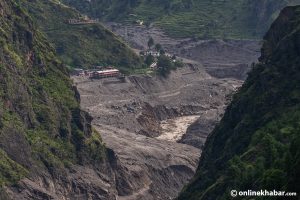
The hospital’s patient load was somewhat lower on Thursday compared to Wednesday. But complete details of the damage caused by the flood and landslides are still not available. Several settlements remain out of contact, search operations continue, and there remains an equal likelihood that more injured people will be found during rescue efforts.