
Kathmandu, September 1
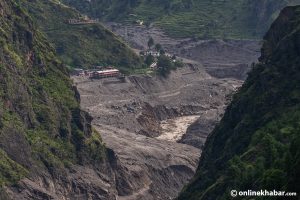
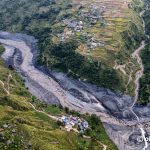
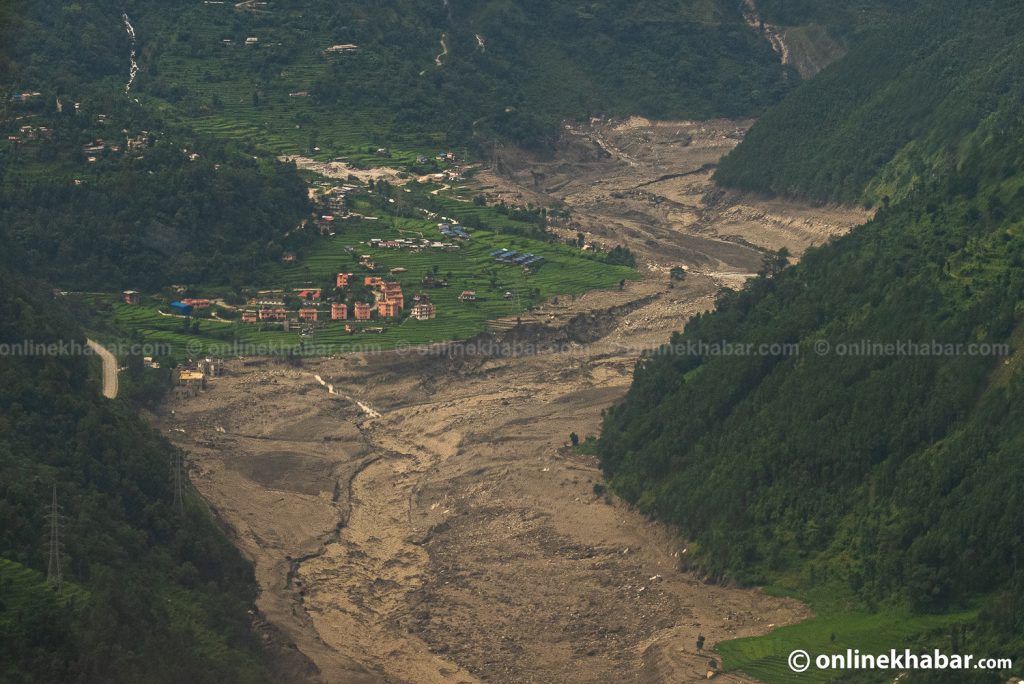
On July 8, 2025, at around 3am, a sudden flood swept through the Bhotekoshi River — known as the Lhende River on the Chinese side — along the Nepal-China international border in Rasuwa.
The flood left 18 people missing and destroyed the Miteri (Friendship) Bridge. It also caused extensive damage to the Rasuwa-Gadhi Hydropower Project, the Rasuwa Customs Office yard, cargo containers and vehicles held for customs clearance, as well as the Syabrubesi-Rasuwagadhi road section.
Following the disaster, emergency meetings of the Rasuwa District Security Committee and District Disaster Management Committee formed a committee to assess the damage and prepare a preliminary report as soon as possible.
The report was submitted and remains part of government records. But its recommendations and conclusions were not implemented. Instead, the report was left in a drawer.
Within a year, a similar but far more powerful flood struck the same river system, causing an unprecedented loss of life and widespread destruction.
Ashish Gajurel, chairperson of the House of Representatives Development Committee and former executive director of the Nepal Intermodal Transport Development Board, said last year’s disaster had already served as a warning.
“Last year’s flood had already given a strong warning to the customs point and settlements in the surrounding areas. Perhaps we failed to take it seriously,” Gajurel said.
What did the report warn?

The report said the nature of last year’s flood showed the need to consider the possibility of sudden floods of this kind when building settlements and infrastructure along riverbanks.
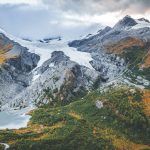
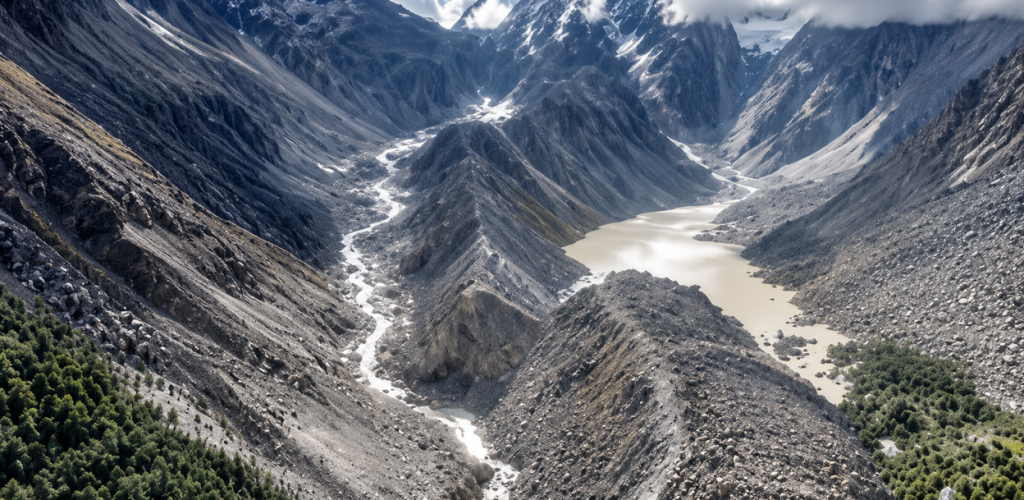
It warned that modern technology and precautionary measures were needed to protect lives and property from floods triggered by glacial lakes, supraglacial lakes, rising temperatures caused by climate change, accelerated snowmelt, extreme rainfall and large landslides along rivers.
The report also said Nepal needed to develop the technology, infrastructure and early warning systems necessary to forecast such disasters and make them more predictable, which could help reduce loss of life and property.
Cross-border warning system, risk assessment recommended
The report called for cooperation between Nepal and China to establish a cross-border early warning system in high-risk areas along glaciers and rivers located near the two countries’ border.
Such a system could provide advance warning of floods, glacial lake outburst floods and other potential disasters, helping reduce casualties and damage, the report said.
It also recommended scientific mapping, monitoring and risk assessment of glacial lakes along both banks of the Bhotekoshi and its tributaries.
For high-risk glacial lakes, the report recommended long-term measures to reduce the risk of glacial lake outburst floods (GLOFs), including water drainage structures and surveillance equipment.
Climate risk assessment for riverside settlements and infrastructure
For long-term risk reduction, the report recommended that the government adopt a policy requiring scientific assessments of potential risks from climate change, floods, glacial floods and other natural disasters before constructing any infrastructure, implementing projects or developing settlements along riverbanks.
It also recommended that hydropower projects under construction and in operation manage waste materials generated by their projects in a way that does not create risks in other areas, as required by their environmental impact assessments.
Assess risks before rebuilding the dry port
The report recommended that Nepal take up with the Chinese government the upgrading of the Syabrubesi-Rasuwagadhi road, a key northern trade route that was being prepared for upgrading with Chinese assistance.
It also called for a detailed geological and infrastructure study of the Rasuwa-Gadhi area, including an assessment of the post-flood situation, before reconstruction begins.
The report specifically recommended that reconstruction be started only after assessing the findings of such a study.
Plan relocation of settlements from Timure to Betrawati

The report recommended preparing and implementing plans to relocate settlements devastated by the flood.
It identified settlements along the river from Rasuwagadhi to Betrawati — including Timure, Syabrubesi, Mailung, Pairobesi, Shantibazar and Khalte — as being at high risk of flooding.
It called for scientific studies to assess the risks faced by these settlements and for relocation plans to be developed and implemented based on priority, moving people to safer areas.
Strengthen emergency response and install early warning systems
The report also called for strengthening the capacity of local administrations, security agencies, government offices, local governments and communities involved in disaster management, including by equipping them with adequate resources.
It recommended installing sirens in settlements and structures along rivers and establishing early warning systems using mobile messages, FM radio and other communication channels.
It also called for disaster risk reduction measures to be made mandatory in development and construction plans.
In addition, the report recommended government-supported insurance schemes targeting small businesses and farmers against natural disasters such as floods, landslides and glacial floods.
A warning left unheeded
The government had prepared the report itself and received it in July last year. Yet its recommendations remained unimplemented for a year.
Construction and other human activity continued around the river system without the recommended risk assessments and safeguards.
The consequences were seen in the latest Bhotekoshi flood.
The report, submitted last year, had concluded: “If these recommendations can be implemented from both immediate and long-term perspectives, it can be expected to build a disaster management system not only for Rasuwa district but for the entire Himalayan region.”
A year later, that warning has taken on a far more urgent meaning.