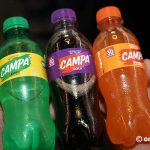


Campa-Cola, an old Indian cola brand revived by Reliance Industries, entered Nepal in July 2025 through a partnership with the Chaudhary Group, the company behind Wai Wai noodles. Its pitch to a market long dominated by Coca-Cola and Pepsi was straightforward: offer a familiar cola taste at a lower price.
But more than a year after its arrival, a blind taste test in Lalitpur suggests that price and taste alone may not be enough to win over Nepali consumers.
In September, 62 passers-by in a residential neighbourhood of Lalitpur took part in a simple experiment. Each participant first sipped Coca-Cola, then tasted two unlabelled samples — Campa-Cola and Pepsi — and rated how closely each resembled Coca-Cola on a scale of zero (not at all alike) to 10 (identical).
The results were close. Campa-Cola scored an average of 5.11, compared with Pepsi’s 5.40. The small difference suggests that participants perceived the two drinks as broadly similar in taste, although the test cannot establish that they are statistically indistinguishable.
On taste alone, the newcomer appeared to hold its own against an established competitor.
The picture changed when participants learned which drink was which and were asked to name their favourite.
Coca-Cola emerged as the clear winner, chosen by 33 participants, or 53 per cent. Pepsi came second with 19 votes (31 per cent), while Campa-Cola received just 10 (16 per cent). Despite its comparable taste score, Campa-Cola was chosen as a favourite by barely half as many participants as Pepsi.
Even among those who rated Campa-Cola’s taste highly, preference for the newcomer was limited. Of the 23 participants who gave it a score of seven or higher, 15 still preferred either Coca-Cola or Pepsi.
The findings point to a gap between how a drink tastes and how consumers feel about its brand.
The power of brand loyalty
Taste is only part of what makes a product appealing. Familiarity, memories and marketing can also shape consumer preferences, particularly in a market where established brands have spent decades building recognition.
Coca-Cola, for instance, has found ways to connect its product with Nepali cultural life. During Dashain and Tihar in 2015, the company replaced its logo on bottles with family and relationship titles such as Buwa, Aama, Didi and Saathi. The campaign associated the drink with family gatherings and the country’s biggest festive season.
For Campa-Cola, offering a similar taste at a lower price may be the easier part of the challenge. Building the same familiarity and emotional connection takes time.
How much cheaper is Campa-Cola?
Price remains Campa-Cola’s clearest competitive advantage. In the Lalitpur market surveyed, it was cheaper than both Coca-Cola and Pepsi across the bottle sizes compared.
| Bottle size | Campa-Cola | Coca-Cola | Pepsi |
|---|---|---|---|
| Small bottle | Rs 30 (250 ml) | Rs 50 (250 ml) | Rs 50 (400 ml) |
| 1 litre | Rs 99 | Rs 140 | Rs 140 |
The savings, however, depend on the comparison.
Against Coca-Cola, Campa-Cola is about 40 per cent cheaper per millilitre in the small-bottle comparison. Against Pepsi, the difference is much smaller: Pepsi’s 400 ml bottle costs the same as Coca-Cola’s 250 ml bottle, making it substantially cheaper per millilitre than Coca-Cola at that size. Campa-Cola’s 250 ml bottle still works out to be about 4 per cent cheaper per millilitre than Pepsi’s 400 ml option.
For one-litre bottles, Campa-Cola costs about 29 per cent less than either rival.
That gives Campa-Cola a meaningful price advantage in some categories, particularly for consumers buying larger bottles. But it does not automatically make it the cheapest option in every practical sense. Coca-Cola, for example, also sells a 175 ml glass bottle for NPR 25, offering a lower upfront price than Campa-Cola’s NPR 30 bottle, even though the glass bottle costs more per millilitre.
Taxes and other costs may also limit how far Campa-Cola can cut prices. Nepal levies excise duty on carbonated drinks, adding to the cost of competing in the market. The precise impact depends on the applicable tax rates and product categories.
Entering a market already in flux
Campa-Cola did not enter a market in which the established players were standing still.
Figures cited in the research indicate that Coca-Cola’s Nepali bottler saw its share of soft-drink sales fall from around 61 per cent in fiscal year 2023 to approximately 54 per cent by early fiscal year 2025. Pepsi’s bottler, meanwhile, increased its share from around 39 per cent to 45–46 per cent over the same period, with Mountain Dew contributing significantly to the gains.
These figures concern broader soft-drink sales, not necessarily cola alone — an important distinction when assessing Campa-Cola’s prospects in the cola segment.
Still, they suggest that consumer preferences and market shares can shift even before a new competitor arrives. Campa-Cola will have to compete not only with the established cola brands but also with a wider portfolio of soft drinks.
In India, where Reliance relaunched Campa in 2023, the brand has reportedly expanded rapidly. The research cited in this study puts its revenue at approximately INR 47 billion in fiscal year 2025–26, making it India’s fourth-largest soft-drink producer by the measure used. Its performance in India offers a reason for optimism, but it does not guarantee the same trajectory in Nepal.
A Chaudhary Group employee involved with the product, who requested anonymity, said Campa-Cola could shake up the market once it becomes widely available and receives more aggressive marketing support. The employee also suggested that its Indian origins might appeal to Nepali consumers because of shared cultural connections.
That association could prove complicated.
Campa-Cola is marketed as an Indian brand, and consumer responses to that identity may vary. Anti-India sentiment, including resentment associated with the 2015 border blockade, could influence how some Nepalis perceive the product. Whether this would materially affect sales, however, remains an open question. The taste test did not examine participants’ attitudes towards India or measure the influence of national identity on purchasing decisions.
A three-way race? Not yet
For now, Campa-Cola appears better positioned as a lower-priced alternative than as a serious challenger to the loyalty enjoyed by Coca-Cola and Pepsi.
That is not necessarily a bad starting point. A competitive price can attract first-time buyers, particularly among consumers who are more concerned about cost than brand identity. Wider availability and sustained marketing could also help turn initial curiosity into repeat purchases.
But the Lalitpur experiment offers a caution. Participants rated Campa-Cola’s taste relatively close to Pepsi’s, yet far fewer named it as their favourite once the brands were revealed. The difference suggests that matching a competitor’s taste profile does not automatically translate into consumer preference.
The study has important limitations. Its 62 participants were not randomly selected, so the results cannot be treated as representative of Nepali consumers as a whole. Participants also chose their favourites without seeing the prices, meaning the test did not capture how cost might influence an actual purchase.
A larger, more representative study that tests blind taste preferences alongside branded choices and real-world price comparisons would offer a clearer picture of Campa-Cola’s prospects.
For now, the newcomer has shown that it can compete on taste. Whether its lower prices, wider availability and marketing can persuade Nepalis to choose it repeatedly is a different question.
In a market shaped by habit as much as flavour, the challenge is not simply to make a cola people like. It is to make one they choose.
Aman Mishra conducted the taste test and wrote the research paper on which this article is based.