Kathmandu, September 28
Disputes between the establishment and rival factions of the Nepali Congress over the party’s 15th General Convention have intensified, with the two sides adopting different provisions on delegate nominations, election procedures and nomination fees.
The party statute amended after the 14th General Convention had allowed the party president to nominate 40 general convention representatives. However, a subsequent special convention amended the statute and increased the number to 75.
The rival faction preparing to hold a separate general convention has set a different provision in its election directive, allowing the party president to nominate 300 general convention representatives.
As the two factions move ahead with separate convention processes, differences have emerged not only over the party statute, election directives and delegate selection procedures, but also over nomination fees for candidates.
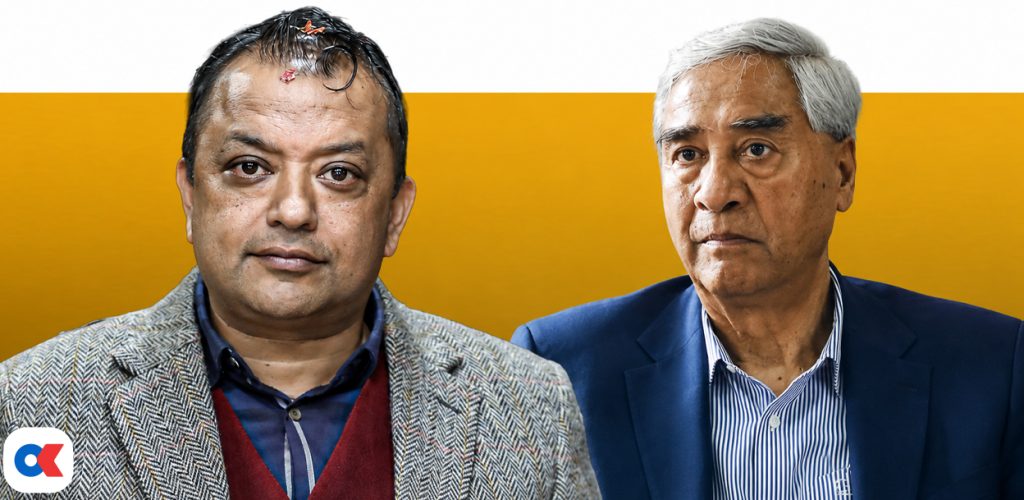
Nepali Congress, led by President Gagan Thapa, who was elected at the special convention, has fixed the nomination fee for the central president at Rs 40,000.
The fee has been set at Rs 30,000 for vice-president and general secretary, Rs 20,000 for joint general secretary and Rs 11,000 for central committee members.
The rival faction led by Sher Bahadur Deuba has proposed lower fees in its election directive. Candidates for central president will have to pay Rs 30,000, while the fee for vice-president and general secretary has been fixed at Rs 25,000.
The nomination fee for joint general secretary is Rs 20,000 and Rs 10,000 for central committee members.
This means candidates contesting for central president under the Deuba faction’s convention would pay Rs 10,000 less than those contesting under the Thapa-led convention. The difference is Rs 5,000 for vice-president and general secretary and Rs 1,000 for central committee members.
The two factions have set the same Rs 20,000 nomination fee for candidates seeking the post of joint general secretary.
Differences in nomination fees also extend to lower levels of the party.
Under the Thapa-led convention, the fee has been set at Rs 20,000 for provincial president, Rs 15,000 for district president, Rs 10,000 for House of Representatives constituency president and Rs 7,000 for provincial assembly constituency president.
The Deuba-led faction has proposed Rs 10,000 for provincial president, Rs 5,000 for district president, Rs 3,500 for House of Representatives constituency president and Rs 2,500 for provincial assembly constituency president.
The differences are even wider at the local level.
The Thapa-led convention has fixed nomination fees of Rs 1,000 for ward president, Rs 5,000 for rural municipality and municipality presidents, and Rs 7,000 for sub-metropolitan and metropolitan city presidents.
The Deuba-led faction has set the fee at Rs 250 for ward president, Rs 1,000 for rural municipality president, Rs 2,000 for municipality president and Rs 2,500 for sub-metropolitan and metropolitan city presidents.
The Thapa-led establishment faction has scheduled its 15th General Convention for October 2, while the Deuba-led faction has set its central general convention for December 7 to 9.
The establishment faction is also preparing to postpone its convention by a few days.